Event submissions
Published
This submission belongs to the session 3. Cutting-Edge Approaches in Pharmacology & Toxicology of the event The 2nd International Online Conference on Toxics
Published date
02 Sep, 2025
Academic Editor
'%3e%3cpath%20d='M12.6657%2010.9104C12.4185%2010.325%2012.0599%209.79327%2011.6097%209.34482C11.1609%208.89508%2010.6293%208.5365%2010.0442%208.28888C10.0389%208.28626%2010.0337%208.28495%2010.0285%208.28233C10.8446%207.69279%2011.3752%206.73249%2011.3752%205.64904C11.3752%203.8542%209.92103%202.39999%208.1262%202.39999C6.33136%202.39999%204.87715%203.8542%204.87715%205.64904C4.87715%206.73249%205.40774%207.69279%206.22393%208.28364C6.21869%208.28626%206.21345%208.28757%206.20821%208.29019C5.62129%208.5378%205.09463%208.89284%204.64265%209.34613C4.1929%209.79493%203.83432%2010.3266%203.58671%2010.9117C3.34345%2011.4845%203.21226%2012.0987%203.20023%2012.7209C3.19988%2012.7349%203.20233%2012.7488%203.20744%2012.7619C3.21255%2012.7749%203.22022%2012.7867%203.22998%2012.7968C3.23975%2012.8068%203.25142%2012.8147%203.26431%2012.8202C3.2772%2012.8256%203.29105%2012.8284%203.30504%2012.8284H4.09109C4.14874%2012.8284%204.19459%2012.7825%204.1959%2012.7262C4.2221%2011.7148%204.62823%2010.7676%205.34617%2010.0497C6.08899%209.30683%207.0755%208.89808%208.1262%208.89808C9.17689%208.89808%2010.1634%209.30683%2010.9062%2010.0497C11.6242%2010.7676%2012.0303%2011.7148%2012.0565%2012.7262C12.0578%2012.7838%2012.1037%2012.8284%2012.1613%2012.8284H12.9474C12.9613%2012.8284%2012.9752%2012.8256%2012.9881%2012.8202C13.001%2012.8147%2013.0126%2012.8068%2013.0224%2012.7968C13.0322%2012.7867%2013.0398%2012.7749%2013.0449%2012.7619C13.0501%2012.7488%2013.0525%2012.7349%2013.0522%2012.7209C13.0391%2012.0947%2012.9094%2011.4855%2012.6657%2010.9104ZM8.1262%207.9024C7.52486%207.9024%206.9589%207.6679%206.53312%207.24211C6.10733%206.81633%205.87283%206.25037%205.87283%205.64904C5.87283%205.0477%206.10733%204.48174%206.53312%204.05596C6.9589%203.63018%207.52486%203.39567%208.1262%203.39567C8.72753%203.39567%209.29349%203.63018%209.71927%204.05596C10.1451%204.48174%2010.3796%205.0477%2010.3796%205.64904C10.3796%206.25037%2010.1451%206.81633%209.71927%207.24211C9.29349%207.6679%208.72753%207.9024%208.1262%207.9024Z'%20fill='%235D1EE1'/%3e%3c/g%3e%3c/svg%3e) Youssef Sari
Youssef SariCitation
Phyllis Wah, Christopher Martyniuk, Hailey Skaggs, Ciara Saccente, Emma Ivantsova, Lev Avidan, Cole English, Molecular and Behavioral Effects of Atorvastatin Exposure in Zebrafish (Danio rerio): Insights into Statin Toxicity at Environmentally Relevant Levels, in Proceedings of The 2nd International Online Conference on Toxics, 8 September–10 September 2025, MDPI: Basel, Switzerland
Share
Email
Facebook
Twitter
LinkedIn
Molecular and Behavioral Effects of Atorvastatin Exposure in Zebrafish (Danio rerio): Insights into Statin Toxicity at Environmentally Relevant Levels
'%3e%3cpath%20d='M12.6647%2010.9104C12.4176%2010.325%2012.0589%209.7933%2011.6088%209.34485C11.16%208.89511%2010.6283%208.53653%2010.0432%208.28891C10.038%208.28629%2010.0327%208.28498%2010.0275%208.28236C10.8437%207.69282%2011.3743%206.73252%2011.3743%205.64907C11.3743%203.85423%209.92005%202.40002%208.12522%202.40002C6.33038%202.40002%204.87618%203.85423%204.87618%205.64907C4.87618%206.73252%205.40677%207.69282%206.22296%208.28367C6.21772%208.28629%206.21248%208.2876%206.20724%208.29022C5.62031%208.53783%205.09365%208.89287%204.64167%209.34616C4.19192%209.79496%203.83334%2010.3266%203.58573%2010.9117C3.34247%2011.4846%203.21128%2012.0987%203.19925%2012.721C3.1989%2012.735%203.20135%2012.7489%203.20646%2012.7619C3.21157%2012.7749%203.21924%2012.7868%203.22901%2012.7968C3.23877%2012.8068%203.25045%2012.8148%203.26334%2012.8202C3.27623%2012.8256%203.29007%2012.8284%203.30406%2012.8284H4.09012C4.14776%2012.8284%204.19362%2012.7825%204.19493%2012.7262C4.22113%2011.7148%204.62726%2010.7676%205.34519%2010.0497C6.08802%209.30686%207.07452%208.89811%208.12522%208.89811C9.17592%208.89811%2010.1624%209.30686%2010.9052%2010.0497C11.6232%2010.7676%2012.0293%2011.7148%2012.0555%2012.7262C12.0568%2012.7839%2012.1027%2012.8284%2012.1603%2012.8284H12.9464C12.9604%2012.8284%2012.9742%2012.8256%2012.9871%2012.8202C13%2012.8148%2013.0117%2012.8068%2013.0214%2012.7968C13.0312%2012.7868%2013.0389%2012.7749%2013.044%2012.7619C13.0491%2012.7489%2013.0515%2012.735%2013.0512%2012.721C13.0381%2012.0947%2012.9084%2011.4856%2012.6647%2010.9104ZM8.12522%207.90243C7.52388%207.90243%206.95792%207.66793%206.53214%207.24215C6.10636%206.81636%205.87185%206.2504%205.87185%205.64907C5.87185%205.04773%206.10636%204.48177%206.53214%204.05599C6.95792%203.63021%207.52388%203.3957%208.12522%203.3957C8.72655%203.3957%209.29252%203.63021%209.7183%204.05599C10.1441%204.48177%2010.3786%205.04773%2010.3786%205.64907C10.3786%206.2504%2010.1441%206.81636%209.7183%207.24215C9.29252%207.66793%208.72655%207.90243%208.12522%207.90243Z'%20fill='%235D1EE1'/%3e%3c/g%3e%3c/svg%3e)
Phyllis Wah 1

Christopher Martyniuk 1
Hailey Skaggs 1
Ciara Saccente 1
Emma Ivantsova 1
Lev Avidan 1

Cole English 1
1. Center for Environmental and Human Toxicology, Department of Physiological Sciences, College of Veterinary Medicine, University of Florida, Gainesville, Florida, 32611, USA
Abstract
Atorvastatin, a widely used cholesterol-lowering statin, functions by inhibiting 3-hydroxy-3-methylglutaryl-CoA (HMG-CoA) reductase. While its environmental presence has been documented, its toxicity to aquatic organisms remains poorly understood. In this study, I conducted RNA-seq and measured sub-lethal developmental and locomotor-related endpoints in zebrafish to identify toxicity mechanisms related to environmentally relevant exposures to atorvastatin. Zebrafish were exposed to atorvastatin continuously, and their water was renewed every 24 hours, with a 90% change in the proportion of fresh chemical in the water every day. No significant impacts on survival, hatching success, or deformities were observed across treatment groups. However, the amount of reactive oxygen species (ROS) was increased at lower doses, and locomotor activity was significantly reduced at 100 µg/L. RNA-seq analysis revealed dose-specific transcriptomic responses. At 1 µg/L, differentially expressed genes included collagen type I, alpha 1a, fatty acid desaturase 2, and prolactin, implicating pathways such as B-cell leukemia signaling, CD8+ T-cell activation, and NF-κB regulation. At 100 µg/L, genes such as solute carrier family 12 (potassium/ chloride transporter) and G-Protein subunit alpha z were affected, linked to pathways like Th17-cell activation and oxytocin signaling. These findings suggest that atorvastatin can alter neurodevelopmental and immune-related pathways even at low concentrations, without causing overt morphological defects. Data from this study are expected to contribute to our understanding of atorvastatin toxicity to fish in their early stages, and can support efforts to assess the risks of statin drugs in aquatic ecosystems.
Keywords
Atorvastatin
zebrafish
RNA-seq
aquatic toxicology
transcriptomics
Reactive oxygen species (ROS)
environmental risk assessment
Poster
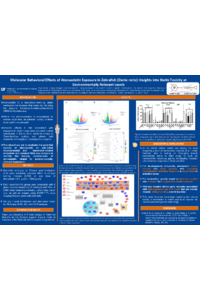
ATORVASTATIN POSTER PHYLLIS for submission.pdf
Evaluating the Combined Effects of Pesticides and Heavy Metals on Human and Honey Bee Health: A One Health Perspective
Influence of urban pollution and smoking in human salivary nitrate concentrations:negative result