Event submissions
Published
This submission belongs to the session 4. Pesticides, Pollutants, and Health Risk of the event The 2nd International Online Conference on Toxics
Published date
03 Sep, 2025
Academic Editor
'%3e%3cpath%20d='M12.6657%2010.9104C12.4185%2010.325%2012.0599%209.79327%2011.6097%209.34482C11.1609%208.89508%2010.6293%208.5365%2010.0442%208.28888C10.0389%208.28626%2010.0337%208.28495%2010.0285%208.28233C10.8446%207.69279%2011.3752%206.73249%2011.3752%205.64904C11.3752%203.8542%209.92103%202.39999%208.1262%202.39999C6.33136%202.39999%204.87715%203.8542%204.87715%205.64904C4.87715%206.73249%205.40774%207.69279%206.22393%208.28364C6.21869%208.28626%206.21345%208.28757%206.20821%208.29019C5.62129%208.5378%205.09463%208.89284%204.64265%209.34613C4.1929%209.79493%203.83432%2010.3266%203.58671%2010.9117C3.34345%2011.4845%203.21226%2012.0987%203.20023%2012.7209C3.19988%2012.7349%203.20233%2012.7488%203.20744%2012.7619C3.21255%2012.7749%203.22022%2012.7867%203.22998%2012.7968C3.23975%2012.8068%203.25142%2012.8147%203.26431%2012.8202C3.2772%2012.8256%203.29105%2012.8284%203.30504%2012.8284H4.09109C4.14874%2012.8284%204.19459%2012.7825%204.1959%2012.7262C4.2221%2011.7148%204.62823%2010.7676%205.34617%2010.0497C6.08899%209.30683%207.0755%208.89808%208.1262%208.89808C9.17689%208.89808%2010.1634%209.30683%2010.9062%2010.0497C11.6242%2010.7676%2012.0303%2011.7148%2012.0565%2012.7262C12.0578%2012.7838%2012.1037%2012.8284%2012.1613%2012.8284H12.9474C12.9613%2012.8284%2012.9752%2012.8256%2012.9881%2012.8202C13.001%2012.8147%2013.0126%2012.8068%2013.0224%2012.7968C13.0322%2012.7867%2013.0398%2012.7749%2013.0449%2012.7619C13.0501%2012.7488%2013.0525%2012.7349%2013.0522%2012.7209C13.0391%2012.0947%2012.9094%2011.4855%2012.6657%2010.9104ZM8.1262%207.9024C7.52486%207.9024%206.9589%207.6679%206.53312%207.24211C6.10733%206.81633%205.87283%206.25037%205.87283%205.64904C5.87283%205.0477%206.10733%204.48174%206.53312%204.05596C6.9589%203.63018%207.52486%203.39567%208.1262%203.39567C8.72753%203.39567%209.29349%203.63018%209.71927%204.05596C10.1451%204.48174%2010.3796%205.0477%2010.3796%205.64904C10.3796%206.25037%2010.1451%206.81633%209.71927%207.24211C9.29349%207.6679%208.72753%207.9024%208.1262%207.9024Z'%20fill='%235D1EE1'/%3e%3c/g%3e%3c/svg%3e) Virgínia Cruz Fernandes
Virgínia Cruz FernandesCitation
Musa Adamu Ibrahim, Muhammad Kabir Usman, Yusha’u Usman Muhammad, Musa Ibrahim, Ahmed Abbator, Ibrahim Galadima Dagona, Mohammed Abdulhamid Umar, Mustapha Saidu, Growth Response and Phytoremediation of Copper and Chromium in Dumpsite Leachate by Common duckweed (Lemna minor L.): A Case Study of A Market Dumpsite in Maiduguri, Nigeria, in Proceedings of The 2nd International Online Conference on Toxics, 8 September–10 September 2025, MDPI: Basel, Switzerland
Share
Email
Facebook
Twitter
LinkedIn
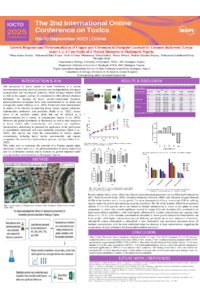
Growth Response and Phytoremediation of Copper and Chromium in Dumpsite Leachate by Common duckweed (Lemna minor L.): A Case Study of A Market Dumpsite in Maiduguri, Nigeria
'%3e%3cpath%20d='M12.6647%2010.9104C12.4176%2010.325%2012.0589%209.7933%2011.6088%209.34485C11.16%208.89511%2010.6283%208.53653%2010.0432%208.28891C10.038%208.28629%2010.0327%208.28498%2010.0275%208.28236C10.8437%207.69282%2011.3743%206.73252%2011.3743%205.64907C11.3743%203.85423%209.92005%202.40002%208.12522%202.40002C6.33038%202.40002%204.87618%203.85423%204.87618%205.64907C4.87618%206.73252%205.40677%207.69282%206.22296%208.28367C6.21772%208.28629%206.21248%208.2876%206.20724%208.29022C5.62031%208.53783%205.09365%208.89287%204.64167%209.34616C4.19192%209.79496%203.83334%2010.3266%203.58573%2010.9117C3.34247%2011.4846%203.21128%2012.0987%203.19925%2012.721C3.1989%2012.735%203.20135%2012.7489%203.20646%2012.7619C3.21157%2012.7749%203.21924%2012.7868%203.22901%2012.7968C3.23877%2012.8068%203.25045%2012.8148%203.26334%2012.8202C3.27623%2012.8256%203.29007%2012.8284%203.30406%2012.8284H4.09012C4.14776%2012.8284%204.19362%2012.7825%204.19493%2012.7262C4.22113%2011.7148%204.62726%2010.7676%205.34519%2010.0497C6.08802%209.30686%207.07452%208.89811%208.12522%208.89811C9.17592%208.89811%2010.1624%209.30686%2010.9052%2010.0497C11.6232%2010.7676%2012.0293%2011.7148%2012.0555%2012.7262C12.0568%2012.7839%2012.1027%2012.8284%2012.1603%2012.8284H12.9464C12.9604%2012.8284%2012.9742%2012.8256%2012.9871%2012.8202C13%2012.8148%2013.0117%2012.8068%2013.0214%2012.7968C13.0312%2012.7868%2013.0389%2012.7749%2013.044%2012.7619C13.0491%2012.7489%2013.0515%2012.735%2013.0512%2012.721C13.0381%2012.0947%2012.9084%2011.4856%2012.6647%2010.9104ZM8.12522%207.90243C7.52388%207.90243%206.95792%207.66793%206.53214%207.24215C6.10636%206.81636%205.87185%206.2504%205.87185%205.64907C5.87185%205.04773%206.10636%204.48177%206.53214%204.05599C6.95792%203.63021%207.52388%203.3957%208.12522%203.3957C8.72655%203.3957%209.29252%203.63021%209.7183%204.05599C10.1441%204.48177%2010.3786%205.04773%2010.3786%205.64907C10.3786%206.2504%2010.1441%206.81636%209.7183%207.24215C9.29252%207.66793%208.72655%207.90243%208.12522%207.90243Z'%20fill='%235D1EE1'/%3e%3c/g%3e%3c/svg%3e)
Musa Adamu Ibrahim 1

Muhammad Kabir Usman 1,2
Yusha’u Usman Muhammad 1
Musa Ibrahim 1
Ahmed Abbator 3
Ibrahim Galadima Dagona 4
Mohammed Abdulhamid Umar 3
Mustapha Saidu 5
1. Department of Biology, University of Maiduguri, P.M.B. 1069, Maiduguri, Nigeria
2. Department of Environmental Science, Sharda University, Greater Noida,India
3. Department of Botany, University of Maiduguri, P.M.B. 1069, Maiduguri, Nigeria
4. Nigeria Agricultural Quarantine Service (NAQS) Northeast Zonal Office, Maiduguri, Nigeria
5. Department of Biology, University of St Andrews, St Andrews, United Kingdom
Abstract
Water safety in low- and middle-income countries is an issue of serious concern globally. Heavy metals in leachates from residential dumpsites and other businesses affect water quality due to their non-biodegradability and toxicity. Copper (Cu) and chromium (Cr) in water pose a danger to local ecosystems and public health. This study determined the growth response and phytoremediation of Cu and Cr in market dumpsite leachate using a floating aquatic plant, common duckweed (Lemna minor), as a locally applicable, cost-effective and eco-friendly solution. The plant was exposed to different concentrations of leachate for 14 days. Growth and the physicochemical parameters were measured. Ourresults showed a significant reduction in Co, Cr, electrical conductivity (EC), total dissolved solids (TDS), salinity, oxidation-reduction potential (ORP), and dissolved oxygen (DO) at 50% v/v concentration of the leachate. The pH increased from slightly alkaline to more alkaline at the same concentration. The number of fronds, biomass, relative growth rate, and chlorophyll contents decreased significantly at 100% v/v. This finding indicates that L. minor can tolerate and remediate 50% v/v of dumpsite leachate. Further studies arerecommended to evaluate other environmental and eco-physiological factors to improve the phytoremediation of leachate using this plant in Maiduguri metropolis and beyond.
Keywords
Keywords: Heavy metals
dumpsite
leachate
phytoremediation
Lemna minor L.
Poster
s4 sciforum-126411 Poster.pdf
The Hidden Threat of Combined Stressors: The Influence of Temperature and pH on Antibiotic Toxicity in Danio rerio
Role of Akkermansia muciniphila and Its Outer Membrane Vesicles in High-Fat Diet and Nano Titanium Dioxide-Induced Metabolic Dysfunction-Associated Fatty Liver Disease