Event submissions
Published
This submission belongs to the session 4. Pesticides, Pollutants, and Health Risk of the event The 2nd International Online Conference on Toxics
Published date
03 Sep, 2025
Academic Editor
'%3e%3cpath%20d='M12.6657%2010.9104C12.4185%2010.325%2012.0599%209.79327%2011.6097%209.34482C11.1609%208.89508%2010.6293%208.5365%2010.0442%208.28888C10.0389%208.28626%2010.0337%208.28495%2010.0285%208.28233C10.8446%207.69279%2011.3752%206.73249%2011.3752%205.64904C11.3752%203.8542%209.92103%202.39999%208.1262%202.39999C6.33136%202.39999%204.87715%203.8542%204.87715%205.64904C4.87715%206.73249%205.40774%207.69279%206.22393%208.28364C6.21869%208.28626%206.21345%208.28757%206.20821%208.29019C5.62129%208.5378%205.09463%208.89284%204.64265%209.34613C4.1929%209.79493%203.83432%2010.3266%203.58671%2010.9117C3.34345%2011.4845%203.21226%2012.0987%203.20023%2012.7209C3.19988%2012.7349%203.20233%2012.7488%203.20744%2012.7619C3.21255%2012.7749%203.22022%2012.7867%203.22998%2012.7968C3.23975%2012.8068%203.25142%2012.8147%203.26431%2012.8202C3.2772%2012.8256%203.29105%2012.8284%203.30504%2012.8284H4.09109C4.14874%2012.8284%204.19459%2012.7825%204.1959%2012.7262C4.2221%2011.7148%204.62823%2010.7676%205.34617%2010.0497C6.08899%209.30683%207.0755%208.89808%208.1262%208.89808C9.17689%208.89808%2010.1634%209.30683%2010.9062%2010.0497C11.6242%2010.7676%2012.0303%2011.7148%2012.0565%2012.7262C12.0578%2012.7838%2012.1037%2012.8284%2012.1613%2012.8284H12.9474C12.9613%2012.8284%2012.9752%2012.8256%2012.9881%2012.8202C13.001%2012.8147%2013.0126%2012.8068%2013.0224%2012.7968C13.0322%2012.7867%2013.0398%2012.7749%2013.0449%2012.7619C13.0501%2012.7488%2013.0525%2012.7349%2013.0522%2012.7209C13.0391%2012.0947%2012.9094%2011.4855%2012.6657%2010.9104ZM8.1262%207.9024C7.52486%207.9024%206.9589%207.6679%206.53312%207.24211C6.10733%206.81633%205.87283%206.25037%205.87283%205.64904C5.87283%205.0477%206.10733%204.48174%206.53312%204.05596C6.9589%203.63018%207.52486%203.39567%208.1262%203.39567C8.72753%203.39567%209.29349%203.63018%209.71927%204.05596C10.1451%204.48174%2010.3796%205.0477%2010.3796%205.64904C10.3796%206.25037%2010.1451%206.81633%209.71927%207.24211C9.29349%207.6679%208.72753%207.9024%208.1262%207.9024Z'%20fill='%235D1EE1'/%3e%3c/g%3e%3c/svg%3e) Virgínia Cruz Fernandes
Virgínia Cruz FernandesCitation
Inês Boaventura, Sara Sousa, Tiago Bordeira Gaspar, Inês Borges, Cristina Delerue-Matos, Paula Soares, Valentina Fernandes Domingues, Assessment of endocrine-disrupting chemicals in companion animals, in Proceedings of The 2nd International Online Conference on Toxics, 8 September–10 September 2025, MDPI: Basel, Switzerland
Share
Email
Facebook
Twitter
LinkedIn
Assessment of endocrine-disrupting chemicals in companion animals
'%3e%3cpath%20d='M12.6647%2010.9104C12.4176%2010.325%2012.0589%209.7933%2011.6088%209.34485C11.16%208.89511%2010.6283%208.53653%2010.0432%208.28891C10.038%208.28629%2010.0327%208.28498%2010.0275%208.28236C10.8437%207.69282%2011.3743%206.73252%2011.3743%205.64907C11.3743%203.85423%209.92005%202.40002%208.12522%202.40002C6.33038%202.40002%204.87618%203.85423%204.87618%205.64907C4.87618%206.73252%205.40677%207.69282%206.22296%208.28367C6.21772%208.28629%206.21248%208.2876%206.20724%208.29022C5.62031%208.53783%205.09365%208.89287%204.64167%209.34616C4.19192%209.79496%203.83334%2010.3266%203.58573%2010.9117C3.34247%2011.4846%203.21128%2012.0987%203.19925%2012.721C3.1989%2012.735%203.20135%2012.7489%203.20646%2012.7619C3.21157%2012.7749%203.21924%2012.7868%203.22901%2012.7968C3.23877%2012.8068%203.25045%2012.8148%203.26334%2012.8202C3.27623%2012.8256%203.29007%2012.8284%203.30406%2012.8284H4.09012C4.14776%2012.8284%204.19362%2012.7825%204.19493%2012.7262C4.22113%2011.7148%204.62726%2010.7676%205.34519%2010.0497C6.08802%209.30686%207.07452%208.89811%208.12522%208.89811C9.17592%208.89811%2010.1624%209.30686%2010.9052%2010.0497C11.6232%2010.7676%2012.0293%2011.7148%2012.0555%2012.7262C12.0568%2012.7839%2012.1027%2012.8284%2012.1603%2012.8284H12.9464C12.9604%2012.8284%2012.9742%2012.8256%2012.9871%2012.8202C13%2012.8148%2013.0117%2012.8068%2013.0214%2012.7968C13.0312%2012.7868%2013.0389%2012.7749%2013.044%2012.7619C13.0491%2012.7489%2013.0515%2012.735%2013.0512%2012.721C13.0381%2012.0947%2012.9084%2011.4856%2012.6647%2010.9104ZM8.12522%207.90243C7.52388%207.90243%206.95792%207.66793%206.53214%207.24215C6.10636%206.81636%205.87185%206.2504%205.87185%205.64907C5.87185%205.04773%206.10636%204.48177%206.53214%204.05599C6.95792%203.63021%207.52388%203.3957%208.12522%203.3957C8.72655%203.3957%209.29252%203.63021%209.7183%204.05599C10.1441%204.48177%2010.3786%205.04773%2010.3786%205.64907C10.3786%206.2504%2010.1441%206.81636%209.7183%207.24215C9.29252%207.66793%208.72655%207.90243%208.12522%207.90243Z'%20fill='%235D1EE1'/%3e%3c/g%3e%3c/svg%3e)
Inês Boaventura 1
Sara Sousa 2

Tiago Bordeira Gaspar 1,3,4,5,6
Inês Borges 4

Cristina Delerue-Matos 2

Paula Soares 5,6
Valentina Fernandes Domingues 2
1. Department of Veterinary Sciences , Vasco da Gama University School , 3020-210 Coimbra, Portugal
2. REQUIMTE/LAQV-ISEP, Polytechnic of Porto, Porto, 4249-015, Portugal
3. Department of Veterinary Sciences, Vasco da Gama Research Centre (CIVG), Vasco da Gama University School, Coimbra, 3020-210, Portugal
4. Veterinary Clinical Laboratory, Leça do Balio, 4465-671 Matosinhos, Portugal
5. Institute for Research and Innovation in Health (i3S), University of Porto, Porto, 4200-135, Portugal
6. Institute of Molecular Pathology and Immunology of the University of Porto (IPATIMUP), Porto, 4200-135, Portugal
Abstract
Endocrine-disrupting chemicals (EDCs) can interfere with hormone signalling, posing a significant risk to animal and human health. Usually, EDCs are environmental pollutants and, due to their lipophilic nature, can accumulate in fat tissues, leading to chronic exposure and serious health issues, such as endocrine-related neoplasia. Companion animals, particularly dogs and cats, are frequently exposed to EDCs at higher rates than their owners, owing to their proximity to the ground and their behaviours.
Despite increasing concern regarding EDC exposure, most biomonitoring studies to date have focused on humans and livestock, with limited attention given to pets. This study aimed to assess the presence of EDCs in the adipose tissue of dogs and cats diagnosed with hormone-sensitive neoplasms. Biological samples were collected from animals with and without neoplasia (i.e., a control group) at veterinary care centres across the north of Portugal. Clinical and pathological data, along with lifestyle information obtained through in-person questionnaires, were also gathered. A broad range of persistent and emerging EDCs were quantified using gas chromatography after a single ultrasound-assisted extraction (UAE) method was performed. Statistical data analysis was conducted to explore associations between EDC exposure and various clinical/pathological characteristics or animal habits. The findings from this research could provide valuable insights into the risks posed to pets by EDCs and support the development of improved strategies for the prevention, diagnosis, and treatment of endocrine-related diseases in companion animals.
Acknowledgements
This work received support and help from FCT/MCTES(LA/P/0008/2020-DOI 10.54499/LA/P/0008/2020, UIDP/50006/2020-DOI10.54499/UIDP/50006/2020 and UIDB/50006/2020-DOI 10.54499/UIDB/50006/2020), through national funds.
Keywords
endocrine-disrupting chemicals
hormone-sensitive neoplasms
environmental pollution
companion animals
Poster
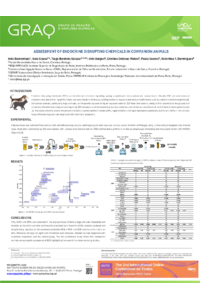
PosterIOCTO_final.pdf
Azithromycin reshapes the effect of toxic Microcystis aeruginosa on the grazing behavior of Daphnia similis at environmentally relevant concentrations
Transcriptional Biomarkers of Metal-Induced Stress Contamination in the Critically Endangered Burrunan Dolphin (Tursiops australis)