Event submissions
Published
This submission belongs to the session S1. Infectious Diseases of the event The 1st International Online Conference on Diseases
Published date
04 Sep, 2025
Academic Editor
'%3e%3cpath%20d='M12.6657%2010.9104C12.4185%2010.325%2012.0599%209.79327%2011.6097%209.34482C11.1609%208.89508%2010.6293%208.5365%2010.0442%208.28888C10.0389%208.28626%2010.0337%208.28495%2010.0285%208.28233C10.8446%207.69279%2011.3752%206.73249%2011.3752%205.64904C11.3752%203.8542%209.92103%202.39999%208.1262%202.39999C6.33136%202.39999%204.87715%203.8542%204.87715%205.64904C4.87715%206.73249%205.40774%207.69279%206.22393%208.28364C6.21869%208.28626%206.21345%208.28757%206.20821%208.29019C5.62129%208.5378%205.09463%208.89284%204.64265%209.34613C4.1929%209.79493%203.83432%2010.3266%203.58671%2010.9117C3.34345%2011.4845%203.21226%2012.0987%203.20023%2012.7209C3.19988%2012.7349%203.20233%2012.7488%203.20744%2012.7619C3.21255%2012.7749%203.22022%2012.7867%203.22998%2012.7968C3.23975%2012.8068%203.25142%2012.8147%203.26431%2012.8202C3.2772%2012.8256%203.29105%2012.8284%203.30504%2012.8284H4.09109C4.14874%2012.8284%204.19459%2012.7825%204.1959%2012.7262C4.2221%2011.7148%204.62823%2010.7676%205.34617%2010.0497C6.08899%209.30683%207.0755%208.89808%208.1262%208.89808C9.17689%208.89808%2010.1634%209.30683%2010.9062%2010.0497C11.6242%2010.7676%2012.0303%2011.7148%2012.0565%2012.7262C12.0578%2012.7838%2012.1037%2012.8284%2012.1613%2012.8284H12.9474C12.9613%2012.8284%2012.9752%2012.8256%2012.9881%2012.8202C13.001%2012.8147%2013.0126%2012.8068%2013.0224%2012.7968C13.0322%2012.7867%2013.0398%2012.7749%2013.0449%2012.7619C13.0501%2012.7488%2013.0525%2012.7349%2013.0522%2012.7209C13.0391%2012.0947%2012.9094%2011.4855%2012.6657%2010.9104ZM8.1262%207.9024C7.52486%207.9024%206.9589%207.6679%206.53312%207.24211C6.10733%206.81633%205.87283%206.25037%205.87283%205.64904C5.87283%205.0477%206.10733%204.48174%206.53312%204.05596C6.9589%203.63018%207.52486%203.39567%208.1262%203.39567C8.72753%203.39567%209.29349%203.63018%209.71927%204.05596C10.1451%204.48174%2010.3796%205.0477%2010.3796%205.64904C10.3796%206.25037%2010.1451%206.81633%209.71927%207.24211C9.29349%207.6679%208.72753%207.9024%208.1262%207.9024Z'%20fill='%235D1EE1'/%3e%3c/g%3e%3c/svg%3e) Omar Cauli
Omar CauliCitation
Mehdi EL MOKADDEM, NAIMA GHAILANI NOUROUTI, AMINA BARAKAT, SARA DERDABI, MOHCINE MECHITA BENNANI, Prevalence and Co-Infection of Mycoplasma genitalium and Gardnerella vaginalis Among Moroccan Women: Implications for Sexual and Reproductive Health, in Proceedings of The 1st International Online Conference on Diseases, 9 September–11 September 2025, MDPI: Basel, Switzerland
Share
Email
Facebook
Twitter
LinkedIn
Prevalence and Co-Infection of Mycoplasma genitalium and Gardnerella vaginalis Among Moroccan Women: Implications for Sexual and Reproductive Health
'%3e%3cpath%20d='M12.6647%2010.9104C12.4176%2010.325%2012.0589%209.7933%2011.6088%209.34485C11.16%208.89511%2010.6283%208.53653%2010.0432%208.28891C10.038%208.28629%2010.0327%208.28498%2010.0275%208.28236C10.8437%207.69282%2011.3743%206.73252%2011.3743%205.64907C11.3743%203.85423%209.92005%202.40002%208.12522%202.40002C6.33038%202.40002%204.87618%203.85423%204.87618%205.64907C4.87618%206.73252%205.40677%207.69282%206.22296%208.28367C6.21772%208.28629%206.21248%208.2876%206.20724%208.29022C5.62031%208.53783%205.09365%208.89287%204.64167%209.34616C4.19192%209.79496%203.83334%2010.3266%203.58573%2010.9117C3.34247%2011.4846%203.21128%2012.0987%203.19925%2012.721C3.1989%2012.735%203.20135%2012.7489%203.20646%2012.7619C3.21157%2012.7749%203.21924%2012.7868%203.22901%2012.7968C3.23877%2012.8068%203.25045%2012.8148%203.26334%2012.8202C3.27623%2012.8256%203.29007%2012.8284%203.30406%2012.8284H4.09012C4.14776%2012.8284%204.19362%2012.7825%204.19493%2012.7262C4.22113%2011.7148%204.62726%2010.7676%205.34519%2010.0497C6.08802%209.30686%207.07452%208.89811%208.12522%208.89811C9.17592%208.89811%2010.1624%209.30686%2010.9052%2010.0497C11.6232%2010.7676%2012.0293%2011.7148%2012.0555%2012.7262C12.0568%2012.7839%2012.1027%2012.8284%2012.1603%2012.8284H12.9464C12.9604%2012.8284%2012.9742%2012.8256%2012.9871%2012.8202C13%2012.8148%2013.0117%2012.8068%2013.0214%2012.7968C13.0312%2012.7868%2013.0389%2012.7749%2013.044%2012.7619C13.0491%2012.7489%2013.0515%2012.735%2013.0512%2012.721C13.0381%2012.0947%2012.9084%2011.4856%2012.6647%2010.9104ZM8.12522%207.90243C7.52388%207.90243%206.95792%207.66793%206.53214%207.24215C6.10636%206.81636%205.87185%206.2504%205.87185%205.64907C5.87185%205.04773%206.10636%204.48177%206.53214%204.05599C6.95792%203.63021%207.52388%203.3957%208.12522%203.3957C8.72655%203.3957%209.29252%203.63021%209.7183%204.05599C10.1441%204.48177%2010.3786%205.04773%2010.3786%205.64907C10.3786%206.2504%2010.1441%206.81636%209.7183%207.24215C9.29252%207.66793%208.72655%207.90243%208.12522%207.90243Z'%20fill='%235D1EE1'/%3e%3c/g%3e%3c/svg%3e)
Mehdi EL MOKADDEM 1,2
NAIMA GHAILANI NOUROUTI 1
AMINA BARAKAT 1
SARA DERDABI 2
MOHCINE MECHITA BENNANI 1
1. Intelligent Automation and BioMed Genomics Laboratory, Faculty of Sciences and Techniques of Tangier, Abdelmalek Essaadi University, Tetouan, Morocco.
2. Laboratory of Medical Analysis, Molecular and Specialized Biology Department, LABORATORY
DERDABI, Tangier, Morocco.
Abstract
Mycoplasma genitalium is an emerging sexually transmitted pathogen implicated in multiple urogenital conditions and a global sexual health challenge. Its coexistence with Gardnerella vaginalis, a major contributor to bacterial vaginosis, becomes problematic and potentially contributes to significant reproductive health complications. This study investigates the prevalence and co-infection of Mycoplasma genitalium and Gardnerella vaginalis in a cohort of Moroccan women and evaluates their potential impact on sexual health and fertility. Vaginal swabs were collected from women presenting with symptoms of vaginal infections who attended gynecology and sexual health clinics in Tangier, Morocco. A bacteriological analysis was performed using the standard culture methods, Gram staining, and wet mount microscopy to detect Gardnerella vaginalis. For Mycoplasma genitalium, bacterial DNA was first extracted using a magnetic-bead-based technique and subsequently analyzed through PCR targeting multiple insertion sequences specific to Mycoplasma, providing both qualitative and quantitative analyses. The results revealed that out of the 50 women tested, 13 patients were positive for Mycoplasma genitalium according to PCR and also showed the presence of Gardnerella vaginalis. An additional two patients were positive for Mycoplasma genitalium but tested negative for G. vaginalis. In contrast, 26 patients were positive for G. vaginalis but negative for Mycoplasma genitalium. Only nine patients tested negative for both pathogens. These findings reveal a significant rate of co-infection between Mycoplasma genitalium and Gardnerella vaginalis. This highlights the importance of using sensitive and specific diagnostic techniques, particularly PCR, to accurately detect Mycoplasma genitalium, even in women with slight or non-specific symptoms. The co-presence of these two pathogens suggests a possible solid interaction that could contribute to the development or persistence of bacterial vaginosis and that could elevate the risk of reproductive health complications and potential fertility issues, particularly among women experiencing symptoms of vaginal discomfort. Further studies are needed to understand the long-term reproductive impact and optimize the treatment strategies.
Keywords
Mycoplasma Genitalium
Gardnerella vaginalis
Bacterial Vaginosis
Sexual health
Moroccan women
Poster
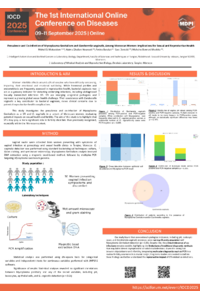
Poster final Co-infection mycoplasma-GV.pdf
Maternal Peri-Conceptional Sleep Quality and Risk of Congenital Heart Disease in Offspring: An Exploratory Case–Control Study
Effect of intracerebral Magnetoelectric nanoparticles on behavioral outcomes