Event submissions
Published
This submission belongs to the session S6. Neuropsychiatric Disorders of the event The 1st International Online Conference on Diseases
Published date
04 Sep, 2025
Academic Editor
'%3e%3cpath%20d='M12.6657%2010.9104C12.4185%2010.325%2012.0599%209.79327%2011.6097%209.34482C11.1609%208.89508%2010.6293%208.5365%2010.0442%208.28888C10.0389%208.28626%2010.0337%208.28495%2010.0285%208.28233C10.8446%207.69279%2011.3752%206.73249%2011.3752%205.64904C11.3752%203.8542%209.92103%202.39999%208.1262%202.39999C6.33136%202.39999%204.87715%203.8542%204.87715%205.64904C4.87715%206.73249%205.40774%207.69279%206.22393%208.28364C6.21869%208.28626%206.21345%208.28757%206.20821%208.29019C5.62129%208.5378%205.09463%208.89284%204.64265%209.34613C4.1929%209.79493%203.83432%2010.3266%203.58671%2010.9117C3.34345%2011.4845%203.21226%2012.0987%203.20023%2012.7209C3.19988%2012.7349%203.20233%2012.7488%203.20744%2012.7619C3.21255%2012.7749%203.22022%2012.7867%203.22998%2012.7968C3.23975%2012.8068%203.25142%2012.8147%203.26431%2012.8202C3.2772%2012.8256%203.29105%2012.8284%203.30504%2012.8284H4.09109C4.14874%2012.8284%204.19459%2012.7825%204.1959%2012.7262C4.2221%2011.7148%204.62823%2010.7676%205.34617%2010.0497C6.08899%209.30683%207.0755%208.89808%208.1262%208.89808C9.17689%208.89808%2010.1634%209.30683%2010.9062%2010.0497C11.6242%2010.7676%2012.0303%2011.7148%2012.0565%2012.7262C12.0578%2012.7838%2012.1037%2012.8284%2012.1613%2012.8284H12.9474C12.9613%2012.8284%2012.9752%2012.8256%2012.9881%2012.8202C13.001%2012.8147%2013.0126%2012.8068%2013.0224%2012.7968C13.0322%2012.7867%2013.0398%2012.7749%2013.0449%2012.7619C13.0501%2012.7488%2013.0525%2012.7349%2013.0522%2012.7209C13.0391%2012.0947%2012.9094%2011.4855%2012.6657%2010.9104ZM8.1262%207.9024C7.52486%207.9024%206.9589%207.6679%206.53312%207.24211C6.10733%206.81633%205.87283%206.25037%205.87283%205.64904C5.87283%205.0477%206.10733%204.48174%206.53312%204.05596C6.9589%203.63018%207.52486%203.39567%208.1262%203.39567C8.72753%203.39567%209.29349%203.63018%209.71927%204.05596C10.1451%204.48174%2010.3796%205.0477%2010.3796%205.64904C10.3796%206.25037%2010.1451%206.81633%209.71927%207.24211C9.29349%207.6679%208.72753%207.9024%208.1262%207.9024Z'%20fill='%235D1EE1'/%3e%3c/g%3e%3c/svg%3e) Michele Malaguarnera
Michele MalaguarneraCitation
Marta Pardo, Victoria Andre, Silvia Gimenez, Alvaro Colomina, Sonia Barber, Claudia Cos, Sakhrat Khizroev, Effect of intracerebral Magnetoelectric nanoparticles on behavioral outcomes, in Proceedings of The 1st International Online Conference on Diseases, 9 September–11 September 2025, MDPI: Basel, Switzerland
Share
Email
Facebook
Twitter
LinkedIn
Effect of intracerebral Magnetoelectric nanoparticles on behavioral outcomes
'%3e%3cpath%20d='M12.6647%2010.9104C12.4176%2010.325%2012.0589%209.7933%2011.6088%209.34485C11.16%208.89511%2010.6283%208.53653%2010.0432%208.28891C10.038%208.28629%2010.0327%208.28498%2010.0275%208.28236C10.8437%207.69282%2011.3743%206.73252%2011.3743%205.64907C11.3743%203.85423%209.92005%202.40002%208.12522%202.40002C6.33038%202.40002%204.87618%203.85423%204.87618%205.64907C4.87618%206.73252%205.40677%207.69282%206.22296%208.28367C6.21772%208.28629%206.21248%208.2876%206.20724%208.29022C5.62031%208.53783%205.09365%208.89287%204.64167%209.34616C4.19192%209.79496%203.83334%2010.3266%203.58573%2010.9117C3.34247%2011.4846%203.21128%2012.0987%203.19925%2012.721C3.1989%2012.735%203.20135%2012.7489%203.20646%2012.7619C3.21157%2012.7749%203.21924%2012.7868%203.22901%2012.7968C3.23877%2012.8068%203.25045%2012.8148%203.26334%2012.8202C3.27623%2012.8256%203.29007%2012.8284%203.30406%2012.8284H4.09012C4.14776%2012.8284%204.19362%2012.7825%204.19493%2012.7262C4.22113%2011.7148%204.62726%2010.7676%205.34519%2010.0497C6.08802%209.30686%207.07452%208.89811%208.12522%208.89811C9.17592%208.89811%2010.1624%209.30686%2010.9052%2010.0497C11.6232%2010.7676%2012.0293%2011.7148%2012.0555%2012.7262C12.0568%2012.7839%2012.1027%2012.8284%2012.1603%2012.8284H12.9464C12.9604%2012.8284%2012.9742%2012.8256%2012.9871%2012.8202C13%2012.8148%2013.0117%2012.8068%2013.0214%2012.7968C13.0312%2012.7868%2013.0389%2012.7749%2013.044%2012.7619C13.0491%2012.7489%2013.0515%2012.735%2013.0512%2012.721C13.0381%2012.0947%2012.9084%2011.4856%2012.6647%2010.9104ZM8.12522%207.90243C7.52388%207.90243%206.95792%207.66793%206.53214%207.24215C6.10636%206.81636%205.87185%206.2504%205.87185%205.64907C5.87185%205.04773%206.10636%204.48177%206.53214%204.05599C6.95792%203.63021%207.52388%203.3957%208.12522%203.3957C8.72655%203.3957%209.29252%203.63021%209.7183%204.05599C10.1441%204.48177%2010.3786%205.04773%2010.3786%205.64907C10.3786%206.2504%2010.1441%206.81636%209.7183%207.24215C9.29252%207.66793%208.72655%207.90243%208.12522%207.90243Z'%20fill='%235D1EE1'/%3e%3c/g%3e%3c/svg%3e)
Marta Pardo 1,2
Victoria Andre 3
Silvia Gimenez 1
Alvaro Colomina 1
Sonia Barber 1
Claudia Cos 1
Sakhrat Khizroev 3
1. Department of Psychobiology, Universidad de Valencia, 46010 Valencia, Spain
2. Interuniversity Research Institute for Molecular Recognition and Technological Development (IDM), 46022 Valencia, Spain
3. Department of Biomedical Engineering, University of Miami, Coral Gables, USA
Abstract
INTRODUCTION: Current neuromodulation technologies face significant limitations in terms of invasiveness, spatial precision, and long-term compatibility. Recently developed magnetoelectric nanoparticles (MENPs) offer a promising alternative by enabling wireless and localized stimulation through external magnetic fields. Previous studies have demonstrated that a single 1 µg intracerebral dose of MENPs can induce motor activity and trigger intracellular calcium release, indicating neuronal activation. However, no evaluation post anesthesia or stimulation was assessed. METHODS: In the present study, we evaluated the behavioral and neurobiological effects of varying intracerebral doses of MENPs in a rat model. Behavioral assessments were conducted to detect potential alterations in motor and cognitive performance. Histological analyses were also performed to evaluate cellular integrity and detect any signs of neurotoxicity. RESULTS: Our findings indicate that MENPs (0.5–3 µg) do not produce detrimental behavioral outcomes or induce cell death across the tested dose range. These results support the safety profile of MENPs and underscore their potential for future applications in non-invasive neuromodulation therapies. CONCLUSIONS: Given the role of dysregulated neural activity in psychiatric and neurodegenerative disorders, MENPs may offer a novel, targeted approach for modulating the brain circuits implicated in conditions such as depression, Parkinson’s disease, and Alzheimer’s disease
Keywords
brain stimulation
magnetoelectric nanoparticles
cognition
memory
locomotion
Poster
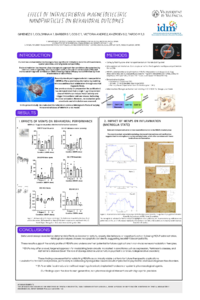
IOCD2025 Effect of intracerebral Magnetoelectric nanoparticles on behavioral outcomes (100 x 175 cm).pdf
Prevalence and Co-Infection of Mycoplasma genitalium and Gardnerella vaginalis Among Moroccan Women: Implications for Sexual and Reproductive Health
Metabolic Disease and Coronary Risk: Biomarker and Pathway Signatures in T2DM-Driven Atherosclerosis