Event submissions
Published
This submission belongs to the session S1. Plant, Animal, Insect and Microbial Toxins: New Developments of the event The 3rd International Online Conference on Toxins
Published date
08 Sep, 2025
Academic Editor
'%3e%3cpath%20d='M12.6657%2010.9104C12.4185%2010.325%2012.0599%209.79327%2011.6097%209.34482C11.1609%208.89508%2010.6293%208.5365%2010.0442%208.28888C10.0389%208.28626%2010.0337%208.28495%2010.0285%208.28233C10.8446%207.69279%2011.3752%206.73249%2011.3752%205.64904C11.3752%203.8542%209.92103%202.39999%208.1262%202.39999C6.33136%202.39999%204.87715%203.8542%204.87715%205.64904C4.87715%206.73249%205.40774%207.69279%206.22393%208.28364C6.21869%208.28626%206.21345%208.28757%206.20821%208.29019C5.62129%208.5378%205.09463%208.89284%204.64265%209.34613C4.1929%209.79493%203.83432%2010.3266%203.58671%2010.9117C3.34345%2011.4845%203.21226%2012.0987%203.20023%2012.7209C3.19988%2012.7349%203.20233%2012.7488%203.20744%2012.7619C3.21255%2012.7749%203.22022%2012.7867%203.22998%2012.7968C3.23975%2012.8068%203.25142%2012.8147%203.26431%2012.8202C3.2772%2012.8256%203.29105%2012.8284%203.30504%2012.8284H4.09109C4.14874%2012.8284%204.19459%2012.7825%204.1959%2012.7262C4.2221%2011.7148%204.62823%2010.7676%205.34617%2010.0497C6.08899%209.30683%207.0755%208.89808%208.1262%208.89808C9.17689%208.89808%2010.1634%209.30683%2010.9062%2010.0497C11.6242%2010.7676%2012.0303%2011.7148%2012.0565%2012.7262C12.0578%2012.7838%2012.1037%2012.8284%2012.1613%2012.8284H12.9474C12.9613%2012.8284%2012.9752%2012.8256%2012.9881%2012.8202C13.001%2012.8147%2013.0126%2012.8068%2013.0224%2012.7968C13.0322%2012.7867%2013.0398%2012.7749%2013.0449%2012.7619C13.0501%2012.7488%2013.0525%2012.7349%2013.0522%2012.7209C13.0391%2012.0947%2012.9094%2011.4855%2012.6657%2010.9104ZM8.1262%207.9024C7.52486%207.9024%206.9589%207.6679%206.53312%207.24211C6.10733%206.81633%205.87283%206.25037%205.87283%205.64904C5.87283%205.0477%206.10733%204.48174%206.53312%204.05596C6.9589%203.63018%207.52486%203.39567%208.1262%203.39567C8.72753%203.39567%209.29349%203.63018%209.71927%204.05596C10.1451%204.48174%2010.3796%205.0477%2010.3796%205.64904C10.3796%206.25037%2010.1451%206.81633%209.71927%207.24211C9.29349%207.6679%208.72753%207.9024%208.1262%207.9024Z'%20fill='%235D1EE1'/%3e%3c/g%3e%3c/svg%3e) Joseph Barbieri
Joseph BarbieriCitation
Ajinkya Kishor Unawane, Gotravalli V Rudresha, Prasad Gopalkrishna Gond, Kartik Sunagar, Sanjay Sopan Kharat, Unveiling the Venom Complexity of Hypnale hypnale: Regional Variation, Transcriptomics, and Clinical Implications from the Western Ghats, India, in Proceedings of The 3rd International Online Conference on Toxins, 10 September–12 September 2025, MDPI: Basel, Switzerland
Share
Email
Facebook
Twitter
LinkedIn
Unveiling the Venom Complexity of Hypnale hypnale: Regional Variation, Transcriptomics, and Clinical Implications from the Western Ghats, India
'%3e%3cpath%20d='M12.6647%2010.9104C12.4176%2010.325%2012.0589%209.7933%2011.6088%209.34485C11.16%208.89511%2010.6283%208.53653%2010.0432%208.28891C10.038%208.28629%2010.0327%208.28498%2010.0275%208.28236C10.8437%207.69282%2011.3743%206.73252%2011.3743%205.64907C11.3743%203.85423%209.92005%202.40002%208.12522%202.40002C6.33038%202.40002%204.87618%203.85423%204.87618%205.64907C4.87618%206.73252%205.40677%207.69282%206.22296%208.28367C6.21772%208.28629%206.21248%208.2876%206.20724%208.29022C5.62031%208.53783%205.09365%208.89287%204.64167%209.34616C4.19192%209.79496%203.83334%2010.3266%203.58573%2010.9117C3.34247%2011.4846%203.21128%2012.0987%203.19925%2012.721C3.1989%2012.735%203.20135%2012.7489%203.20646%2012.7619C3.21157%2012.7749%203.21924%2012.7868%203.22901%2012.7968C3.23877%2012.8068%203.25045%2012.8148%203.26334%2012.8202C3.27623%2012.8256%203.29007%2012.8284%203.30406%2012.8284H4.09012C4.14776%2012.8284%204.19362%2012.7825%204.19493%2012.7262C4.22113%2011.7148%204.62726%2010.7676%205.34519%2010.0497C6.08802%209.30686%207.07452%208.89811%208.12522%208.89811C9.17592%208.89811%2010.1624%209.30686%2010.9052%2010.0497C11.6232%2010.7676%2012.0293%2011.7148%2012.0555%2012.7262C12.0568%2012.7839%2012.1027%2012.8284%2012.1603%2012.8284H12.9464C12.9604%2012.8284%2012.9742%2012.8256%2012.9871%2012.8202C13%2012.8148%2013.0117%2012.8068%2013.0214%2012.7968C13.0312%2012.7868%2013.0389%2012.7749%2013.044%2012.7619C13.0491%2012.7489%2013.0515%2012.735%2013.0512%2012.721C13.0381%2012.0947%2012.9084%2011.4856%2012.6647%2010.9104ZM8.12522%207.90243C7.52388%207.90243%206.95792%207.66793%206.53214%207.24215C6.10636%206.81636%205.87185%206.2504%205.87185%205.64907C5.87185%205.04773%206.10636%204.48177%206.53214%204.05599C6.95792%203.63021%207.52388%203.3957%208.12522%203.3957C8.72655%203.3957%209.29252%203.63021%209.7183%204.05599C10.1441%204.48177%2010.3786%205.04773%2010.3786%205.64907C10.3786%206.2504%2010.1441%206.81636%209.7183%207.24215C9.29252%207.66793%208.72655%207.90243%208.12522%207.90243Z'%20fill='%235D1EE1'/%3e%3c/g%3e%3c/svg%3e)
Ajinkya Kishor Unawane 1,2
Gotravalli V Rudresha 1

Prasad Gopalkrishna Gond 1
Kartik Sunagar 1
Sanjay Sopan Kharat 2
1. Evolutionary Venomics Lab. Centre for Ecological Sciences, Indian Institute of Science, Bangalore, Karnataka, India
2. Department of Zoology, Modern College of Arts, Science and Commerce, Savitribai Phule Pune University, Ganeshkhind, Pune, India
Abstract
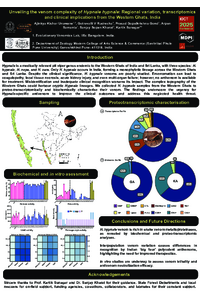
The genus Hypnale, endemic to the Western Ghats of India and Sri Lanka, comprises three valid species: Hypnale hypnale, Hypnale nepa, and Hypnale zara. Of these, H. nepa and H. zara are restricted to Sri Lanka, while H. hypnale is the only species present in India, where it forms a monophyletic lineage endemic to the Western Ghats and Sri Lanka. Despite its medical significance, the hump-nosed pit viper (Hypnale hypnale) remains understudied in venom research and neglected in antivenom development. Currently, India’s polyvalent antivenom targets only the "big four" Indian snakes [Russell’s viper (Daboia russelii), Echis carinatus, Naja naja, and Bungarus caeruleus), showing limited efficacy against Hypnale envenomation. Misidentification and inadequate clinical management further exacerbate the threat posed by this species, whose venom is known to induce coagulopathy, local tissue damage, acute kidney injury (AKI), and multi-organ failure. The Western Ghats is a recognized biodiversity hotspot, presenting significant potential for the discovery of cryptic or previously undocumented Hypnale species due to their complex topography and underexplored habitats. In this study, for the first time, we collected 35 venom samples of H. hypnale from diverse locations across the Western Ghats. We generated venom gland transcriptomes and undertook biochemical assays to investigate molecular diversity and assess regional venom variation. Our findings underscore the urgent need for Hypnale-specific antivenom formulation to improve treatment outcomes in affected regions.
Keywords
Hypnale hypnale
Venom gland
transcriptomes
morbidity
Western Ghats.
Poster
IOCT2025_Final.pdf
Bothrops jararaca snake venom: a reappraisal of its coagulant activity
The Detection of Ciguatoxins in Fish Species from two hotspot Coastal Areas of Gran Canaria (Spain): A Two-Year Study