Event submissions
Published
This submission belongs to the session S3. Use of Toxins as Tools for Research, Drug Discovery, and Therapeutics of the event The 3rd International Online Conference on Toxins
Published date
08 Sep, 2025
Academic Editor
'%3e%3cpath%20d='M12.6657%2010.9104C12.4185%2010.325%2012.0599%209.79327%2011.6097%209.34482C11.1609%208.89508%2010.6293%208.5365%2010.0442%208.28888C10.0389%208.28626%2010.0337%208.28495%2010.0285%208.28233C10.8446%207.69279%2011.3752%206.73249%2011.3752%205.64904C11.3752%203.8542%209.92103%202.39999%208.1262%202.39999C6.33136%202.39999%204.87715%203.8542%204.87715%205.64904C4.87715%206.73249%205.40774%207.69279%206.22393%208.28364C6.21869%208.28626%206.21345%208.28757%206.20821%208.29019C5.62129%208.5378%205.09463%208.89284%204.64265%209.34613C4.1929%209.79493%203.83432%2010.3266%203.58671%2010.9117C3.34345%2011.4845%203.21226%2012.0987%203.20023%2012.7209C3.19988%2012.7349%203.20233%2012.7488%203.20744%2012.7619C3.21255%2012.7749%203.22022%2012.7867%203.22998%2012.7968C3.23975%2012.8068%203.25142%2012.8147%203.26431%2012.8202C3.2772%2012.8256%203.29105%2012.8284%203.30504%2012.8284H4.09109C4.14874%2012.8284%204.19459%2012.7825%204.1959%2012.7262C4.2221%2011.7148%204.62823%2010.7676%205.34617%2010.0497C6.08899%209.30683%207.0755%208.89808%208.1262%208.89808C9.17689%208.89808%2010.1634%209.30683%2010.9062%2010.0497C11.6242%2010.7676%2012.0303%2011.7148%2012.0565%2012.7262C12.0578%2012.7838%2012.1037%2012.8284%2012.1613%2012.8284H12.9474C12.9613%2012.8284%2012.9752%2012.8256%2012.9881%2012.8202C13.001%2012.8147%2013.0126%2012.8068%2013.0224%2012.7968C13.0322%2012.7867%2013.0398%2012.7749%2013.0449%2012.7619C13.0501%2012.7488%2013.0525%2012.7349%2013.0522%2012.7209C13.0391%2012.0947%2012.9094%2011.4855%2012.6657%2010.9104ZM8.1262%207.9024C7.52486%207.9024%206.9589%207.6679%206.53312%207.24211C6.10733%206.81633%205.87283%206.25037%205.87283%205.64904C5.87283%205.0477%206.10733%204.48174%206.53312%204.05596C6.9589%203.63018%207.52486%203.39567%208.1262%203.39567C8.72753%203.39567%209.29349%203.63018%209.71927%204.05596C10.1451%204.48174%2010.3796%205.0477%2010.3796%205.64904C10.3796%206.25037%2010.1451%206.81633%209.71927%207.24211C9.29349%207.6679%208.72753%207.9024%208.1262%207.9024Z'%20fill='%235D1EE1'/%3e%3c/g%3e%3c/svg%3e) Jay Fox
Jay FoxCitation
Edward S. Gasanoff, Zimu Zhou, Shuhao Zhang, Hanchen Cui, Yanglin Guo, Yuri N. Utkin, Cobra Venom Cytotoxin as a Tool for Probing Polymorphic Transitions, Proton Absorption and Permeability of Membranes Made of Phosphatidylethanolamine or Phosphatidylserine, in Proceedings of The 3rd International Online Conference on Toxins, 10 September–12 September 2025, MDPI: Basel, Switzerland
Share
Email
Facebook
Twitter
LinkedIn
Cobra Venom Cytotoxin as a Tool for Probing Polymorphic Transitions, Proton Absorption and Permeability of Membranes Made of Phosphatidylethanolamine or Phosphatidylserine
'%3e%3cpath%20d='M12.6647%2010.9104C12.4176%2010.325%2012.0589%209.7933%2011.6088%209.34485C11.16%208.89511%2010.6283%208.53653%2010.0432%208.28891C10.038%208.28629%2010.0327%208.28498%2010.0275%208.28236C10.8437%207.69282%2011.3743%206.73252%2011.3743%205.64907C11.3743%203.85423%209.92005%202.40002%208.12522%202.40002C6.33038%202.40002%204.87618%203.85423%204.87618%205.64907C4.87618%206.73252%205.40677%207.69282%206.22296%208.28367C6.21772%208.28629%206.21248%208.2876%206.20724%208.29022C5.62031%208.53783%205.09365%208.89287%204.64167%209.34616C4.19192%209.79496%203.83334%2010.3266%203.58573%2010.9117C3.34247%2011.4846%203.21128%2012.0987%203.19925%2012.721C3.1989%2012.735%203.20135%2012.7489%203.20646%2012.7619C3.21157%2012.7749%203.21924%2012.7868%203.22901%2012.7968C3.23877%2012.8068%203.25045%2012.8148%203.26334%2012.8202C3.27623%2012.8256%203.29007%2012.8284%203.30406%2012.8284H4.09012C4.14776%2012.8284%204.19362%2012.7825%204.19493%2012.7262C4.22113%2011.7148%204.62726%2010.7676%205.34519%2010.0497C6.08802%209.30686%207.07452%208.89811%208.12522%208.89811C9.17592%208.89811%2010.1624%209.30686%2010.9052%2010.0497C11.6232%2010.7676%2012.0293%2011.7148%2012.0555%2012.7262C12.0568%2012.7839%2012.1027%2012.8284%2012.1603%2012.8284H12.9464C12.9604%2012.8284%2012.9742%2012.8256%2012.9871%2012.8202C13%2012.8148%2013.0117%2012.8068%2013.0214%2012.7968C13.0312%2012.7868%2013.0389%2012.7749%2013.044%2012.7619C13.0491%2012.7489%2013.0515%2012.735%2013.0512%2012.721C13.0381%2012.0947%2012.9084%2011.4856%2012.6647%2010.9104ZM8.12522%207.90243C7.52388%207.90243%206.95792%207.66793%206.53214%207.24215C6.10636%206.81636%205.87185%206.2504%205.87185%205.64907C5.87185%205.04773%206.10636%204.48177%206.53214%204.05599C6.95792%203.63021%207.52388%203.3957%208.12522%203.3957C8.72655%203.3957%209.29252%203.63021%209.7183%204.05599C10.1441%204.48177%2010.3786%205.04773%2010.3786%205.64907C10.3786%206.2504%2010.1441%206.81636%209.7183%207.24215C9.29252%207.66793%208.72655%207.90243%208.12522%207.90243Z'%20fill='%235D1EE1'/%3e%3c/g%3e%3c/svg%3e)
Edward S. Gasanoff 1,2
Zimu Zhou 2
Shuhao Zhang 2
Hanchen Cui 2
Yanglin Guo 2

Yuri N. Utkin 3
1. Belozersky Institute of Physico-Chemical Biology, M.V. Lomonosov Moscow State University, Moscow 119991, Russia
2. Advanced STEM Research Center, Beijing Chaoyang KaiWen Academy, Beijing 100018, China
3. Shemyakin–Ovchinnikov Institute of Bioorganic Chemistry, Russian Academy of Sciences, Moscow 117997, Russia
Abstract
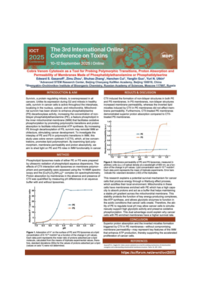
Introduction: Survivin, a protein regulating mitosis, is overexpressed in all cancers. Unlike its expression during G2 and mitosis in healthy cells, survivin in cancer cells is active throughout the interphase, localizing in the nucleus, cytosol, and mitochondria. Mitochondrial survivin has been shown to enhance phosphatidylserine (PS) decarboxylase activity, increasing the concentration of non-bilayer phosphatidylethanolamine (PE), a feature phospholipid in the inner mitochondrial membrane (IMM) that facilitates oxidative phosphorylation by promoting polymorphic transitions and proton absorption to facilitate mitochondrial ATP synthesis. By increasing PE through decarboxylation of PS, survivin may remodel IMM architecture, stimulating cancer development. To investigate the interplay of PE and PS in polymorphic transitions in IMM, this study uses cobra venom cytotoxin II (CTII), which, at low concentrations, promotes lipid polymorphism. By examining lipid polymorphism, membrane permeability and proton absorptivity, we aim to shed light on PE and PS roles in IMM functionality in cancer.
Methods: Phospholipid liposomes made of either PE or PS were prepared by ultrasonic radiation of phospholipid aqueous dispersions. The effects of CTII interaction with liposomes on membrane polymorphism and permeability were assessed using the ¹H-NMR spectroscopy and the [Cu(H2O)2(NH3)4]2+ complex ion spectrophotometry. Proton absorption by membranes in the absence and presence of CTII was quantified by measuring pH differences in an aqueous buffer with and without liposomes.
Results: CTII induced the formation of non-bilayer structures in both PE and PS membranes. In PS membranes, non-bilayer structures increased membrane permeability, whereas the inverted lipid micelles induced by CTII in PE membranes did not affect membrane permeability. Furthermore, CTII-treated PE membranes demonstrated superior proton absorption compared to CTII-treated PS membranes.
Conclusions: Superior proton absorption and the inverted micelles formation triggered by CTII in PE membranes—without compromising membrane permeability—may represent key features of the IMM that enhance ATP production, thereby supporting the accelerated proliferation of cancer cells.
Keywords
Cobra venom cytotoxin
phosphatidylethanolamine
phosphatidylserine
inverted lipid micelles
membrane proton absorptivity
cancer
Poster
Sciforum-124711.pdf
First Insight into the Binding of Microcystin-LR and Cylindrospermopsin to Estrogen and Androgen Receptors via In Silico Molecular Docking
Identification of potential metabolites of Cylindrospermopsin and Microcystin-LR and effects on brain oxidative stress biomarkers in rats after oral exposure to their mixture