Event submissions
Published
This submission belongs to the session S3. Bioinspired Materials—Structures, Surfaces and Interfaces of the event The 2nd International Online Conference on Biomimetics
Published date
15 Sep, 2025
Academic Editor
'%3e%3cpath%20d='M12.6657%2010.9104C12.4185%2010.325%2012.0599%209.79327%2011.6097%209.34482C11.1609%208.89508%2010.6293%208.5365%2010.0442%208.28888C10.0389%208.28626%2010.0337%208.28495%2010.0285%208.28233C10.8446%207.69279%2011.3752%206.73249%2011.3752%205.64904C11.3752%203.8542%209.92103%202.39999%208.1262%202.39999C6.33136%202.39999%204.87715%203.8542%204.87715%205.64904C4.87715%206.73249%205.40774%207.69279%206.22393%208.28364C6.21869%208.28626%206.21345%208.28757%206.20821%208.29019C5.62129%208.5378%205.09463%208.89284%204.64265%209.34613C4.1929%209.79493%203.83432%2010.3266%203.58671%2010.9117C3.34345%2011.4845%203.21226%2012.0987%203.20023%2012.7209C3.19988%2012.7349%203.20233%2012.7488%203.20744%2012.7619C3.21255%2012.7749%203.22022%2012.7867%203.22998%2012.7968C3.23975%2012.8068%203.25142%2012.8147%203.26431%2012.8202C3.2772%2012.8256%203.29105%2012.8284%203.30504%2012.8284H4.09109C4.14874%2012.8284%204.19459%2012.7825%204.1959%2012.7262C4.2221%2011.7148%204.62823%2010.7676%205.34617%2010.0497C6.08899%209.30683%207.0755%208.89808%208.1262%208.89808C9.17689%208.89808%2010.1634%209.30683%2010.9062%2010.0497C11.6242%2010.7676%2012.0303%2011.7148%2012.0565%2012.7262C12.0578%2012.7838%2012.1037%2012.8284%2012.1613%2012.8284H12.9474C12.9613%2012.8284%2012.9752%2012.8256%2012.9881%2012.8202C13.001%2012.8147%2013.0126%2012.8068%2013.0224%2012.7968C13.0322%2012.7867%2013.0398%2012.7749%2013.0449%2012.7619C13.0501%2012.7488%2013.0525%2012.7349%2013.0522%2012.7209C13.0391%2012.0947%2012.9094%2011.4855%2012.6657%2010.9104ZM8.1262%207.9024C7.52486%207.9024%206.9589%207.6679%206.53312%207.24211C6.10733%206.81633%205.87283%206.25037%205.87283%205.64904C5.87283%205.0477%206.10733%204.48174%206.53312%204.05596C6.9589%203.63018%207.52486%203.39567%208.1262%203.39567C8.72753%203.39567%209.29349%203.63018%209.71927%204.05596C10.1451%204.48174%2010.3796%205.0477%2010.3796%205.64904C10.3796%206.25037%2010.1451%206.81633%209.71927%207.24211C9.29349%207.6679%208.72753%207.9024%208.1262%207.9024Z'%20fill='%235D1EE1'/%3e%3c/g%3e%3c/svg%3e) Andrew Adamatzky
Andrew AdamatzkyCitation
Eduardo Favret, Noelia Guillén, Lorena Setten, How the cuticle of soil-digging beetles can help us achieve non-stick surfaces for soil tillage tools: a review, in Proceedings of The 2nd International Online Conference on Biomimetics, 16 September–18 September 2025, MDPI: Basel, Switzerland
Share
Email
Facebook
Twitter
LinkedIn
How the cuticle of soil-digging beetles can help us achieve non-stick surfaces for soil tillage tools: a review
'%3e%3cpath%20d='M12.6647%2010.9104C12.4176%2010.325%2012.0589%209.7933%2011.6088%209.34485C11.16%208.89511%2010.6283%208.53653%2010.0432%208.28891C10.038%208.28629%2010.0327%208.28498%2010.0275%208.28236C10.8437%207.69282%2011.3743%206.73252%2011.3743%205.64907C11.3743%203.85423%209.92005%202.40002%208.12522%202.40002C6.33038%202.40002%204.87618%203.85423%204.87618%205.64907C4.87618%206.73252%205.40677%207.69282%206.22296%208.28367C6.21772%208.28629%206.21248%208.2876%206.20724%208.29022C5.62031%208.53783%205.09365%208.89287%204.64167%209.34616C4.19192%209.79496%203.83334%2010.3266%203.58573%2010.9117C3.34247%2011.4846%203.21128%2012.0987%203.19925%2012.721C3.1989%2012.735%203.20135%2012.7489%203.20646%2012.7619C3.21157%2012.7749%203.21924%2012.7868%203.22901%2012.7968C3.23877%2012.8068%203.25045%2012.8148%203.26334%2012.8202C3.27623%2012.8256%203.29007%2012.8284%203.30406%2012.8284H4.09012C4.14776%2012.8284%204.19362%2012.7825%204.19493%2012.7262C4.22113%2011.7148%204.62726%2010.7676%205.34519%2010.0497C6.08802%209.30686%207.07452%208.89811%208.12522%208.89811C9.17592%208.89811%2010.1624%209.30686%2010.9052%2010.0497C11.6232%2010.7676%2012.0293%2011.7148%2012.0555%2012.7262C12.0568%2012.7839%2012.1027%2012.8284%2012.1603%2012.8284H12.9464C12.9604%2012.8284%2012.9742%2012.8256%2012.9871%2012.8202C13%2012.8148%2013.0117%2012.8068%2013.0214%2012.7968C13.0312%2012.7868%2013.0389%2012.7749%2013.044%2012.7619C13.0491%2012.7489%2013.0515%2012.735%2013.0512%2012.721C13.0381%2012.0947%2012.9084%2011.4856%2012.6647%2010.9104ZM8.12522%207.90243C7.52388%207.90243%206.95792%207.66793%206.53214%207.24215C6.10636%206.81636%205.87185%206.2504%205.87185%205.64907C5.87185%205.04773%206.10636%204.48177%206.53214%204.05599C6.95792%203.63021%207.52388%203.3957%208.12522%203.3957C8.72655%203.3957%209.29252%203.63021%209.7183%204.05599C10.1441%204.48177%2010.3786%205.04773%2010.3786%205.64907C10.3786%206.2504%2010.1441%206.81636%209.7183%207.24215C9.29252%207.66793%208.72655%207.90243%208.12522%207.90243Z'%20fill='%235D1EE1'/%3e%3c/g%3e%3c/svg%3e)
Eduardo Favret 1,2,3
Noelia Guillén 1
Lorena Setten 1
1. Instituto de Suelos, INTA, Hurlingham, 1686, República Argentina
2. CONICET, Ciudad de Buenos Aires, C1425FQB CABA, República Argentina
3. Instituto Sabato, UNSAM - CNEA, San Martín, 1650, República Argentina
Abstract
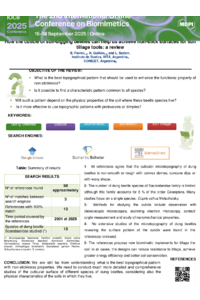
Over the last 25 years, numerous studies on soil-digging animals have been published. Many of them are focused on analyzing the characteristics of the cuticle of soil-digging beetles to find what variables of the topographical pattern lead to non-stickiness, seeking to apply this functional property to soil tillage tools.
The great diversity of soil-dwelling species makes it possible to approach studies from different angles. Over the last several years, our group has been investigating this topic by microscopically observing specimens and cuticle replicates. We are currently focused on analyzing different species of the Scarabidae family. These dung beetles are insects that play a crucial role in the ecosystem, feeding and breeding in the dung of herbivorous animals.
The present paper is a general review of scientific works related to soil anti-adherence through the study of soil-digging beetles. Many questions emerged after reading the prevailing literature on the subject, including the following: What is the best topographical pattern that should be used to enhance the functional property of non-stickiness? Is it possible to find a characteristic pattern common to all species? Will such a pattern depend on the physical properties of the soil where these beetle species live? And, is it more effective to use topographic patterns with protrusions or dimples?
The conclusion of this review is that we are still far from understanding what the best physical conditions of the topographic pattern are to achieve an optimal anti-adhesion function. We are far from finding the optimal pattern, if it even exists.
Keywords
Soil antiadhesion
Soil-digging beetles
tillage tools
topographical pattern
Poster
Poster_IOCB 2025_Final_With QR.pdf
Self-Healing Electro-Stimulating Implants – A Step Toward Regenerative Neurology
Bio-Inspired Underwater Robots: A Review