Event submissions
Published
This submission belongs to the session S5. Computational Antibody Engineering of the event The 1st International Online Conference by Antibodies
Published date
07 Oct, 2025
Academic Editor
'%3e%3cpath%20d='M12.6657%2010.9104C12.4185%2010.325%2012.0599%209.79327%2011.6097%209.34482C11.1609%208.89508%2010.6293%208.5365%2010.0442%208.28888C10.0389%208.28626%2010.0337%208.28495%2010.0285%208.28233C10.8446%207.69279%2011.3752%206.73249%2011.3752%205.64904C11.3752%203.8542%209.92103%202.39999%208.1262%202.39999C6.33136%202.39999%204.87715%203.8542%204.87715%205.64904C4.87715%206.73249%205.40774%207.69279%206.22393%208.28364C6.21869%208.28626%206.21345%208.28757%206.20821%208.29019C5.62129%208.5378%205.09463%208.89284%204.64265%209.34613C4.1929%209.79493%203.83432%2010.3266%203.58671%2010.9117C3.34345%2011.4845%203.21226%2012.0987%203.20023%2012.7209C3.19988%2012.7349%203.20233%2012.7488%203.20744%2012.7619C3.21255%2012.7749%203.22022%2012.7867%203.22998%2012.7968C3.23975%2012.8068%203.25142%2012.8147%203.26431%2012.8202C3.2772%2012.8256%203.29105%2012.8284%203.30504%2012.8284H4.09109C4.14874%2012.8284%204.19459%2012.7825%204.1959%2012.7262C4.2221%2011.7148%204.62823%2010.7676%205.34617%2010.0497C6.08899%209.30683%207.0755%208.89808%208.1262%208.89808C9.17689%208.89808%2010.1634%209.30683%2010.9062%2010.0497C11.6242%2010.7676%2012.0303%2011.7148%2012.0565%2012.7262C12.0578%2012.7838%2012.1037%2012.8284%2012.1613%2012.8284H12.9474C12.9613%2012.8284%2012.9752%2012.8256%2012.9881%2012.8202C13.001%2012.8147%2013.0126%2012.8068%2013.0224%2012.7968C13.0322%2012.7867%2013.0398%2012.7749%2013.0449%2012.7619C13.0501%2012.7488%2013.0525%2012.7349%2013.0522%2012.7209C13.0391%2012.0947%2012.9094%2011.4855%2012.6657%2010.9104ZM8.1262%207.9024C7.52486%207.9024%206.9589%207.6679%206.53312%207.24211C6.10733%206.81633%205.87283%206.25037%205.87283%205.64904C5.87283%205.0477%206.10733%204.48174%206.53312%204.05596C6.9589%203.63018%207.52486%203.39567%208.1262%203.39567C8.72753%203.39567%209.29349%203.63018%209.71927%204.05596C10.1451%204.48174%2010.3796%205.0477%2010.3796%205.64904C10.3796%206.25037%2010.1451%206.81633%209.71927%207.24211C9.29349%207.6679%208.72753%207.9024%208.1262%207.9024Z'%20fill='%235D1EE1'/%3e%3c/g%3e%3c/svg%3e) Sophia Karagiannis
Sophia KaragiannisCitation
DEEPAK CHAURASIYA, Puja Kumari, From Disorder to Design: Ensemble-Based Computational Antibody Discovery for IDP Targets in Zika Virus, in Proceedings of The 1st International Online Conference by Antibodies, 13 October–14 October 2025, MDPI: Basel, Switzerland
Share
Email
Facebook
Twitter
LinkedIn
From Disorder to Design: Ensemble-Based Computational Antibody Discovery for IDP Targets in Zika Virus
'%3e%3cpath%20d='M12.6647%2010.9104C12.4176%2010.325%2012.0589%209.7933%2011.6088%209.34485C11.16%208.89511%2010.6283%208.53653%2010.0432%208.28891C10.038%208.28629%2010.0327%208.28498%2010.0275%208.28236C10.8437%207.69282%2011.3743%206.73252%2011.3743%205.64907C11.3743%203.85423%209.92005%202.40002%208.12522%202.40002C6.33038%202.40002%204.87618%203.85423%204.87618%205.64907C4.87618%206.73252%205.40677%207.69282%206.22296%208.28367C6.21772%208.28629%206.21248%208.2876%206.20724%208.29022C5.62031%208.53783%205.09365%208.89287%204.64167%209.34616C4.19192%209.79496%203.83334%2010.3266%203.58573%2010.9117C3.34247%2011.4846%203.21128%2012.0987%203.19925%2012.721C3.1989%2012.735%203.20135%2012.7489%203.20646%2012.7619C3.21157%2012.7749%203.21924%2012.7868%203.22901%2012.7968C3.23877%2012.8068%203.25045%2012.8148%203.26334%2012.8202C3.27623%2012.8256%203.29007%2012.8284%203.30406%2012.8284H4.09012C4.14776%2012.8284%204.19362%2012.7825%204.19493%2012.7262C4.22113%2011.7148%204.62726%2010.7676%205.34519%2010.0497C6.08802%209.30686%207.07452%208.89811%208.12522%208.89811C9.17592%208.89811%2010.1624%209.30686%2010.9052%2010.0497C11.6232%2010.7676%2012.0293%2011.7148%2012.0555%2012.7262C12.0568%2012.7839%2012.1027%2012.8284%2012.1603%2012.8284H12.9464C12.9604%2012.8284%2012.9742%2012.8256%2012.9871%2012.8202C13%2012.8148%2013.0117%2012.8068%2013.0214%2012.7968C13.0312%2012.7868%2013.0389%2012.7749%2013.044%2012.7619C13.0491%2012.7489%2013.0515%2012.735%2013.0512%2012.721C13.0381%2012.0947%2012.9084%2011.4856%2012.6647%2010.9104ZM8.12522%207.90243C7.52388%207.90243%206.95792%207.66793%206.53214%207.24215C6.10636%206.81636%205.87185%206.2504%205.87185%205.64907C5.87185%205.04773%206.10636%204.48177%206.53214%204.05599C6.95792%203.63021%207.52388%203.3957%208.12522%203.3957C8.72655%203.3957%209.29252%203.63021%209.7183%204.05599C10.1441%204.48177%2010.3786%205.04773%2010.3786%205.64907C10.3786%206.2504%2010.1441%206.81636%209.7183%207.24215C9.29252%207.66793%208.72655%207.90243%208.12522%207.90243Z'%20fill='%235D1EE1'/%3e%3c/g%3e%3c/svg%3e)
DEEPAK CHAURASIYA 1
Puja Kumari 2
1. Department of Applied Sciences, Indian Institute of Information Technology Allahabad, Prayagraj, 211015 , India
2. ICMR-National Institute for Research In Reproductive and Child Health , Parel, Mumbai
Abstract
Zika virus (ZIKV), a mosquito-borne flavivirus, has emerged as a significant global health concern due to its association with severe neurological complications, including congenital microcephaly and Guillain–Barré syndrome. Despite recurring outbreaks across multiple continents, there are currently no licensed vaccines or specific antiviral therapies available. Previous intrinsic disorder profiling of the ZIKV proteome has revealed that several viral proteins harbour substantial intrinsically disordered regions (IDRs), with particularly high disorder propensity in the non-structural proteins NS4B and NS5, and in the C-terminal tail of the capsid protein. These flexible regions facilitate dynamic interactions with host factors, playing a pivotal role in viral replication, immune modulation, and evasion mechanisms. In this study, we present an open-access, end-to-end in silico antibody design pipeline specifically tailored to target these disordered viral proteins. Consensus IDR prediction was performed using IUPred3, flDPnn, PONDR, and IDPpred, enabling the identification of epitope-rich disordered segments. Structural ensembles for these regions were generated using AlphaFold2 modelling followed by FlexServ sampling to capture conformational heterogeneity. B-cell epitope profiling (BepiPred-3.0, ElliPro) was employed to identify accessible and potentially immunogenic regions, which were then docked to human germline antibody scaffolds sourced from SAbDab using HADDOCK 2.4 and ClusPro. Paratope optimisation was achieved with ABpredict2, while developability and manufacturability assessments were performed using Thera-P. Preliminary docking and scoring indicate that several candidate antibodies display predicted nanomolar-range affinities for the NS4B N-terminal disordered segment and the capsid tail epitopes, with favourable stability and developability profiles. This work demonstrates the feasibility of computational antibody engineering against naturally flexible ZIKV proteins, highlighting the potential of targeting the viral “dark proteome” to develop novel therapeutic interventions.
Keywords
Zika virus
intrinsically disordered proteins
antibody design
NS4B
NS5
capsid
Poster
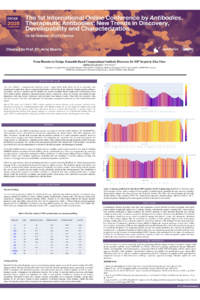
poster zika virus.pdf
Antibody-Functionalized Nanoparticles: A Targeted Drug Delivery Strategy
A broad-spectrum SARS-CoV-2 immunization strategy targeting the highly conserved MPER of the Spike protein