Event submissions
Published
This submission belongs to the session S5. Applications of Metabolomics in Pharmacology and New Drug Development of the event The 4th International Electronic Conference on Metabolomics
Published date
10 Oct, 2025
Academic Editor
'%3e%3cpath%20d='M12.6657%2010.9104C12.4185%2010.325%2012.0599%209.79327%2011.6097%209.34482C11.1609%208.89508%2010.6293%208.5365%2010.0442%208.28888C10.0389%208.28626%2010.0337%208.28495%2010.0285%208.28233C10.8446%207.69279%2011.3752%206.73249%2011.3752%205.64904C11.3752%203.8542%209.92103%202.39999%208.1262%202.39999C6.33136%202.39999%204.87715%203.8542%204.87715%205.64904C4.87715%206.73249%205.40774%207.69279%206.22393%208.28364C6.21869%208.28626%206.21345%208.28757%206.20821%208.29019C5.62129%208.5378%205.09463%208.89284%204.64265%209.34613C4.1929%209.79493%203.83432%2010.3266%203.58671%2010.9117C3.34345%2011.4845%203.21226%2012.0987%203.20023%2012.7209C3.19988%2012.7349%203.20233%2012.7488%203.20744%2012.7619C3.21255%2012.7749%203.22022%2012.7867%203.22998%2012.7968C3.23975%2012.8068%203.25142%2012.8147%203.26431%2012.8202C3.2772%2012.8256%203.29105%2012.8284%203.30504%2012.8284H4.09109C4.14874%2012.8284%204.19459%2012.7825%204.1959%2012.7262C4.2221%2011.7148%204.62823%2010.7676%205.34617%2010.0497C6.08899%209.30683%207.0755%208.89808%208.1262%208.89808C9.17689%208.89808%2010.1634%209.30683%2010.9062%2010.0497C11.6242%2010.7676%2012.0303%2011.7148%2012.0565%2012.7262C12.0578%2012.7838%2012.1037%2012.8284%2012.1613%2012.8284H12.9474C12.9613%2012.8284%2012.9752%2012.8256%2012.9881%2012.8202C13.001%2012.8147%2013.0126%2012.8068%2013.0224%2012.7968C13.0322%2012.7867%2013.0398%2012.7749%2013.0449%2012.7619C13.0501%2012.7488%2013.0525%2012.7349%2013.0522%2012.7209C13.0391%2012.0947%2012.9094%2011.4855%2012.6657%2010.9104ZM8.1262%207.9024C7.52486%207.9024%206.9589%207.6679%206.53312%207.24211C6.10733%206.81633%205.87283%206.25037%205.87283%205.64904C5.87283%205.0477%206.10733%204.48174%206.53312%204.05596C6.9589%203.63018%207.52486%203.39567%208.1262%203.39567C8.72753%203.39567%209.29349%203.63018%209.71927%204.05596C10.1451%204.48174%2010.3796%205.0477%2010.3796%205.64904C10.3796%206.25037%2010.1451%206.81633%209.71927%207.24211C9.29349%207.6679%208.72753%207.9024%208.1262%207.9024Z'%20fill='%235D1EE1'/%3e%3c/g%3e%3c/svg%3e) Ala Nassar
Ala NassarCitation
Desta Gebremedhin Gebrehiwot, Ignacio Hernández, Rikard Landberg, Enrique Durán-Guerrero, Raúl González-Domínguez, Characterization of the bioactive profile of beach-cast seaweeds using a quantitative and large-scale metabolomics approach, in Proceedings of The 4th International Electronic Conference on Metabolomics, 13 October–15 October 2025, MDPI: Basel, Switzerland
Share
Email
Facebook
Twitter
LinkedIn
Characterization of the bioactive profile of beach-cast seaweeds using a quantitative and large-scale metabolomics approach
'%3e%3cpath%20d='M12.6647%2010.9104C12.4176%2010.325%2012.0589%209.7933%2011.6088%209.34485C11.16%208.89511%2010.6283%208.53653%2010.0432%208.28891C10.038%208.28629%2010.0327%208.28498%2010.0275%208.28236C10.8437%207.69282%2011.3743%206.73252%2011.3743%205.64907C11.3743%203.85423%209.92005%202.40002%208.12522%202.40002C6.33038%202.40002%204.87618%203.85423%204.87618%205.64907C4.87618%206.73252%205.40677%207.69282%206.22296%208.28367C6.21772%208.28629%206.21248%208.2876%206.20724%208.29022C5.62031%208.53783%205.09365%208.89287%204.64167%209.34616C4.19192%209.79496%203.83334%2010.3266%203.58573%2010.9117C3.34247%2011.4846%203.21128%2012.0987%203.19925%2012.721C3.1989%2012.735%203.20135%2012.7489%203.20646%2012.7619C3.21157%2012.7749%203.21924%2012.7868%203.22901%2012.7968C3.23877%2012.8068%203.25045%2012.8148%203.26334%2012.8202C3.27623%2012.8256%203.29007%2012.8284%203.30406%2012.8284H4.09012C4.14776%2012.8284%204.19362%2012.7825%204.19493%2012.7262C4.22113%2011.7148%204.62726%2010.7676%205.34519%2010.0497C6.08802%209.30686%207.07452%208.89811%208.12522%208.89811C9.17592%208.89811%2010.1624%209.30686%2010.9052%2010.0497C11.6232%2010.7676%2012.0293%2011.7148%2012.0555%2012.7262C12.0568%2012.7839%2012.1027%2012.8284%2012.1603%2012.8284H12.9464C12.9604%2012.8284%2012.9742%2012.8256%2012.9871%2012.8202C13%2012.8148%2013.0117%2012.8068%2013.0214%2012.7968C13.0312%2012.7868%2013.0389%2012.7749%2013.044%2012.7619C13.0491%2012.7489%2013.0515%2012.735%2013.0512%2012.721C13.0381%2012.0947%2012.9084%2011.4856%2012.6647%2010.9104ZM8.12522%207.90243C7.52388%207.90243%206.95792%207.66793%206.53214%207.24215C6.10636%206.81636%205.87185%206.2504%205.87185%205.64907C5.87185%205.04773%206.10636%204.48177%206.53214%204.05599C6.95792%203.63021%207.52388%203.3957%208.12522%203.3957C8.72655%203.3957%209.29252%203.63021%209.7183%204.05599C10.1441%204.48177%2010.3786%205.04773%2010.3786%205.64907C10.3786%206.2504%2010.1441%206.81636%209.7183%207.24215C9.29252%207.66793%208.72655%207.90243%208.12522%207.90243Z'%20fill='%235D1EE1'/%3e%3c/g%3e%3c/svg%3e)
Desta Gebremedhin Gebrehiwot 1
Ignacio Hernández 2

Rikard Landberg 3

Enrique Durán-Guerrero 2

Raúl González-Domínguez 1
1. Instituto de Investigación e Innovación Biomédica de Cádiz (INiBICA), Universidad de Cádiz, Cádiz, 11009, Spain.
2. Faculty of Sciences, University of Cádiz, Cádiz, 11510, Spain.
3. Division of Food and Nutrition Science, Chalmers University of Technology, Gothenburg, SE-412 96, Sweden.
Abstract
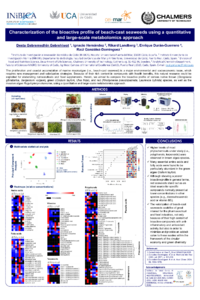
The proliferation and coastal accumulation of marine macroalgae (i.e., beach-cast seaweed) is a major environmental and socioeconomic issue, which requires new management and valorization strategies. In this vein, because of their rich content of compounds with health benefits, this natural resource could be exploited for elaborating nutraceuticals and food supplements. Herein, we aimed to compare the bioactive profile of various native brown (Gongolaria barbata and Sargassum vulgare), green (Codium taylorii and Ulva linza), and red (Rhodymenia pseudopalmata and Laurencia hybrida) species, as well as the invasive algae Rugulopteryx okamurae. To this end, samples were subjected to ultrasonic-assisted extraction and subsequent metabolomics analysis by liquid chromatography–mass spectrometry. Overall, higher levels of most phytochemicals under study were observed in brown algae, especially in Rugulopteryx okamurae, including polyphenols, carotenoids, and phytosterols. On the other hand, many essential amino acids and polyunsaturated fatty acids were found to be particularly abundant in the green algae Codium taylorii. Finally, although showing a poorer bioactive profile in general terms, red seaweeds stand out as an ideal source for specific compounds normally present at lower concentrations in the other aforementioned species, such as docosahexaenoic acid or vitamin B5. In summary, our findings demonstrate that the valorization of beach-cast seaweeds could be of great interest for pharmaceutical and food industries, not only because of their high content of bioactive compounds with anti-inflammatory and antioxidant activity, but also because they can help minimize waste and provide added value to these wastes within the framework of a circular economy and green chemistry.
Keywords
Seaweed
bioactive compounds
metabolomics
valorization
Poster
poster_DGG_Metabolomics.pdf
Adverse neonatal outcomes predispose individuals to exacerbated metabolic disturbances in childhood obesity
HepG2 cells may not be reliable allies for the study of hepatic gluconeogenesis.