Event submissions
Published
This submission belongs to the session S2. Chemical Processes and Systems of the event The 4th International Electronic Conference on Processes
Published date
17 Oct, 2025
Academic Editor
'%3e%3cpath%20d='M12.6657%2010.9104C12.4185%2010.325%2012.0599%209.79327%2011.6097%209.34482C11.1609%208.89508%2010.6293%208.5365%2010.0442%208.28888C10.0389%208.28626%2010.0337%208.28495%2010.0285%208.28233C10.8446%207.69279%2011.3752%206.73249%2011.3752%205.64904C11.3752%203.8542%209.92103%202.39999%208.1262%202.39999C6.33136%202.39999%204.87715%203.8542%204.87715%205.64904C4.87715%206.73249%205.40774%207.69279%206.22393%208.28364C6.21869%208.28626%206.21345%208.28757%206.20821%208.29019C5.62129%208.5378%205.09463%208.89284%204.64265%209.34613C4.1929%209.79493%203.83432%2010.3266%203.58671%2010.9117C3.34345%2011.4845%203.21226%2012.0987%203.20023%2012.7209C3.19988%2012.7349%203.20233%2012.7488%203.20744%2012.7619C3.21255%2012.7749%203.22022%2012.7867%203.22998%2012.7968C3.23975%2012.8068%203.25142%2012.8147%203.26431%2012.8202C3.2772%2012.8256%203.29105%2012.8284%203.30504%2012.8284H4.09109C4.14874%2012.8284%204.19459%2012.7825%204.1959%2012.7262C4.2221%2011.7148%204.62823%2010.7676%205.34617%2010.0497C6.08899%209.30683%207.0755%208.89808%208.1262%208.89808C9.17689%208.89808%2010.1634%209.30683%2010.9062%2010.0497C11.6242%2010.7676%2012.0303%2011.7148%2012.0565%2012.7262C12.0578%2012.7838%2012.1037%2012.8284%2012.1613%2012.8284H12.9474C12.9613%2012.8284%2012.9752%2012.8256%2012.9881%2012.8202C13.001%2012.8147%2013.0126%2012.8068%2013.0224%2012.7968C13.0322%2012.7867%2013.0398%2012.7749%2013.0449%2012.7619C13.0501%2012.7488%2013.0525%2012.7349%2013.0522%2012.7209C13.0391%2012.0947%2012.9094%2011.4855%2012.6657%2010.9104ZM8.1262%207.9024C7.52486%207.9024%206.9589%207.6679%206.53312%207.24211C6.10733%206.81633%205.87283%206.25037%205.87283%205.64904C5.87283%205.0477%206.10733%204.48174%206.53312%204.05596C6.9589%203.63018%207.52486%203.39567%208.1262%203.39567C8.72753%203.39567%209.29349%203.63018%209.71927%204.05596C10.1451%204.48174%2010.3796%205.0477%2010.3796%205.64904C10.3796%206.25037%2010.1451%206.81633%209.71927%207.24211C9.29349%207.6679%208.72753%207.9024%208.1262%207.9024Z'%20fill='%235D1EE1'/%3e%3c/g%3e%3c/svg%3e) Blaž Likozar
Blaž LikozarCitation
Ruzimurod Jurayev, Azimjon Choriyev, Anvar Kabirovich Abdushukurov, Ilyos Normurodov, Synthesis of 2-Naphthyl 2-Chloroacetate and Study of Its Nucleophilic Substitution Reactions with Citric Acid, in Proceedings of The 4th International Electronic Conference on Processes, 20 October–22 October 2025, MDPI: Basel, Switzerland
Share
Email
Facebook
Twitter
LinkedIn
Synthesis of 2-Naphthyl 2-Chloroacetate and Study of Its Nucleophilic Substitution Reactions with Citric Acid

Ruzimurod Jurayev 1
'%3e%3cpath%20d='M12.6647%2010.9104C12.4176%2010.325%2012.0589%209.7933%2011.6088%209.34485C11.16%208.89511%2010.6283%208.53653%2010.0432%208.28891C10.038%208.28629%2010.0327%208.28498%2010.0275%208.28236C10.8437%207.69282%2011.3743%206.73252%2011.3743%205.64907C11.3743%203.85423%209.92005%202.40002%208.12522%202.40002C6.33038%202.40002%204.87618%203.85423%204.87618%205.64907C4.87618%206.73252%205.40677%207.69282%206.22296%208.28367C6.21772%208.28629%206.21248%208.2876%206.20724%208.29022C5.62031%208.53783%205.09365%208.89287%204.64167%209.34616C4.19192%209.79496%203.83334%2010.3266%203.58573%2010.9117C3.34247%2011.4846%203.21128%2012.0987%203.19925%2012.721C3.1989%2012.735%203.20135%2012.7489%203.20646%2012.7619C3.21157%2012.7749%203.21924%2012.7868%203.22901%2012.7968C3.23877%2012.8068%203.25045%2012.8148%203.26334%2012.8202C3.27623%2012.8256%203.29007%2012.8284%203.30406%2012.8284H4.09012C4.14776%2012.8284%204.19362%2012.7825%204.19493%2012.7262C4.22113%2011.7148%204.62726%2010.7676%205.34519%2010.0497C6.08802%209.30686%207.07452%208.89811%208.12522%208.89811C9.17592%208.89811%2010.1624%209.30686%2010.9052%2010.0497C11.6232%2010.7676%2012.0293%2011.7148%2012.0555%2012.7262C12.0568%2012.7839%2012.1027%2012.8284%2012.1603%2012.8284H12.9464C12.9604%2012.8284%2012.9742%2012.8256%2012.9871%2012.8202C13%2012.8148%2013.0117%2012.8068%2013.0214%2012.7968C13.0312%2012.7868%2013.0389%2012.7749%2013.044%2012.7619C13.0491%2012.7489%2013.0515%2012.735%2013.0512%2012.721C13.0381%2012.0947%2012.9084%2011.4856%2012.6647%2010.9104ZM8.12522%207.90243C7.52388%207.90243%206.95792%207.66793%206.53214%207.24215C6.10636%206.81636%205.87185%206.2504%205.87185%205.64907C5.87185%205.04773%206.10636%204.48177%206.53214%204.05599C6.95792%203.63021%207.52388%203.3957%208.12522%203.3957C8.72655%203.3957%209.29252%203.63021%209.7183%204.05599C10.1441%204.48177%2010.3786%205.04773%2010.3786%205.64907C10.3786%206.2504%2010.1441%206.81636%209.7183%207.24215C9.29252%207.66793%208.72655%207.90243%208.12522%207.90243Z'%20fill='%235D1EE1'/%3e%3c/g%3e%3c/svg%3e)
Azimjon Choriyev 2
Anvar Kabirovich Abdushukurov 3
Ilyos Normurodov 1
1. Department of “Chemical Engineering ”, Karshi State Technical University Shahrisabz Faculty of Food Engineering, 20, Shakhrisabz str., Shakhrisabz 181306, Uzbekistan;
2. Karshi Statе University, Kuchabog street, 17, 180103, Karshi, Uzbekistan
3. National University of Uzbekistan name of Mirzo Ulugbek, Universitetskaya street, 4, 100174, Tashkent, Uzbekistan
Abstract
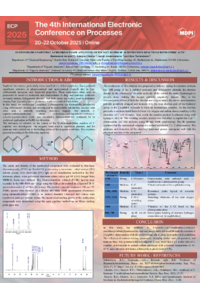
The article analytically and experimentally presents the possibilities for the synthesis of 2-naphthyl 2-chloroacetate. Particular attention is given to the reaction conditions. Based on the literature review, the selective insecticidal activity and chemical properties of 2-naphthol, as well as the features of its nucleophilic substitution reactions with citric acid, are studied. The aim of the research is to develop an efficient method for the synthesis of O-chloroacetylated naphthol and to investigate the nucleophilic substitution reactions of the O-chloroacetylation product with citric acid. The chloracetylation of 2-naphthol in dichloroethane solution without a catalyst leads exclusively to O-acylation, resulting in the formation of 2-naphthyl 2-chloroacetate with a 95% yield. The composition and structure of the synthesized compounds were confirmed by spectroscopic methods. Since the reaction proceeds in dichloroethane without a catalyst, no acylium cation (ion pair) is formed. Therefore, the reaction follows a nucleophilic substitution mechanism at the carbonyl group of the chloroacetyl chloride molecule, yielding an ester product. The oxygen atom in the naphthol molecule serves as the nucleophilic reagent. The nucleophilic substitution products of 2-naphthyl 2-chloroacetate with citric acid were studied using thin-layer chromatography (TLC), and their composition was confirmed with reference substances. The physical constants of 2-naphthyl 2-chloroacetate were determined, and its composition and structure were verified using TLC, IR, and NMR spectroscopy.
Keywords
2-naphthol
chloroacetyl chloride
chloroacetylation
2-naphthyl 2-chloroacetate
nucleophilic substitution
dichloroethane
chromatography
spectroscopy
Poster
SYNTHESIS OF 2-NAPHTHYL.pdf
Processing of gluten-free cupcakes utilizing plant-based Lepidium sativum seed mucilage as a fat replacer
CFD-Based Modeling and Simulation of a Cabinet-Type Solar Dryer for Medicinal Plants