Event submissions
Published
This submission belongs to the session S1. Environmental and Green Processes of the event The 4th International Electronic Conference on Processes
Published date
17 Oct, 2025
Academic Editor
'%3e%3cpath%20d='M12.6657%2010.9104C12.4185%2010.325%2012.0599%209.79327%2011.6097%209.34482C11.1609%208.89508%2010.6293%208.5365%2010.0442%208.28888C10.0389%208.28626%2010.0337%208.28495%2010.0285%208.28233C10.8446%207.69279%2011.3752%206.73249%2011.3752%205.64904C11.3752%203.8542%209.92103%202.39999%208.1262%202.39999C6.33136%202.39999%204.87715%203.8542%204.87715%205.64904C4.87715%206.73249%205.40774%207.69279%206.22393%208.28364C6.21869%208.28626%206.21345%208.28757%206.20821%208.29019C5.62129%208.5378%205.09463%208.89284%204.64265%209.34613C4.1929%209.79493%203.83432%2010.3266%203.58671%2010.9117C3.34345%2011.4845%203.21226%2012.0987%203.20023%2012.7209C3.19988%2012.7349%203.20233%2012.7488%203.20744%2012.7619C3.21255%2012.7749%203.22022%2012.7867%203.22998%2012.7968C3.23975%2012.8068%203.25142%2012.8147%203.26431%2012.8202C3.2772%2012.8256%203.29105%2012.8284%203.30504%2012.8284H4.09109C4.14874%2012.8284%204.19459%2012.7825%204.1959%2012.7262C4.2221%2011.7148%204.62823%2010.7676%205.34617%2010.0497C6.08899%209.30683%207.0755%208.89808%208.1262%208.89808C9.17689%208.89808%2010.1634%209.30683%2010.9062%2010.0497C11.6242%2010.7676%2012.0303%2011.7148%2012.0565%2012.7262C12.0578%2012.7838%2012.1037%2012.8284%2012.1613%2012.8284H12.9474C12.9613%2012.8284%2012.9752%2012.8256%2012.9881%2012.8202C13.001%2012.8147%2013.0126%2012.8068%2013.0224%2012.7968C13.0322%2012.7867%2013.0398%2012.7749%2013.0449%2012.7619C13.0501%2012.7488%2013.0525%2012.7349%2013.0522%2012.7209C13.0391%2012.0947%2012.9094%2011.4855%2012.6657%2010.9104ZM8.1262%207.9024C7.52486%207.9024%206.9589%207.6679%206.53312%207.24211C6.10733%206.81633%205.87283%206.25037%205.87283%205.64904C5.87283%205.0477%206.10733%204.48174%206.53312%204.05596C6.9589%203.63018%207.52486%203.39567%208.1262%203.39567C8.72753%203.39567%209.29349%203.63018%209.71927%204.05596C10.1451%204.48174%2010.3796%205.0477%2010.3796%205.64904C10.3796%206.25037%2010.1451%206.81633%209.71927%207.24211C9.29349%207.6679%208.72753%207.9024%208.1262%207.9024Z'%20fill='%235D1EE1'/%3e%3c/g%3e%3c/svg%3e) Young-Cheol Chang
Young-Cheol ChangCitation
Vincy Antoney, Gayathri Padinchare Veettil, Divya Nair, Telsa T., Sreelakshmi M.G, Sneha V.S, Thara Surendran, ADVANCED OXIDATION PROCESS FOR THE DECONTAMINATION OF TETRACYCLINE FROM WASTEWATER USING IMMOBILIZED MAGNETITE., in Proceedings of The 4th International Electronic Conference on Processes, 20 October–22 October 2025, MDPI: Basel, Switzerland
Share
Email
Facebook
Twitter
LinkedIn
ADVANCED OXIDATION PROCESS FOR THE DECONTAMINATION OF TETRACYCLINE FROM WASTEWATER USING IMMOBILIZED MAGNETITE.

Vincy Antoney 1
'%3e%3cpath%20d='M12.6647%2010.9104C12.4176%2010.325%2012.0589%209.7933%2011.6088%209.34485C11.16%208.89511%2010.6283%208.53653%2010.0432%208.28891C10.038%208.28629%2010.0327%208.28498%2010.0275%208.28236C10.8437%207.69282%2011.3743%206.73252%2011.3743%205.64907C11.3743%203.85423%209.92005%202.40002%208.12522%202.40002C6.33038%202.40002%204.87618%203.85423%204.87618%205.64907C4.87618%206.73252%205.40677%207.69282%206.22296%208.28367C6.21772%208.28629%206.21248%208.2876%206.20724%208.29022C5.62031%208.53783%205.09365%208.89287%204.64167%209.34616C4.19192%209.79496%203.83334%2010.3266%203.58573%2010.9117C3.34247%2011.4846%203.21128%2012.0987%203.19925%2012.721C3.1989%2012.735%203.20135%2012.7489%203.20646%2012.7619C3.21157%2012.7749%203.21924%2012.7868%203.22901%2012.7968C3.23877%2012.8068%203.25045%2012.8148%203.26334%2012.8202C3.27623%2012.8256%203.29007%2012.8284%203.30406%2012.8284H4.09012C4.14776%2012.8284%204.19362%2012.7825%204.19493%2012.7262C4.22113%2011.7148%204.62726%2010.7676%205.34519%2010.0497C6.08802%209.30686%207.07452%208.89811%208.12522%208.89811C9.17592%208.89811%2010.1624%209.30686%2010.9052%2010.0497C11.6232%2010.7676%2012.0293%2011.7148%2012.0555%2012.7262C12.0568%2012.7839%2012.1027%2012.8284%2012.1603%2012.8284H12.9464C12.9604%2012.8284%2012.9742%2012.8256%2012.9871%2012.8202C13%2012.8148%2013.0117%2012.8068%2013.0214%2012.7968C13.0312%2012.7868%2013.0389%2012.7749%2013.044%2012.7619C13.0491%2012.7489%2013.0515%2012.735%2013.0512%2012.721C13.0381%2012.0947%2012.9084%2011.4856%2012.6647%2010.9104ZM8.12522%207.90243C7.52388%207.90243%206.95792%207.66793%206.53214%207.24215C6.10636%206.81636%205.87185%206.2504%205.87185%205.64907C5.87185%205.04773%206.10636%204.48177%206.53214%204.05599C6.95792%203.63021%207.52388%203.3957%208.12522%203.3957C8.72655%203.3957%209.29252%203.63021%209.7183%204.05599C10.1441%204.48177%2010.3786%205.04773%2010.3786%205.64907C10.3786%206.2504%2010.1441%206.81636%209.7183%207.24215C9.29252%207.66793%208.72655%207.90243%208.12522%207.90243Z'%20fill='%235D1EE1'/%3e%3c/g%3e%3c/svg%3e)
Gayathri Padinchare Veettil 2
Divya Nair 3
Telsa T. 1
Sreelakshmi M.G 1
Sneha V.S 1
Thara Surendran 1
1. St.Alberts College (autonomous), Kochi, Ernakulam, Kerala, India 682018
2. Sree Narayana Gurukulam College of Engineering (SNGCE), Kadayiruppu P.O, Kolenchery, Ernakulam, Kerala, Pin 682311, India
3. Department of Climate Variability and Aquatic Ecosystems, Kerala University of Fisheries and Ocean Studies,Puduveypu P O, Kochi 682508, Kerala, India
Abstract
Pollution due to pharmaceutical contaminants has emerged as a significant ecological issue, affecting water quality, marine ecosystems, and humans across the globe. Due to the increasing concern over pharmaceutical pollutants, effective and sustainable treatment methods are of critical need. This study investigates the solar-assisted photocatalytic degradation of tetracycline hydrochloride (TCT), a persistent pharmaceutical contaminant in aqueous systems, using magnetite nanoparticles as immobilized catalyst. The catalyst was synthesized using a precipitation method. Key operational variables influencing degradation efficiency were systematically analyzed. The degradation followed pseudo-first-order kinetics with approximately 48% TCT removal within 30 minutes and up to 99% within 120 minutes under sunlight exposure. The introduction of a Fenton reagent notably enhanced the photocatalytic performance. The synthesized catalyst was characterized using various techniques. The process also contributed to a reduction in chemical oxygen demand (COD), and by using liquid chromatography–mass spectrometry (LC-MS), the intermediates during the degradation were identified. The catalyst reusability tests indicated minimal loss in activity over successive cycles. These findings highlight the viability of integrating solar energy with immobilized magnetite nanocatalysts for sustainable wastewater treatment, offering an effective method for removing antibiotic residues and promoting water reuse. Future research should focus on exploring new magnetite composites and the potential for integrating this technology with real-world applications.
Keywords
photocatalytic degradation
tetracycline
magnetite
sunlight
Fenton reagent
Poster
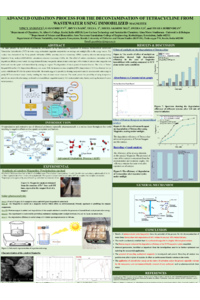
Sciforum-135153-Vincy et al.pdf
Enhancing biogas production using Organic Waste as Clean Energy for sustainable development
Methanol production via the gasification of waste polyethylene: simulation on Aspen Plus