Event submissions
Published
This submission belongs to the session S1. Environmental and Green Processes of the event The 4th International Electronic Conference on Processes
Published date
17 Oct, 2025
Academic Editor
'%3e%3cpath%20d='M12.6657%2010.9104C12.4185%2010.325%2012.0599%209.79327%2011.6097%209.34482C11.1609%208.89508%2010.6293%208.5365%2010.0442%208.28888C10.0389%208.28626%2010.0337%208.28495%2010.0285%208.28233C10.8446%207.69279%2011.3752%206.73249%2011.3752%205.64904C11.3752%203.8542%209.92103%202.39999%208.1262%202.39999C6.33136%202.39999%204.87715%203.8542%204.87715%205.64904C4.87715%206.73249%205.40774%207.69279%206.22393%208.28364C6.21869%208.28626%206.21345%208.28757%206.20821%208.29019C5.62129%208.5378%205.09463%208.89284%204.64265%209.34613C4.1929%209.79493%203.83432%2010.3266%203.58671%2010.9117C3.34345%2011.4845%203.21226%2012.0987%203.20023%2012.7209C3.19988%2012.7349%203.20233%2012.7488%203.20744%2012.7619C3.21255%2012.7749%203.22022%2012.7867%203.22998%2012.7968C3.23975%2012.8068%203.25142%2012.8147%203.26431%2012.8202C3.2772%2012.8256%203.29105%2012.8284%203.30504%2012.8284H4.09109C4.14874%2012.8284%204.19459%2012.7825%204.1959%2012.7262C4.2221%2011.7148%204.62823%2010.7676%205.34617%2010.0497C6.08899%209.30683%207.0755%208.89808%208.1262%208.89808C9.17689%208.89808%2010.1634%209.30683%2010.9062%2010.0497C11.6242%2010.7676%2012.0303%2011.7148%2012.0565%2012.7262C12.0578%2012.7838%2012.1037%2012.8284%2012.1613%2012.8284H12.9474C12.9613%2012.8284%2012.9752%2012.8256%2012.9881%2012.8202C13.001%2012.8147%2013.0126%2012.8068%2013.0224%2012.7968C13.0322%2012.7867%2013.0398%2012.7749%2013.0449%2012.7619C13.0501%2012.7488%2013.0525%2012.7349%2013.0522%2012.7209C13.0391%2012.0947%2012.9094%2011.4855%2012.6657%2010.9104ZM8.1262%207.9024C7.52486%207.9024%206.9589%207.6679%206.53312%207.24211C6.10733%206.81633%205.87283%206.25037%205.87283%205.64904C5.87283%205.0477%206.10733%204.48174%206.53312%204.05596C6.9589%203.63018%207.52486%203.39567%208.1262%203.39567C8.72753%203.39567%209.29349%203.63018%209.71927%204.05596C10.1451%204.48174%2010.3796%205.0477%2010.3796%205.64904C10.3796%206.25037%2010.1451%206.81633%209.71927%207.24211C9.29349%207.6679%208.72753%207.9024%208.1262%207.9024Z'%20fill='%235D1EE1'/%3e%3c/g%3e%3c/svg%3e) Young-Cheol Chang
Young-Cheol ChangCitation
Yusuf Cemal İŞBUĞA, Hybrid Electric–Pneumatic Propulsion System for Sustainable Urban Transportation: Design and Energy Management Optimization, in Proceedings of The 4th International Electronic Conference on Processes, 20 October–22 October 2025, MDPI: Basel, Switzerland
Share
Email
Facebook
Twitter
LinkedIn
Hybrid Electric–Pneumatic Propulsion System for Sustainable Urban Transportation: Design and Energy Management Optimization
'%3e%3cpath%20d='M12.6647%2010.9104C12.4176%2010.325%2012.0589%209.7933%2011.6088%209.34485C11.16%208.89511%2010.6283%208.53653%2010.0432%208.28891C10.038%208.28629%2010.0327%208.28498%2010.0275%208.28236C10.8437%207.69282%2011.3743%206.73252%2011.3743%205.64907C11.3743%203.85423%209.92005%202.40002%208.12522%202.40002C6.33038%202.40002%204.87618%203.85423%204.87618%205.64907C4.87618%206.73252%205.40677%207.69282%206.22296%208.28367C6.21772%208.28629%206.21248%208.2876%206.20724%208.29022C5.62031%208.53783%205.09365%208.89287%204.64167%209.34616C4.19192%209.79496%203.83334%2010.3266%203.58573%2010.9117C3.34247%2011.4846%203.21128%2012.0987%203.19925%2012.721C3.1989%2012.735%203.20135%2012.7489%203.20646%2012.7619C3.21157%2012.7749%203.21924%2012.7868%203.22901%2012.7968C3.23877%2012.8068%203.25045%2012.8148%203.26334%2012.8202C3.27623%2012.8256%203.29007%2012.8284%203.30406%2012.8284H4.09012C4.14776%2012.8284%204.19362%2012.7825%204.19493%2012.7262C4.22113%2011.7148%204.62726%2010.7676%205.34519%2010.0497C6.08802%209.30686%207.07452%208.89811%208.12522%208.89811C9.17592%208.89811%2010.1624%209.30686%2010.9052%2010.0497C11.6232%2010.7676%2012.0293%2011.7148%2012.0555%2012.7262C12.0568%2012.7839%2012.1027%2012.8284%2012.1603%2012.8284H12.9464C12.9604%2012.8284%2012.9742%2012.8256%2012.9871%2012.8202C13%2012.8148%2013.0117%2012.8068%2013.0214%2012.7968C13.0312%2012.7868%2013.0389%2012.7749%2013.044%2012.7619C13.0491%2012.7489%2013.0515%2012.735%2013.0512%2012.721C13.0381%2012.0947%2012.9084%2011.4856%2012.6647%2010.9104ZM8.12522%207.90243C7.52388%207.90243%206.95792%207.66793%206.53214%207.24215C6.10636%206.81636%205.87185%206.2504%205.87185%205.64907C5.87185%205.04773%206.10636%204.48177%206.53214%204.05599C6.95792%203.63021%207.52388%203.3957%208.12522%203.3957C8.72655%203.3957%209.29252%203.63021%209.7183%204.05599C10.1441%204.48177%2010.3786%205.04773%2010.3786%205.64907C10.3786%206.2504%2010.1441%206.81636%209.7183%207.24215C9.29252%207.66793%208.72655%207.90243%208.12522%207.90243Z'%20fill='%235D1EE1'/%3e%3c/g%3e%3c/svg%3e)
Yusuf Cemal İŞBUĞA 1
1. Türkiye-İstanbul-34480
Abstract
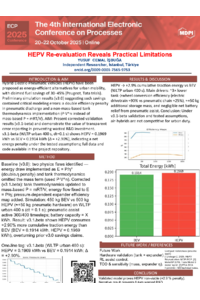
Urban transportation necessitates the development of efficient and sustainable propulsion technologies capable of adapting to future infrastructure. This study presents a hybrid electric–pneumatic propulsion system for lightweight urban vehicles that addresses range limitations and environmental concerns through intelligent energy management.
The system utilizes a 10-15 kW brushless DC motor and a 7-10 kWh lithium-ion battery (72 V/96 V) as the primary drive to achieve a range of 50-70 km. The pneumatic subsystem employs an aluminum composite tank (80-120 L) pressurized at 200-300 bar to provide auxiliary power during emergencies (when the battery is below 15%) and when ascending steep inclines (>8%).
A pivotal innovation is the dual-mode energy management system, which dynamically allocates power between the electric and pneumatic subsystems based on the battery's state of charge, air pressure, the vehicle load, and terrain. This configuration facilitates seamless transitions, thereby optimizing the energy distribution and system efficiency.
The vehicle's carbon fiber chassis contributes to its lightweight design, with a weight of less than 500 kilograms, thereby enhancing its acceleration performance. Preliminary calculations indicate that the vehicle will demonstrate robust competitiveness, with maximum speeds ranging from 70 to 90 kilometers per hour. An environmental assessment indicates that the vehicle emits no local pollutants and generates 15-20 g CO₂/km well-to-wheel emissions with a coal grid. This results in a reduction of less than 5 g CO₂/km when utilizing renewable energy sources.
In contrast to unsuccessful hybrid air systems (such as the Peugeot Hybrid Air and Tata/MDI AirPod), which demonstrate limited efficiency gains, this approach utilizes pneumatic assistance in a targeted manner, exclusively during periods of high-torque demand. This approach has been demonstrated to achieve energy savings while extending battery life. The system employs existing electric vehicle (EV) charging infrastructure in conjunction with standard air compression facilities, thereby ensuring its feasibility for implementation in urban micro-mobility contexts.
Keywords
Hybrid propulsion
Electric vehicle
Pneumatic motor
Energy management
Sustainable transportation
Urban mobility
Conceptual design
Battery optimization
Compressed air
Green technology
Carbon emissions
Micro-mobility
Poster
sciforum-137278-new.pdf
Valorisation of Cassava Peel as Agro-Industrial Waste for the Development of Eco-Friendly Biocomposites
Green Solvent Strategies for BTX Remediation: From Pollution to Prevention in Industrial Wastewater