Event submissions
Published
This submission belongs to the session S5. Agricultural Water Management of the event The 3rd International Online Conference on Agriculture
Published date
20 Oct, 2025
Academic Editor
'%3e%3cpath%20d='M12.6657%2010.9104C12.4185%2010.325%2012.0599%209.79327%2011.6097%209.34482C11.1609%208.89508%2010.6293%208.5365%2010.0442%208.28888C10.0389%208.28626%2010.0337%208.28495%2010.0285%208.28233C10.8446%207.69279%2011.3752%206.73249%2011.3752%205.64904C11.3752%203.8542%209.92103%202.39999%208.1262%202.39999C6.33136%202.39999%204.87715%203.8542%204.87715%205.64904C4.87715%206.73249%205.40774%207.69279%206.22393%208.28364C6.21869%208.28626%206.21345%208.28757%206.20821%208.29019C5.62129%208.5378%205.09463%208.89284%204.64265%209.34613C4.1929%209.79493%203.83432%2010.3266%203.58671%2010.9117C3.34345%2011.4845%203.21226%2012.0987%203.20023%2012.7209C3.19988%2012.7349%203.20233%2012.7488%203.20744%2012.7619C3.21255%2012.7749%203.22022%2012.7867%203.22998%2012.7968C3.23975%2012.8068%203.25142%2012.8147%203.26431%2012.8202C3.2772%2012.8256%203.29105%2012.8284%203.30504%2012.8284H4.09109C4.14874%2012.8284%204.19459%2012.7825%204.1959%2012.7262C4.2221%2011.7148%204.62823%2010.7676%205.34617%2010.0497C6.08899%209.30683%207.0755%208.89808%208.1262%208.89808C9.17689%208.89808%2010.1634%209.30683%2010.9062%2010.0497C11.6242%2010.7676%2012.0303%2011.7148%2012.0565%2012.7262C12.0578%2012.7838%2012.1037%2012.8284%2012.1613%2012.8284H12.9474C12.9613%2012.8284%2012.9752%2012.8256%2012.9881%2012.8202C13.001%2012.8147%2013.0126%2012.8068%2013.0224%2012.7968C13.0322%2012.7867%2013.0398%2012.7749%2013.0449%2012.7619C13.0501%2012.7488%2013.0525%2012.7349%2013.0522%2012.7209C13.0391%2012.0947%2012.9094%2011.4855%2012.6657%2010.9104ZM8.1262%207.9024C7.52486%207.9024%206.9589%207.6679%206.53312%207.24211C6.10733%206.81633%205.87283%206.25037%205.87283%205.64904C5.87283%205.0477%206.10733%204.48174%206.53312%204.05596C6.9589%203.63018%207.52486%203.39567%208.1262%203.39567C8.72753%203.39567%209.29349%203.63018%209.71927%204.05596C10.1451%204.48174%2010.3796%205.0477%2010.3796%205.64904C10.3796%206.25037%2010.1451%206.81633%209.71927%207.24211C9.29349%207.6679%208.72753%207.9024%208.1262%207.9024Z'%20fill='%235D1EE1'/%3e%3c/g%3e%3c/svg%3e) Antonio Paz-Gonzalez
Antonio Paz-GonzalezCitation
Nishat Rumman, Prinon Saha, Md. Mustafijur Rahman Khan, Gazi Md. Adnan Ehsan, AMERIOLATION OF CHROMIUM-INDUCED OXIDATIVE STRESS IN SOYBEAN THROUGH APPLICATION OF CHROMIUM (VI)-REDUCING BACTERIUM, in Proceedings of The 3rd International Online Conference on Agriculture, 22 October–24 October 2025, MDPI: Basel, Switzerland
Share
Email
Facebook
Twitter
LinkedIn
AMERIOLATION OF CHROMIUM-INDUCED OXIDATIVE STRESS IN SOYBEAN THROUGH APPLICATION OF CHROMIUM (VI)-REDUCING BACTERIUM
'%3e%3cpath%20d='M12.6647%2010.9104C12.4176%2010.325%2012.0589%209.7933%2011.6088%209.34485C11.16%208.89511%2010.6283%208.53653%2010.0432%208.28891C10.038%208.28629%2010.0327%208.28498%2010.0275%208.28236C10.8437%207.69282%2011.3743%206.73252%2011.3743%205.64907C11.3743%203.85423%209.92005%202.40002%208.12522%202.40002C6.33038%202.40002%204.87618%203.85423%204.87618%205.64907C4.87618%206.73252%205.40677%207.69282%206.22296%208.28367C6.21772%208.28629%206.21248%208.2876%206.20724%208.29022C5.62031%208.53783%205.09365%208.89287%204.64167%209.34616C4.19192%209.79496%203.83334%2010.3266%203.58573%2010.9117C3.34247%2011.4846%203.21128%2012.0987%203.19925%2012.721C3.1989%2012.735%203.20135%2012.7489%203.20646%2012.7619C3.21157%2012.7749%203.21924%2012.7868%203.22901%2012.7968C3.23877%2012.8068%203.25045%2012.8148%203.26334%2012.8202C3.27623%2012.8256%203.29007%2012.8284%203.30406%2012.8284H4.09012C4.14776%2012.8284%204.19362%2012.7825%204.19493%2012.7262C4.22113%2011.7148%204.62726%2010.7676%205.34519%2010.0497C6.08802%209.30686%207.07452%208.89811%208.12522%208.89811C9.17592%208.89811%2010.1624%209.30686%2010.9052%2010.0497C11.6232%2010.7676%2012.0293%2011.7148%2012.0555%2012.7262C12.0568%2012.7839%2012.1027%2012.8284%2012.1603%2012.8284H12.9464C12.9604%2012.8284%2012.9742%2012.8256%2012.9871%2012.8202C13%2012.8148%2013.0117%2012.8068%2013.0214%2012.7968C13.0312%2012.7868%2013.0389%2012.7749%2013.044%2012.7619C13.0491%2012.7489%2013.0515%2012.735%2013.0512%2012.721C13.0381%2012.0947%2012.9084%2011.4856%2012.6647%2010.9104ZM8.12522%207.90243C7.52388%207.90243%206.95792%207.66793%206.53214%207.24215C6.10636%206.81636%205.87185%206.2504%205.87185%205.64907C5.87185%205.04773%206.10636%204.48177%206.53214%204.05599C6.95792%203.63021%207.52388%203.3957%208.12522%203.3957C8.72655%203.3957%209.29252%203.63021%209.7183%204.05599C10.1441%204.48177%2010.3786%205.04773%2010.3786%205.64907C10.3786%206.2504%2010.1441%206.81636%209.7183%207.24215C9.29252%207.66793%208.72655%207.90243%208.12522%207.90243Z'%20fill='%235D1EE1'/%3e%3c/g%3e%3c/svg%3e)
Nishat Rumman 1
Prinon Saha 1
Md. Mustafijur Rahman Khan 1
Gazi Md. Adnan Ehsan 1
1. Agricultural Chemistry, Bangladesh Agricultural University, Mymensingh, 2200, Bangladesh
Abstract
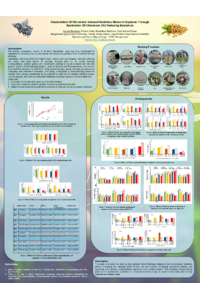
Bangladesh faces severe environmental risks from untreated tannery wastewater containing toxic hexavalent chromium (Cr VI), which harms plant growth. Microorganisms that convert Cr (VI) to less toxic Cr (III) offer a potential detoxification solution. The present study aimed to evaluate the effects of Cr stress on soybean (Glycine max L.) under different Cr concentrations (0, 50, and 100 mg/kg) added from Cr salt and tannery wastewater (TW44 and TW88 mg/kg) and evaluate the efficacy of a Cr (VI)-reducing bacterial strain, Tan3, in reducing stress on the plant. Increasing Cr concentrations clearly lowered plant height, biomass, chlorophyll content, and yield attributes. TW88-treated plants showed the greatest decline in chlorophyll b by 34.5%, total chlorophyll (15.88%), carotenoid content by 64.1%, shoot fresh (13.94%), and dry biomass (25.52%) and also the lowest number of pods. Chromium stress also triggered oxidative stress responses, an increase in MDA levels (from 26.17 to 57.36 nmol/g FW), proline content, H₂O₂, and superoxide under 100 mg/kg Cr. Tan3 inoculation significantly alleviated these effects by reducing their activities. Tan3 bacterial inoculation also markedly alleviated Cr-induced stress across all treatments by reducing oxidative damage, enhancing antioxidant enzyme activity (CAT, POD, GST, APX, GPX), improving nutrient uptake (N, P, S, Mg), and decreasing Cr accumulation in plant tissue. Cr accumulation in plant tissues was highest in soil (165.08 mg/kg) and in tannery wastewater (88 mg/kg). In post-harvest soil, Cr concentration was higher in Tan3-inoculated soil than in respective uninoculated soil, suggesting bacterial immobilization of Cr in soil that ultimately reduced the phytoavailability and translocation of Cr from soil to root, shoot, and pod. These findings clearly show that the complex mixture of contaminants causes TW88 to have the greatest negative consequences, but Tan3 inoculation can efficiently minimize Cr-induced damage by means of physiological protection, oxidative stress reduction through antioxidative enzymes, and lower Cr absorption in plants.
Keywords
Tannery waste water
Bacteria
Enzyme
Oxidative stress
Poster
Nishat Poster.pdf
Optimizing Yield under Saline and Water-Limited Conditions
Exploring the role of Rural Women in Sustainable Agriculture in Morocco