Event submissions
Published
This submission belongs to the session S9. Farm Animal Production of the event The 3rd International Online Conference on Agriculture
Published date
20 Oct, 2025
Academic Editor
'%3e%3cpath%20d='M12.6657%2010.9104C12.4185%2010.325%2012.0599%209.79327%2011.6097%209.34482C11.1609%208.89508%2010.6293%208.5365%2010.0442%208.28888C10.0389%208.28626%2010.0337%208.28495%2010.0285%208.28233C10.8446%207.69279%2011.3752%206.73249%2011.3752%205.64904C11.3752%203.8542%209.92103%202.39999%208.1262%202.39999C6.33136%202.39999%204.87715%203.8542%204.87715%205.64904C4.87715%206.73249%205.40774%207.69279%206.22393%208.28364C6.21869%208.28626%206.21345%208.28757%206.20821%208.29019C5.62129%208.5378%205.09463%208.89284%204.64265%209.34613C4.1929%209.79493%203.83432%2010.3266%203.58671%2010.9117C3.34345%2011.4845%203.21226%2012.0987%203.20023%2012.7209C3.19988%2012.7349%203.20233%2012.7488%203.20744%2012.7619C3.21255%2012.7749%203.22022%2012.7867%203.22998%2012.7968C3.23975%2012.8068%203.25142%2012.8147%203.26431%2012.8202C3.2772%2012.8256%203.29105%2012.8284%203.30504%2012.8284H4.09109C4.14874%2012.8284%204.19459%2012.7825%204.1959%2012.7262C4.2221%2011.7148%204.62823%2010.7676%205.34617%2010.0497C6.08899%209.30683%207.0755%208.89808%208.1262%208.89808C9.17689%208.89808%2010.1634%209.30683%2010.9062%2010.0497C11.6242%2010.7676%2012.0303%2011.7148%2012.0565%2012.7262C12.0578%2012.7838%2012.1037%2012.8284%2012.1613%2012.8284H12.9474C12.9613%2012.8284%2012.9752%2012.8256%2012.9881%2012.8202C13.001%2012.8147%2013.0126%2012.8068%2013.0224%2012.7968C13.0322%2012.7867%2013.0398%2012.7749%2013.0449%2012.7619C13.0501%2012.7488%2013.0525%2012.7349%2013.0522%2012.7209C13.0391%2012.0947%2012.9094%2011.4855%2012.6657%2010.9104ZM8.1262%207.9024C7.52486%207.9024%206.9589%207.6679%206.53312%207.24211C6.10733%206.81633%205.87283%206.25037%205.87283%205.64904C5.87283%205.0477%206.10733%204.48174%206.53312%204.05596C6.9589%203.63018%207.52486%203.39567%208.1262%203.39567C8.72753%203.39567%209.29349%203.63018%209.71927%204.05596C10.1451%204.48174%2010.3796%205.0477%2010.3796%205.64904C10.3796%206.25037%2010.1451%206.81633%209.71927%207.24211C9.29349%207.6679%208.72753%207.9024%208.1262%207.9024Z'%20fill='%235D1EE1'/%3e%3c/g%3e%3c/svg%3e) Jalil Ghassemi Nejad
Jalil Ghassemi NejadCitation
Hassan Benya, Emmanuel Odanye, Ibrahim Benya, Assessing the Impact of Free-Range and Indoor Rearing Systems on small ruminants in Sierra Leone, in Proceedings of The 3rd International Online Conference on Agriculture, 22 October–24 October 2025, MDPI: Basel, Switzerland
Share
Email
Facebook
Twitter
LinkedIn
Assessing the Impact of Free-Range and Indoor Rearing Systems on small ruminants in Sierra Leone
'%3e%3cpath%20d='M12.6647%2010.9104C12.4176%2010.325%2012.0589%209.7933%2011.6088%209.34485C11.16%208.89511%2010.6283%208.53653%2010.0432%208.28891C10.038%208.28629%2010.0327%208.28498%2010.0275%208.28236C10.8437%207.69282%2011.3743%206.73252%2011.3743%205.64907C11.3743%203.85423%209.92005%202.40002%208.12522%202.40002C6.33038%202.40002%204.87618%203.85423%204.87618%205.64907C4.87618%206.73252%205.40677%207.69282%206.22296%208.28367C6.21772%208.28629%206.21248%208.2876%206.20724%208.29022C5.62031%208.53783%205.09365%208.89287%204.64167%209.34616C4.19192%209.79496%203.83334%2010.3266%203.58573%2010.9117C3.34247%2011.4846%203.21128%2012.0987%203.19925%2012.721C3.1989%2012.735%203.20135%2012.7489%203.20646%2012.7619C3.21157%2012.7749%203.21924%2012.7868%203.22901%2012.7968C3.23877%2012.8068%203.25045%2012.8148%203.26334%2012.8202C3.27623%2012.8256%203.29007%2012.8284%203.30406%2012.8284H4.09012C4.14776%2012.8284%204.19362%2012.7825%204.19493%2012.7262C4.22113%2011.7148%204.62726%2010.7676%205.34519%2010.0497C6.08802%209.30686%207.07452%208.89811%208.12522%208.89811C9.17592%208.89811%2010.1624%209.30686%2010.9052%2010.0497C11.6232%2010.7676%2012.0293%2011.7148%2012.0555%2012.7262C12.0568%2012.7839%2012.1027%2012.8284%2012.1603%2012.8284H12.9464C12.9604%2012.8284%2012.9742%2012.8256%2012.9871%2012.8202C13%2012.8148%2013.0117%2012.8068%2013.0214%2012.7968C13.0312%2012.7868%2013.0389%2012.7749%2013.044%2012.7619C13.0491%2012.7489%2013.0515%2012.735%2013.0512%2012.721C13.0381%2012.0947%2012.9084%2011.4856%2012.6647%2010.9104ZM8.12522%207.90243C7.52388%207.90243%206.95792%207.66793%206.53214%207.24215C6.10636%206.81636%205.87185%206.2504%205.87185%205.64907C5.87185%205.04773%206.10636%204.48177%206.53214%204.05599C6.95792%203.63021%207.52388%203.3957%208.12522%203.3957C8.72655%203.3957%209.29252%203.63021%209.7183%204.05599C10.1441%204.48177%2010.3786%205.04773%2010.3786%205.64907C10.3786%206.2504%2010.1441%206.81636%209.7183%207.24215C9.29252%207.66793%208.72655%207.90243%208.12522%207.90243Z'%20fill='%235D1EE1'/%3e%3c/g%3e%3c/svg%3e)
Hassan Benya 1
Emmanuel Odanye 2
Ibrahim Benya 1
1. Celebrity Agricultural Company (SL) Limited, Freetown, Sierra Leone
2. Lithesome Impact Development Initiative, Abuja, Nigeria
Abstract
Background: Free-range small ruminant production has gained increasing attention for its perceived benefits on animal welfare and meat quality. Despite goats ranking as the third most productive small ruminants farmed globally, little research explores how different rearing systems affect their health, behavior, muscle characteristics, and welfare. This study investigates the impact of a long-distance pasture system (LDPS) versus conventional indoor rearing in Sierra Leone.
Objectives: We aimed to evaluate how free-range grazing, particularly LDPS, influences goats’ and sheep’s health, feeding behavior, muscle fiber structure, and welfare indicators, such as locomotion and behavioral patterns, in comparison to an indoor confinement system.
Methods: Twenty animals (10 goats and 10 sheep) were randomly divided into two groups: LDPS (grazing up to 200 meters within the farm) and an indoor system (IS) with regulated feeding. From May to July 10, 2025, researchers monitored health conditions, feeding habits, muscle fiber composition, and welfare indicators, including mobility and behavioral responses from 8 am to 6 pm daily.
Results: The LDPS group showed enhanced walking ability and more natural foraging behavior than their IS counterparts. Free-range goats exhibited fewer stress-related symptoms, and muscle analysis revealed fiber type variations potentially linked to meat quality. However, the IS group achieved more consistent weight gain, likely due to structured feeding.
Conclusion: Free-range systems like LDPS can improve welfare indicators, especially in goats, by encouraging natural behavior and reducing stress. Indoor systems, however, may be more effective for rapid weight gain. These findings support ongoing discourse on sustainable small ruminant farming and offer context-specific insights for improving goat and sheep rearing practices in Sierra Leone.
Keywords
Small ruminants
Free range
Indoor
Sierra Leone
Poster
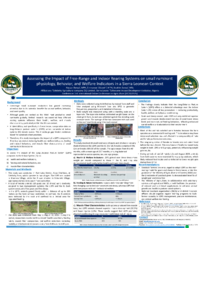
Assessing the Impact of Free-Range and Indoor Rearing Systems on small ruminant physiology, Behavior, and Welfare Indicators in a Sierra Leonean Context.pdf
EVALUATING THE YIELD AND ECONOMIC IMPACT OF OXAMYL AND IMIDACLOPRID TREATMENTS ON SUGARCANE UNDER VARYING STRESS CONDITIONS
Pigmentation Diversity and Nutritional Profiling of Multicolored Tropical Carrots (Daucus carota L.)