Event submissions
Published
This submission belongs to the session S8. Crop Production of the event The 3rd International Online Conference on Agriculture
Published date
20 Oct, 2025
Academic Editor
'%3e%3cpath%20d='M12.6657%2010.9104C12.4185%2010.325%2012.0599%209.79327%2011.6097%209.34482C11.1609%208.89508%2010.6293%208.5365%2010.0442%208.28888C10.0389%208.28626%2010.0337%208.28495%2010.0285%208.28233C10.8446%207.69279%2011.3752%206.73249%2011.3752%205.64904C11.3752%203.8542%209.92103%202.39999%208.1262%202.39999C6.33136%202.39999%204.87715%203.8542%204.87715%205.64904C4.87715%206.73249%205.40774%207.69279%206.22393%208.28364C6.21869%208.28626%206.21345%208.28757%206.20821%208.29019C5.62129%208.5378%205.09463%208.89284%204.64265%209.34613C4.1929%209.79493%203.83432%2010.3266%203.58671%2010.9117C3.34345%2011.4845%203.21226%2012.0987%203.20023%2012.7209C3.19988%2012.7349%203.20233%2012.7488%203.20744%2012.7619C3.21255%2012.7749%203.22022%2012.7867%203.22998%2012.7968C3.23975%2012.8068%203.25142%2012.8147%203.26431%2012.8202C3.2772%2012.8256%203.29105%2012.8284%203.30504%2012.8284H4.09109C4.14874%2012.8284%204.19459%2012.7825%204.1959%2012.7262C4.2221%2011.7148%204.62823%2010.7676%205.34617%2010.0497C6.08899%209.30683%207.0755%208.89808%208.1262%208.89808C9.17689%208.89808%2010.1634%209.30683%2010.9062%2010.0497C11.6242%2010.7676%2012.0303%2011.7148%2012.0565%2012.7262C12.0578%2012.7838%2012.1037%2012.8284%2012.1613%2012.8284H12.9474C12.9613%2012.8284%2012.9752%2012.8256%2012.9881%2012.8202C13.001%2012.8147%2013.0126%2012.8068%2013.0224%2012.7968C13.0322%2012.7867%2013.0398%2012.7749%2013.0449%2012.7619C13.0501%2012.7488%2013.0525%2012.7349%2013.0522%2012.7209C13.0391%2012.0947%2012.9094%2011.4855%2012.6657%2010.9104ZM8.1262%207.9024C7.52486%207.9024%206.9589%207.6679%206.53312%207.24211C6.10733%206.81633%205.87283%206.25037%205.87283%205.64904C5.87283%205.0477%206.10733%204.48174%206.53312%204.05596C6.9589%203.63018%207.52486%203.39567%208.1262%203.39567C8.72753%203.39567%209.29349%203.63018%209.71927%204.05596C10.1451%204.48174%2010.3796%205.0477%2010.3796%205.64904C10.3796%206.25037%2010.1451%206.81633%209.71927%207.24211C9.29349%207.6679%208.72753%207.9024%208.1262%207.9024Z'%20fill='%235D1EE1'/%3e%3c/g%3e%3c/svg%3e) Isabel Lara
Isabel LaraCitation
Arielle Grâce Mpoam Miague, Pierre Germain Ntsoli, Idriss Djoko Kouam, Roland Wilfried Titti, Aoudou Yaouba, Potential of Bacillus thuringiensis B9 and Bacillus pacificus B11 Isolated from Tomato (Solanum lycopersicum L.) Rhizosphere for Enhancing Groundnut (Arachis hypogaea L.) Production and Reducing Aflatoxigenic Aspergillus flavus Contamination, in Proceedings of The 3rd International Online Conference on Agriculture, 22 October–24 October 2025, MDPI: Basel, Switzerland
Share
Email
Facebook
Twitter
LinkedIn
Potential of Bacillus thuringiensis B9 and Bacillus pacificus B11 Isolated from Tomato (Solanum lycopersicum L.) Rhizosphere for Enhancing Groundnut (Arachis hypogaea L.) Production and Reducing Aflatoxigenic Aspergillus flavus Contamination
'%3e%3cpath%20d='M12.6647%2010.9104C12.4176%2010.325%2012.0589%209.7933%2011.6088%209.34485C11.16%208.89511%2010.6283%208.53653%2010.0432%208.28891C10.038%208.28629%2010.0327%208.28498%2010.0275%208.28236C10.8437%207.69282%2011.3743%206.73252%2011.3743%205.64907C11.3743%203.85423%209.92005%202.40002%208.12522%202.40002C6.33038%202.40002%204.87618%203.85423%204.87618%205.64907C4.87618%206.73252%205.40677%207.69282%206.22296%208.28367C6.21772%208.28629%206.21248%208.2876%206.20724%208.29022C5.62031%208.53783%205.09365%208.89287%204.64167%209.34616C4.19192%209.79496%203.83334%2010.3266%203.58573%2010.9117C3.34247%2011.4846%203.21128%2012.0987%203.19925%2012.721C3.1989%2012.735%203.20135%2012.7489%203.20646%2012.7619C3.21157%2012.7749%203.21924%2012.7868%203.22901%2012.7968C3.23877%2012.8068%203.25045%2012.8148%203.26334%2012.8202C3.27623%2012.8256%203.29007%2012.8284%203.30406%2012.8284H4.09012C4.14776%2012.8284%204.19362%2012.7825%204.19493%2012.7262C4.22113%2011.7148%204.62726%2010.7676%205.34519%2010.0497C6.08802%209.30686%207.07452%208.89811%208.12522%208.89811C9.17592%208.89811%2010.1624%209.30686%2010.9052%2010.0497C11.6232%2010.7676%2012.0293%2011.7148%2012.0555%2012.7262C12.0568%2012.7839%2012.1027%2012.8284%2012.1603%2012.8284H12.9464C12.9604%2012.8284%2012.9742%2012.8256%2012.9871%2012.8202C13%2012.8148%2013.0117%2012.8068%2013.0214%2012.7968C13.0312%2012.7868%2013.0389%2012.7749%2013.044%2012.7619C13.0491%2012.7489%2013.0515%2012.735%2013.0512%2012.721C13.0381%2012.0947%2012.9084%2011.4856%2012.6647%2010.9104ZM8.12522%207.90243C7.52388%207.90243%206.95792%207.66793%206.53214%207.24215C6.10636%206.81636%205.87185%206.2504%205.87185%205.64907C5.87185%205.04773%206.10636%204.48177%206.53214%204.05599C6.95792%203.63021%207.52388%203.3957%208.12522%203.3957C8.72655%203.3957%209.29252%203.63021%209.7183%204.05599C10.1441%204.48177%2010.3786%205.04773%2010.3786%205.64907C10.3786%206.2504%2010.1441%206.81636%209.7183%207.24215C9.29252%207.66793%208.72655%207.90243%208.12522%207.90243Z'%20fill='%235D1EE1'/%3e%3c/g%3e%3c/svg%3e)
Arielle Grâce Mpoam Miague 1
Pierre Germain Ntsoli 1
Idriss Djoko Kouam 1
Roland Wilfried Titti 1
Aoudou Yaouba 1
1. Department of Crop Sciences, Faculty of Agronomy and Agricultural Sciences, University of Dschang, Dschang P.O. Box 222, Cameroon
Abstract
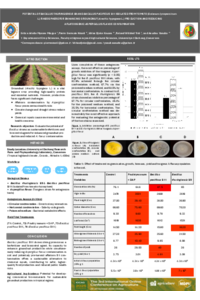
Context: Plant Growth-Promoting Rhizobacteria (PGPR) are crucial for enhancing plant nutrition and health. This study investigated the dual potential of PGPR as biocontrol agents to suppress aflatoxigenic Aspergillus flavus contamination in groundnut (Arachis hypogaea L.) and to concurrently improve crop growth and yield, addressing critical food safety and productivity challenges. Methodology: Two Bacillus strains, B. thuringiensis B9 and B. pacificus B11, isolated from tomato rhizosphere, were evaluated. In vitro antagonistic activity against aflatoxigenic A. flavus was assessed using vertical, circular confrontation and poisoned medium dual culture methods. A field trial was simultaneously conducted at astation, employing a Completely Randomized Block Design with four replications. Factors included two groundnut varieties (Grimari and Siksa) and four treatments (B. pacificus B11, B. thuringiensis B9, DAP+manure, and an untreated control). Growth and yield parameters were subsequently measured and statistically analyzed. Results: In vitro, B. pacificus B11 consistently inhibited aflatoxigenic A. flavus growth by over 50% across all methods, achieving the highest inhibition (83.9%) via circular confrontation. Field results demonstrated significant (p<0.05) differences among treatments for most growth and yield variables. Notably, B. pacificus B11 significantly improved groundnut performance regardless of variety, leading to a higher emergence rate (87.50%). Furthermore, this strain positively impacted pod number (40 per plant) and remarkably increased overall yield by more than 100% compared to the control. Conclusion: Bacillus pacificus B11 shows strong promise as a biofertilizer and biocontrol agent. Its capacity to enhance groundnut production while simultaneously reducing Aspergillus flavus contamination and potentially aflatoxin B1 contamination offers a sustainable alternative to chemical inputs, contributing to safer, higher-quality food production and reduced public health risks.
Keywords
Arachis hypogaea
Plant Growth-Promoting Rhizobacteria (PGPR)
Aspergillus flavus
Aflatoxigenic
Poster
Poster-MDPI-Conference-NTSOLI.pdf
Evaluating the combined use of Kolosal Pro Fungicide and novel resistant spring wheat cultivars (Triticum aestivum L.) against Septoria Tritici Blotch and Yield enhancement
MACHINE LEARNING-BASED ANALYSIS OF CROP YIELD VARIABILITY IN THE PHILIPPINES UNDER IRRIGATED AND RAINFED CONDITIONS: THE ROLE OF NITROGEN, PHOSPHORUS, AND MAGNESIUM FERTILIZATION