Event submissions
Published
This submission belongs to the session S8. Crop Production of the event The 3rd International Online Conference on Agriculture
Published date
20 Oct, 2025
Academic Editor
'%3e%3cpath%20d='M12.6657%2010.9104C12.4185%2010.325%2012.0599%209.79327%2011.6097%209.34482C11.1609%208.89508%2010.6293%208.5365%2010.0442%208.28888C10.0389%208.28626%2010.0337%208.28495%2010.0285%208.28233C10.8446%207.69279%2011.3752%206.73249%2011.3752%205.64904C11.3752%203.8542%209.92103%202.39999%208.1262%202.39999C6.33136%202.39999%204.87715%203.8542%204.87715%205.64904C4.87715%206.73249%205.40774%207.69279%206.22393%208.28364C6.21869%208.28626%206.21345%208.28757%206.20821%208.29019C5.62129%208.5378%205.09463%208.89284%204.64265%209.34613C4.1929%209.79493%203.83432%2010.3266%203.58671%2010.9117C3.34345%2011.4845%203.21226%2012.0987%203.20023%2012.7209C3.19988%2012.7349%203.20233%2012.7488%203.20744%2012.7619C3.21255%2012.7749%203.22022%2012.7867%203.22998%2012.7968C3.23975%2012.8068%203.25142%2012.8147%203.26431%2012.8202C3.2772%2012.8256%203.29105%2012.8284%203.30504%2012.8284H4.09109C4.14874%2012.8284%204.19459%2012.7825%204.1959%2012.7262C4.2221%2011.7148%204.62823%2010.7676%205.34617%2010.0497C6.08899%209.30683%207.0755%208.89808%208.1262%208.89808C9.17689%208.89808%2010.1634%209.30683%2010.9062%2010.0497C11.6242%2010.7676%2012.0303%2011.7148%2012.0565%2012.7262C12.0578%2012.7838%2012.1037%2012.8284%2012.1613%2012.8284H12.9474C12.9613%2012.8284%2012.9752%2012.8256%2012.9881%2012.8202C13.001%2012.8147%2013.0126%2012.8068%2013.0224%2012.7968C13.0322%2012.7867%2013.0398%2012.7749%2013.0449%2012.7619C13.0501%2012.7488%2013.0525%2012.7349%2013.0522%2012.7209C13.0391%2012.0947%2012.9094%2011.4855%2012.6657%2010.9104ZM8.1262%207.9024C7.52486%207.9024%206.9589%207.6679%206.53312%207.24211C6.10733%206.81633%205.87283%206.25037%205.87283%205.64904C5.87283%205.0477%206.10733%204.48174%206.53312%204.05596C6.9589%203.63018%207.52486%203.39567%208.1262%203.39567C8.72753%203.39567%209.29349%203.63018%209.71927%204.05596C10.1451%204.48174%2010.3796%205.0477%2010.3796%205.64904C10.3796%206.25037%2010.1451%206.81633%209.71927%207.24211C9.29349%207.6679%208.72753%207.9024%208.1262%207.9024Z'%20fill='%235D1EE1'/%3e%3c/g%3e%3c/svg%3e) Lorenzo Negri
Lorenzo NegriCitation
Dr. Shakuntala Rao, Morpho-Biochemical Responses of Sugarcane Varieties to Salinity Stress During Formative Growth, in Proceedings of The 3rd International Online Conference on Agriculture, 22 October–24 October 2025, MDPI: Basel, Switzerland
Share
Email
Facebook
Twitter
LinkedIn
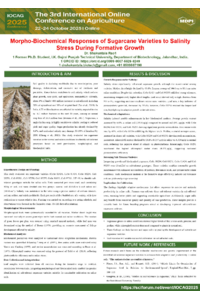
Morpho-Biochemical Responses of Sugarcane Varieties to Salinity Stress During Formative Growth
'%3e%3cpath%20d='M12.6647%2010.9104C12.4176%2010.325%2012.0589%209.7933%2011.6088%209.34485C11.16%208.89511%2010.6283%208.53653%2010.0432%208.28891C10.038%208.28629%2010.0327%208.28498%2010.0275%208.28236C10.8437%207.69282%2011.3743%206.73252%2011.3743%205.64907C11.3743%203.85423%209.92005%202.40002%208.12522%202.40002C6.33038%202.40002%204.87618%203.85423%204.87618%205.64907C4.87618%206.73252%205.40677%207.69282%206.22296%208.28367C6.21772%208.28629%206.21248%208.2876%206.20724%208.29022C5.62031%208.53783%205.09365%208.89287%204.64167%209.34616C4.19192%209.79496%203.83334%2010.3266%203.58573%2010.9117C3.34247%2011.4846%203.21128%2012.0987%203.19925%2012.721C3.1989%2012.735%203.20135%2012.7489%203.20646%2012.7619C3.21157%2012.7749%203.21924%2012.7868%203.22901%2012.7968C3.23877%2012.8068%203.25045%2012.8148%203.26334%2012.8202C3.27623%2012.8256%203.29007%2012.8284%203.30406%2012.8284H4.09012C4.14776%2012.8284%204.19362%2012.7825%204.19493%2012.7262C4.22113%2011.7148%204.62726%2010.7676%205.34519%2010.0497C6.08802%209.30686%207.07452%208.89811%208.12522%208.89811C9.17592%208.89811%2010.1624%209.30686%2010.9052%2010.0497C11.6232%2010.7676%2012.0293%2011.7148%2012.0555%2012.7262C12.0568%2012.7839%2012.1027%2012.8284%2012.1603%2012.8284H12.9464C12.9604%2012.8284%2012.9742%2012.8256%2012.9871%2012.8202C13%2012.8148%2013.0117%2012.8068%2013.0214%2012.7968C13.0312%2012.7868%2013.0389%2012.7749%2013.044%2012.7619C13.0491%2012.7489%2013.0515%2012.735%2013.0512%2012.721C13.0381%2012.0947%2012.9084%2011.4856%2012.6647%2010.9104ZM8.12522%207.90243C7.52388%207.90243%206.95792%207.66793%206.53214%207.24215C6.10636%206.81636%205.87185%206.2504%205.87185%205.64907C5.87185%205.04773%206.10636%204.48177%206.53214%204.05599C6.95792%203.63021%207.52388%203.3957%208.12522%203.3957C8.72655%203.3957%209.29252%203.63021%209.7183%204.05599C10.1441%204.48177%2010.3786%205.04773%2010.3786%205.64907C10.3786%206.2504%2010.1441%206.81636%209.7183%207.24215C9.29252%207.66793%208.72655%207.90243%208.12522%207.90243Z'%20fill='%235D1EE1'/%3e%3c/g%3e%3c/svg%3e)
Dr. Shakuntala Rao 1
1. Department of Biotechnology; I.K. Gujral Punjab Technical University; Jalandhar, Punjab; India
Abstract
Sugarcane, a key tropical cash crop, suffers significant yield losses in arid regions due to soil salinity stress. This study evaluated ten sugarcane varieties under normal and saline soils to identify salt-tolerant genotypes. Key morphological traits (shoot height, green leaf count, leaf area) and biochemical parameters (protein, amino acids, proline, chlorophyll) were investigated to assess salinity’s impact and guide selection for saline cultivation. The climatic parameters were monitored throughout the experiment. The study revealed that salinity reduced sugarcane's growth but enhanced its biochemical traits, including its protein, free amino acid, and proline contents. In terms of the mother shoot height, varieties CoSe 01424 and CoS 95255 exhibited strong tolerance to salinity, despite a 43.6 % reduction in the mother shoot height from an average of 106.6 cm to 60.1 cm under saline conditions. The average leaf count showed a slight decline from 9.8 to 9.2 under saline conditions. The leaf area decreased by 35.4 % under saline conditions, with CoSe 03234 maintaining the largest leaf size among the varieties. Biochemical analysis revealed that sugarcane grown in saline soil had a 6.6% higher average protein content (100.4 μg/g) compared to that grown in normal soil (94.1 μg/g). Varieties CoSe 03234, CoS 03251, and CoS 95255 exhibited increased protein levels under salinity, indicating enhanced protein accumulation under salt-affected conditions. Sugarcane in saline soil had, on average, 48% more free amino acids, with CoSe 03234 showing the highest levels. The proline levels increased in almost all the sugarcane varieties under salinity, with CoSe 03234 and CoS 03251 showing the highest accumulation. The chlorophyll content in sugarcane dropped by 20.6% in saline soil (0.257 μg/g) compared to normal soil (0.324 μg/g). CoSe 03251 had the highest chlorophyll content (0.451 μg/g) in the saline soil. This study identified salt-tolerant sugarcane varieties, CoSe 03234, CoS 03251, CoSe 01424, and CoS 95255, that support saline soil cultivation, higher yields, and sustainable agriculture.
Keywords
Sugarcane
Salinity
Salt tolerance
Morphological and biochemical traits.
Poster
DrRao_Poster_IOCAG2025.pdf (1 MB) size .pdf
Reinvigoration of Deteriorated Seeds of Two Okra varieties (Abelmoschus esculentus var. ‘’Smooth Green’ and Var. ‘Red Ruby’) Using Atmospheric Pressure Plasma-Activated Water
Micropropagation of Hyphaene thebaica Through Seed and Root Tip Cultures: A Strategy for Sustainable Crop Production