Event submissions
Published
This submission belongs to the session S3. Agricultural Systems and Management of the event The 3rd International Online Conference on Agriculture
Published date
20 Oct, 2025
Academic Editor
'%3e%3cpath%20d='M12.6657%2010.9104C12.4185%2010.325%2012.0599%209.79327%2011.6097%209.34482C11.1609%208.89508%2010.6293%208.5365%2010.0442%208.28888C10.0389%208.28626%2010.0337%208.28495%2010.0285%208.28233C10.8446%207.69279%2011.3752%206.73249%2011.3752%205.64904C11.3752%203.8542%209.92103%202.39999%208.1262%202.39999C6.33136%202.39999%204.87715%203.8542%204.87715%205.64904C4.87715%206.73249%205.40774%207.69279%206.22393%208.28364C6.21869%208.28626%206.21345%208.28757%206.20821%208.29019C5.62129%208.5378%205.09463%208.89284%204.64265%209.34613C4.1929%209.79493%203.83432%2010.3266%203.58671%2010.9117C3.34345%2011.4845%203.21226%2012.0987%203.20023%2012.7209C3.19988%2012.7349%203.20233%2012.7488%203.20744%2012.7619C3.21255%2012.7749%203.22022%2012.7867%203.22998%2012.7968C3.23975%2012.8068%203.25142%2012.8147%203.26431%2012.8202C3.2772%2012.8256%203.29105%2012.8284%203.30504%2012.8284H4.09109C4.14874%2012.8284%204.19459%2012.7825%204.1959%2012.7262C4.2221%2011.7148%204.62823%2010.7676%205.34617%2010.0497C6.08899%209.30683%207.0755%208.89808%208.1262%208.89808C9.17689%208.89808%2010.1634%209.30683%2010.9062%2010.0497C11.6242%2010.7676%2012.0303%2011.7148%2012.0565%2012.7262C12.0578%2012.7838%2012.1037%2012.8284%2012.1613%2012.8284H12.9474C12.9613%2012.8284%2012.9752%2012.8256%2012.9881%2012.8202C13.001%2012.8147%2013.0126%2012.8068%2013.0224%2012.7968C13.0322%2012.7867%2013.0398%2012.7749%2013.0449%2012.7619C13.0501%2012.7488%2013.0525%2012.7349%2013.0522%2012.7209C13.0391%2012.0947%2012.9094%2011.4855%2012.6657%2010.9104ZM8.1262%207.9024C7.52486%207.9024%206.9589%207.6679%206.53312%207.24211C6.10733%206.81633%205.87283%206.25037%205.87283%205.64904C5.87283%205.0477%206.10733%204.48174%206.53312%204.05596C6.9589%203.63018%207.52486%203.39567%208.1262%203.39567C8.72753%203.39567%209.29349%203.63018%209.71927%204.05596C10.1451%204.48174%2010.3796%205.0477%2010.3796%205.64904C10.3796%206.25037%2010.1451%206.81633%209.71927%207.24211C9.29349%207.6679%208.72753%207.9024%208.1262%207.9024Z'%20fill='%235D1EE1'/%3e%3c/g%3e%3c/svg%3e) Luca Regni
Luca RegniCitation
Rahela Khatun, Farhan Shahriar, Md. Shariar Hossain Sazzad, Md Sajib Mia, Anna O'Brien, Md Sazan Rahman, Anthony S.Davis, Romel Ahmed, Alleviating water stress tolerance in Aquilaria malaccensis by using Biochar, Bacillus altitudinis (PGPR) and Trichoderma asperellum, in Proceedings of The 3rd International Online Conference on Agriculture, 22 October–24 October 2025, MDPI: Basel, Switzerland
Share
Email
Facebook
Twitter
LinkedIn
Alleviating water stress tolerance in Aquilaria malaccensis by using Biochar, Bacillus altitudinis (PGPR) and Trichoderma asperellum
'%3e%3cpath%20d='M12.6647%2010.9104C12.4176%2010.325%2012.0589%209.7933%2011.6088%209.34485C11.16%208.89511%2010.6283%208.53653%2010.0432%208.28891C10.038%208.28629%2010.0327%208.28498%2010.0275%208.28236C10.8437%207.69282%2011.3743%206.73252%2011.3743%205.64907C11.3743%203.85423%209.92005%202.40002%208.12522%202.40002C6.33038%202.40002%204.87618%203.85423%204.87618%205.64907C4.87618%206.73252%205.40677%207.69282%206.22296%208.28367C6.21772%208.28629%206.21248%208.2876%206.20724%208.29022C5.62031%208.53783%205.09365%208.89287%204.64167%209.34616C4.19192%209.79496%203.83334%2010.3266%203.58573%2010.9117C3.34247%2011.4846%203.21128%2012.0987%203.19925%2012.721C3.1989%2012.735%203.20135%2012.7489%203.20646%2012.7619C3.21157%2012.7749%203.21924%2012.7868%203.22901%2012.7968C3.23877%2012.8068%203.25045%2012.8148%203.26334%2012.8202C3.27623%2012.8256%203.29007%2012.8284%203.30406%2012.8284H4.09012C4.14776%2012.8284%204.19362%2012.7825%204.19493%2012.7262C4.22113%2011.7148%204.62726%2010.7676%205.34519%2010.0497C6.08802%209.30686%207.07452%208.89811%208.12522%208.89811C9.17592%208.89811%2010.1624%209.30686%2010.9052%2010.0497C11.6232%2010.7676%2012.0293%2011.7148%2012.0555%2012.7262C12.0568%2012.7839%2012.1027%2012.8284%2012.1603%2012.8284H12.9464C12.9604%2012.8284%2012.9742%2012.8256%2012.9871%2012.8202C13%2012.8148%2013.0117%2012.8068%2013.0214%2012.7968C13.0312%2012.7868%2013.0389%2012.7749%2013.044%2012.7619C13.0491%2012.7489%2013.0515%2012.735%2013.0512%2012.721C13.0381%2012.0947%2012.9084%2011.4856%2012.6647%2010.9104ZM8.12522%207.90243C7.52388%207.90243%206.95792%207.66793%206.53214%207.24215C6.10636%206.81636%205.87185%206.2504%205.87185%205.64907C5.87185%205.04773%206.10636%204.48177%206.53214%204.05599C6.95792%203.63021%207.52388%203.3957%208.12522%203.3957C8.72655%203.3957%209.29252%203.63021%209.7183%204.05599C10.1441%204.48177%2010.3786%205.04773%2010.3786%205.64907C10.3786%206.2504%2010.1441%206.81636%209.7183%207.24215C9.29252%207.66793%208.72655%207.90243%208.12522%207.90243Z'%20fill='%235D1EE1'/%3e%3c/g%3e%3c/svg%3e)
Rahela Khatun 1
Farhan Shahriar 1

Md. Shariar Hossain Sazzad 1
Md Sajib Mia 1
Anna O'Brien 2
Md Sazan Rahman 2
Anthony S.Davis 2
Romel Ahmed 1
1. Department of Forestry and Environmental Science, Shahjalal University of Science and Technology, Sylhet, Bangladesh
2. College of Life Sciences and Agriculture, University of New Hampshire, Durham, NH, USA
Abstract
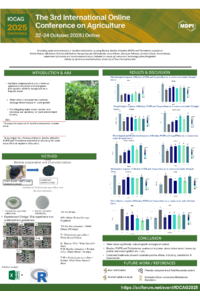
Soil moisture is a challenging environmental factor adversely affecting the growth of plants under water stress conditions. To cope with water scarcity, plants compromise their growth and switch on their adaptive machineries; however, responses vary with species. How water stress affects Aquilaria malaccensis and how to mitigate water stress to keep the optimum growth of the plant is of high importance considering the socio-economic value of the species. Therefore, this study aimed to investigate the efficacy of environmentally friendly mitigation measures of water stress by applying biochar, Bacillus altitudinis (PGPR) and Trichoderma asperellum. The results showed that the seedling of Aquilaria exhibited comparable growth performances under water stress conditions with the application of biochar and the two microbes. Stress was alleviated by reducing the oxidative damage of Reactive Oxygen Species (67.63%) and Malondialdehyde (58.78%) and elevating the accumulation of proline (39.72%) in the single or combined treatments of biochar, PGPR and Trichoderma. Consequently, the photosynthesis pigment chlorophyll (43.89%) and stomatal conductivity (50.71%) increased in the treated plants grown under water stress. Applying biochar, PGPR and Trichoderma asperellum reduced H2O2 (67.63%) and MDA (58.78%) levels and helped to accumulate proline (39.72%), reducing oxidative damage. On the other hand, the photosynthesis pigment chlorophyll (43.89%) and stomatal conductivity (50.71%) helped increase gas exchange and the photosynthesis rate. This study highlights a promising result for enhancing Aquilaria malaccensis resilience to drought conditions for its sustainable production in arid and semi-arid areas.
Keywords
Bacillus altitudinis
Trichoderma asperellum
Proline
H2O2
Poster
MD.Farhan Shahriar.pdf
A Foresight Study on the Development of Fiber-Reinforced LDPE Composites for Greenhouse Covering Applications
Refining Sustainability Indicators for Sugarcane Production in Sofala Province of Mozambique: A Delphi Approach