Event submissions
Published
This submission belongs to the session S3. Agricultural Systems and Management of the event The 3rd International Online Conference on Agriculture
Published date
20 Oct, 2025
Academic Editor
'%3e%3cpath%20d='M12.6657%2010.9104C12.4185%2010.325%2012.0599%209.79327%2011.6097%209.34482C11.1609%208.89508%2010.6293%208.5365%2010.0442%208.28888C10.0389%208.28626%2010.0337%208.28495%2010.0285%208.28233C10.8446%207.69279%2011.3752%206.73249%2011.3752%205.64904C11.3752%203.8542%209.92103%202.39999%208.1262%202.39999C6.33136%202.39999%204.87715%203.8542%204.87715%205.64904C4.87715%206.73249%205.40774%207.69279%206.22393%208.28364C6.21869%208.28626%206.21345%208.28757%206.20821%208.29019C5.62129%208.5378%205.09463%208.89284%204.64265%209.34613C4.1929%209.79493%203.83432%2010.3266%203.58671%2010.9117C3.34345%2011.4845%203.21226%2012.0987%203.20023%2012.7209C3.19988%2012.7349%203.20233%2012.7488%203.20744%2012.7619C3.21255%2012.7749%203.22022%2012.7867%203.22998%2012.7968C3.23975%2012.8068%203.25142%2012.8147%203.26431%2012.8202C3.2772%2012.8256%203.29105%2012.8284%203.30504%2012.8284H4.09109C4.14874%2012.8284%204.19459%2012.7825%204.1959%2012.7262C4.2221%2011.7148%204.62823%2010.7676%205.34617%2010.0497C6.08899%209.30683%207.0755%208.89808%208.1262%208.89808C9.17689%208.89808%2010.1634%209.30683%2010.9062%2010.0497C11.6242%2010.7676%2012.0303%2011.7148%2012.0565%2012.7262C12.0578%2012.7838%2012.1037%2012.8284%2012.1613%2012.8284H12.9474C12.9613%2012.8284%2012.9752%2012.8256%2012.9881%2012.8202C13.001%2012.8147%2013.0126%2012.8068%2013.0224%2012.7968C13.0322%2012.7867%2013.0398%2012.7749%2013.0449%2012.7619C13.0501%2012.7488%2013.0525%2012.7349%2013.0522%2012.7209C13.0391%2012.0947%2012.9094%2011.4855%2012.6657%2010.9104ZM8.1262%207.9024C7.52486%207.9024%206.9589%207.6679%206.53312%207.24211C6.10733%206.81633%205.87283%206.25037%205.87283%205.64904C5.87283%205.0477%206.10733%204.48174%206.53312%204.05596C6.9589%203.63018%207.52486%203.39567%208.1262%203.39567C8.72753%203.39567%209.29349%203.63018%209.71927%204.05596C10.1451%204.48174%2010.3796%205.0477%2010.3796%205.64904C10.3796%206.25037%2010.1451%206.81633%209.71927%207.24211C9.29349%207.6679%208.72753%207.9024%208.1262%207.9024Z'%20fill='%235D1EE1'/%3e%3c/g%3e%3c/svg%3e) Luca Regni
Luca RegniCitation
Jackson Sauers, Veera Gnaneswar Gude, K. Raja Reddy, A comparative study of plant growth affected by soil amendments with recovered nutrients, drought conditions, and seasonal temperatures, in Proceedings of The 3rd International Online Conference on Agriculture, 22 October–24 October 2025, MDPI: Basel, Switzerland
Share
Email
Facebook
Twitter
LinkedIn
A comparative study of plant growth affected by soil amendments with recovered nutrients, drought conditions, and seasonal temperatures
'%3e%3cpath%20d='M12.6647%2010.9104C12.4176%2010.325%2012.0589%209.7933%2011.6088%209.34485C11.16%208.89511%2010.6283%208.53653%2010.0432%208.28891C10.038%208.28629%2010.0327%208.28498%2010.0275%208.28236C10.8437%207.69282%2011.3743%206.73252%2011.3743%205.64907C11.3743%203.85423%209.92005%202.40002%208.12522%202.40002C6.33038%202.40002%204.87618%203.85423%204.87618%205.64907C4.87618%206.73252%205.40677%207.69282%206.22296%208.28367C6.21772%208.28629%206.21248%208.2876%206.20724%208.29022C5.62031%208.53783%205.09365%208.89287%204.64167%209.34616C4.19192%209.79496%203.83334%2010.3266%203.58573%2010.9117C3.34247%2011.4846%203.21128%2012.0987%203.19925%2012.721C3.1989%2012.735%203.20135%2012.7489%203.20646%2012.7619C3.21157%2012.7749%203.21924%2012.7868%203.22901%2012.7968C3.23877%2012.8068%203.25045%2012.8148%203.26334%2012.8202C3.27623%2012.8256%203.29007%2012.8284%203.30406%2012.8284H4.09012C4.14776%2012.8284%204.19362%2012.7825%204.19493%2012.7262C4.22113%2011.7148%204.62726%2010.7676%205.34519%2010.0497C6.08802%209.30686%207.07452%208.89811%208.12522%208.89811C9.17592%208.89811%2010.1624%209.30686%2010.9052%2010.0497C11.6232%2010.7676%2012.0293%2011.7148%2012.0555%2012.7262C12.0568%2012.7839%2012.1027%2012.8284%2012.1603%2012.8284H12.9464C12.9604%2012.8284%2012.9742%2012.8256%2012.9871%2012.8202C13%2012.8148%2013.0117%2012.8068%2013.0214%2012.7968C13.0312%2012.7868%2013.0389%2012.7749%2013.044%2012.7619C13.0491%2012.7489%2013.0515%2012.735%2013.0512%2012.721C13.0381%2012.0947%2012.9084%2011.4856%2012.6647%2010.9104ZM8.12522%207.90243C7.52388%207.90243%206.95792%207.66793%206.53214%207.24215C6.10636%206.81636%205.87185%206.2504%205.87185%205.64907C5.87185%205.04773%206.10636%204.48177%206.53214%204.05599C6.95792%203.63021%207.52388%203.3957%208.12522%203.3957C8.72655%203.3957%209.29252%203.63021%209.7183%204.05599C10.1441%204.48177%2010.3786%205.04773%2010.3786%205.64907C10.3786%206.2504%2010.1441%206.81636%209.7183%207.24215C9.29252%207.66793%208.72655%207.90243%208.12522%207.90243Z'%20fill='%235D1EE1'/%3e%3c/g%3e%3c/svg%3e)
Jackson Sauers 1

Veera Gnaneswar Gude 2,3,4
K. Raja Reddy 5
1. Richard A Rula School of Civil and Environmental Engineering, Mississippi State University, Mississippi State, MS, 39762, USA
2. Purdue University Northwest Water Institute, Purdue University Northwest, Hammond, Indiana 46323, USA
3. Mechanical and Civil Engineering Department, Purdue University Northwest, Hammond, Indiana 46323, USA
4. School of Sustainability Engineering and Environmental Engineering, Purdue University, West Lafayette, IN, 47906, USA
5. Department of Plant and Soil Sciences, Mississippi State University, Mississippi State, MS, 39762, USA
Abstract
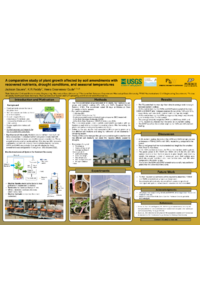
Nutrients recovered from municipal and dairy wastewaters in a bioelectrochemical system constructed with terracotta and biochar were used in different soil amendments. These amendments included terracotta addition (TS), biochar (BS), terracotta and biochar nutrient-rich mixtures from bioelectrochemical systems, DWW, and SWW, respectively. Corn growth affected by these amendments wascompared with straight soil (SS). The first experimental setup consisted of 60 plants, four replications per group, and nutrient loadings (0%, 50%, and 100% Hoagland Nutrient Solution, HNS). The experiment lasted 38 days at Mississippi State University in the fall season. The plants were grown under a prefabricated mini-hoop module with two heaters at each end to minimize the weather effects. After harvesting, the plants and soil were analyzed by various methods. At the 100% nutrient treatment, the TS soil had the best yielding plants. The plants grown in the DWW and SWW soil with the 0% and 50% nutrient treatment had the best results in plant height, total plant dry weight, the average number of leaves per plant, leaf surface area, shoot dry weight, root/shoot ratio, root surface area, and NBI when compared to the control group. Following this test, another test consisted of 80 corn plants grown using five different soil mediums and using four different nutrient treatments in the spring season. Twentyof the plants were put through a simulated drought to see how well the different soil mediums can resist the negative effects caused by droughts. In this test, the SWW soil amendment had a negative effect at 0% HNS and in warm weather. The SWW soil medium had a large retention in soil moisture, which had a negative growth effect. It is recommended that the irrigation be monitored closely when applying the SWW soil amendment to avoid overwatering. This presentation will provide critical insights and will highlight future recommendations.
Keywords
Soil amendments
corn
nutrients
terracotta
biochar
Poster
MDPI-IOCAG-Poster-10-20-25 Jackson Final.pdf
Refining Sustainability Indicators for Sugarcane Production in Sofala Province of Mozambique: A Delphi Approach
Foresight in Agriculture: How to Be More Resilient in a Volatile, Uncertain, Complex and Ambiguous World