Event submissions
Published
This submission belongs to the session D. Food Microbiology of the event The 6th International Electronic Conference on Foods
Published date
27 Oct, 2025
Academic Editor
'%3e%3cpath%20d='M12.6657%2010.9104C12.4185%2010.325%2012.0599%209.79327%2011.6097%209.34482C11.1609%208.89508%2010.6293%208.5365%2010.0442%208.28888C10.0389%208.28626%2010.0337%208.28495%2010.0285%208.28233C10.8446%207.69279%2011.3752%206.73249%2011.3752%205.64904C11.3752%203.8542%209.92103%202.39999%208.1262%202.39999C6.33136%202.39999%204.87715%203.8542%204.87715%205.64904C4.87715%206.73249%205.40774%207.69279%206.22393%208.28364C6.21869%208.28626%206.21345%208.28757%206.20821%208.29019C5.62129%208.5378%205.09463%208.89284%204.64265%209.34613C4.1929%209.79493%203.83432%2010.3266%203.58671%2010.9117C3.34345%2011.4845%203.21226%2012.0987%203.20023%2012.7209C3.19988%2012.7349%203.20233%2012.7488%203.20744%2012.7619C3.21255%2012.7749%203.22022%2012.7867%203.22998%2012.7968C3.23975%2012.8068%203.25142%2012.8147%203.26431%2012.8202C3.2772%2012.8256%203.29105%2012.8284%203.30504%2012.8284H4.09109C4.14874%2012.8284%204.19459%2012.7825%204.1959%2012.7262C4.2221%2011.7148%204.62823%2010.7676%205.34617%2010.0497C6.08899%209.30683%207.0755%208.89808%208.1262%208.89808C9.17689%208.89808%2010.1634%209.30683%2010.9062%2010.0497C11.6242%2010.7676%2012.0303%2011.7148%2012.0565%2012.7262C12.0578%2012.7838%2012.1037%2012.8284%2012.1613%2012.8284H12.9474C12.9613%2012.8284%2012.9752%2012.8256%2012.9881%2012.8202C13.001%2012.8147%2013.0126%2012.8068%2013.0224%2012.7968C13.0322%2012.7867%2013.0398%2012.7749%2013.0449%2012.7619C13.0501%2012.7488%2013.0525%2012.7349%2013.0522%2012.7209C13.0391%2012.0947%2012.9094%2011.4855%2012.6657%2010.9104ZM8.1262%207.9024C7.52486%207.9024%206.9589%207.6679%206.53312%207.24211C6.10733%206.81633%205.87283%206.25037%205.87283%205.64904C5.87283%205.0477%206.10733%204.48174%206.53312%204.05596C6.9589%203.63018%207.52486%203.39567%208.1262%203.39567C8.72753%203.39567%209.29349%203.63018%209.71927%204.05596C10.1451%204.48174%2010.3796%205.0477%2010.3796%205.64904C10.3796%206.25037%2010.1451%206.81633%209.71927%207.24211C9.29349%207.6679%208.72753%207.9024%208.1262%207.9024Z'%20fill='%235D1EE1'/%3e%3c/g%3e%3c/svg%3e) Efstathios Giaouris
Efstathios GiaourisCitation
SOUPARNO PAUL, Sayani Banerjee, Sugato Banerjee, Gunjan Goel, EVALUATION OF THE NEUROPROTECTIVE ACTIVITIES IN GABA-PRODUCING POTENTIAL PROBIOTIC STRAINS FROM INDIGENOUS FERMENTED FOODS, in Proceedings of The 6th International Electronic Conference on Foods, 28 October–30 October 2025, MDPI: Basel, Switzerland
Share
Email
Facebook
Twitter
LinkedIn
EVALUATION OF THE NEUROPROTECTIVE ACTIVITIES IN GABA-PRODUCING POTENTIAL PROBIOTIC STRAINS FROM INDIGENOUS FERMENTED FOODS
'%3e%3cpath%20d='M12.6647%2010.9104C12.4176%2010.325%2012.0589%209.7933%2011.6088%209.34485C11.16%208.89511%2010.6283%208.53653%2010.0432%208.28891C10.038%208.28629%2010.0327%208.28498%2010.0275%208.28236C10.8437%207.69282%2011.3743%206.73252%2011.3743%205.64907C11.3743%203.85423%209.92005%202.40002%208.12522%202.40002C6.33038%202.40002%204.87618%203.85423%204.87618%205.64907C4.87618%206.73252%205.40677%207.69282%206.22296%208.28367C6.21772%208.28629%206.21248%208.2876%206.20724%208.29022C5.62031%208.53783%205.09365%208.89287%204.64167%209.34616C4.19192%209.79496%203.83334%2010.3266%203.58573%2010.9117C3.34247%2011.4846%203.21128%2012.0987%203.19925%2012.721C3.1989%2012.735%203.20135%2012.7489%203.20646%2012.7619C3.21157%2012.7749%203.21924%2012.7868%203.22901%2012.7968C3.23877%2012.8068%203.25045%2012.8148%203.26334%2012.8202C3.27623%2012.8256%203.29007%2012.8284%203.30406%2012.8284H4.09012C4.14776%2012.8284%204.19362%2012.7825%204.19493%2012.7262C4.22113%2011.7148%204.62726%2010.7676%205.34519%2010.0497C6.08802%209.30686%207.07452%208.89811%208.12522%208.89811C9.17592%208.89811%2010.1624%209.30686%2010.9052%2010.0497C11.6232%2010.7676%2012.0293%2011.7148%2012.0555%2012.7262C12.0568%2012.7839%2012.1027%2012.8284%2012.1603%2012.8284H12.9464C12.9604%2012.8284%2012.9742%2012.8256%2012.9871%2012.8202C13%2012.8148%2013.0117%2012.8068%2013.0214%2012.7968C13.0312%2012.7868%2013.0389%2012.7749%2013.044%2012.7619C13.0491%2012.7489%2013.0515%2012.735%2013.0512%2012.721C13.0381%2012.0947%2012.9084%2011.4856%2012.6647%2010.9104ZM8.12522%207.90243C7.52388%207.90243%206.95792%207.66793%206.53214%207.24215C6.10636%206.81636%205.87185%206.2504%205.87185%205.64907C5.87185%205.04773%206.10636%204.48177%206.53214%204.05599C6.95792%203.63021%207.52388%203.3957%208.12522%203.3957C8.72655%203.3957%209.29252%203.63021%209.7183%204.05599C10.1441%204.48177%2010.3786%205.04773%2010.3786%205.64907C10.3786%206.2504%2010.1441%206.81636%209.7183%207.24215C9.29252%207.66793%208.72655%207.90243%208.12522%207.90243Z'%20fill='%235D1EE1'/%3e%3c/g%3e%3c/svg%3e)
SOUPARNO PAUL 1
Sayani Banerjee 2
Sugato Banerjee 2
Gunjan Goel 1
1. Department of Microbiology, Central University of Haryana, Jant-Pali, Mahendragarh, Haryana 123031, India
2. Department of Pharmacology and Toxicology, National Institute of Pharmaceutical Education and Research, Kolkata, West Bengal, 700054, India
Abstract
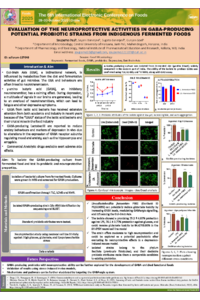
Recent research focuses on developing GABA (γ-aminobutyric acid)-producing psychobiotic strains that can positively influence mental health by modulating the gut–brain axis (GBA) through restoration of stress-induced gut dysbiosis and inflammation. This study evaluated the GABA-producing strain Limosilactobacillus fermentum PB02, isolated from traditional Indian fermented foods, for its activity against lipopolysaccharide (LPS)- and glucose-induced oxidative stress, as well as glutamate-induced toxicity in SH-SY5Y neuronal cell lines. The de Man, Rogosa, and Sharpe (MRS) medium supplemented with 2% monosodium glutamate (MSG) at 37 °C for 72 hours was identified as the optimal condition for GABA production, confirmed using ¹H Nuclear Magnetic Resonance (NMR) and mass spectrometric analyses. The metabolites produced included GABA, along with other important precursors of neurotransmitters such as phenylalanine and L-tyrosine. The strain exhibited key desirable probiotic properties, including non-haemolytic activity, acidic pH tolerance, high bile tolerance (up to 1% bile salts), adhesion to hydrocarbons, and 2,2-diphenyl-1-picrylhydrazyl (DPPH) radical scavenging activity. The cell-free supernatant (CFS) of the isolate provided 79.2 ± 4.87% protection against LPS, 70.1 ± 2.77% protection against glucose-induced stress, and 84.47 ± 3.86% protection against glutamate-induced toxicity in the SH-SY5Y neural cell line model, validated by means of Live/Dead cell imaging. The IC₅₀ values for LPS and high glucose were 200 mM and 1.5 μg/mL, respectively. The strain Limosilactobacillus fermentum PB02 (GenBank accession number PQ555695) has the potential to reduce glutamate toxicity by increasing GABA levels, modulating GABAergic signalling, and influencing the GBA. Our findings suggest that this strain offers moderate-to-high neuroprotection and could be explored further as a potential psychobiotic after evaluation in a depression-induced animal model.
Keywords
GABA
Gut-Brain Axis
Depression
Fermented foods
Poster
sciforum-137040.pdf
Optimizing Wet Fermentation Time with Lactic Acid Bacteria to Improve the Cupping Quality of Coffea arabica-Coffea canephora Blends
Application of Particle Film Influences Yeast Communities on the Surface of Touriga Nacional and Touriga Franca Grape Berries in the Douro Region