Event submissions
Published
This submission belongs to the session D. Food Microbiology of the event The 6th International Electronic Conference on Foods
Published date
27 Oct, 2025
Academic Editor
'%3e%3cpath%20d='M12.6657%2010.9104C12.4185%2010.325%2012.0599%209.79327%2011.6097%209.34482C11.1609%208.89508%2010.6293%208.5365%2010.0442%208.28888C10.0389%208.28626%2010.0337%208.28495%2010.0285%208.28233C10.8446%207.69279%2011.3752%206.73249%2011.3752%205.64904C11.3752%203.8542%209.92103%202.39999%208.1262%202.39999C6.33136%202.39999%204.87715%203.8542%204.87715%205.64904C4.87715%206.73249%205.40774%207.69279%206.22393%208.28364C6.21869%208.28626%206.21345%208.28757%206.20821%208.29019C5.62129%208.5378%205.09463%208.89284%204.64265%209.34613C4.1929%209.79493%203.83432%2010.3266%203.58671%2010.9117C3.34345%2011.4845%203.21226%2012.0987%203.20023%2012.7209C3.19988%2012.7349%203.20233%2012.7488%203.20744%2012.7619C3.21255%2012.7749%203.22022%2012.7867%203.22998%2012.7968C3.23975%2012.8068%203.25142%2012.8147%203.26431%2012.8202C3.2772%2012.8256%203.29105%2012.8284%203.30504%2012.8284H4.09109C4.14874%2012.8284%204.19459%2012.7825%204.1959%2012.7262C4.2221%2011.7148%204.62823%2010.7676%205.34617%2010.0497C6.08899%209.30683%207.0755%208.89808%208.1262%208.89808C9.17689%208.89808%2010.1634%209.30683%2010.9062%2010.0497C11.6242%2010.7676%2012.0303%2011.7148%2012.0565%2012.7262C12.0578%2012.7838%2012.1037%2012.8284%2012.1613%2012.8284H12.9474C12.9613%2012.8284%2012.9752%2012.8256%2012.9881%2012.8202C13.001%2012.8147%2013.0126%2012.8068%2013.0224%2012.7968C13.0322%2012.7867%2013.0398%2012.7749%2013.0449%2012.7619C13.0501%2012.7488%2013.0525%2012.7349%2013.0522%2012.7209C13.0391%2012.0947%2012.9094%2011.4855%2012.6657%2010.9104ZM8.1262%207.9024C7.52486%207.9024%206.9589%207.6679%206.53312%207.24211C6.10733%206.81633%205.87283%206.25037%205.87283%205.64904C5.87283%205.0477%206.10733%204.48174%206.53312%204.05596C6.9589%203.63018%207.52486%203.39567%208.1262%203.39567C8.72753%203.39567%209.29349%203.63018%209.71927%204.05596C10.1451%204.48174%2010.3796%205.0477%2010.3796%205.64904C10.3796%206.25037%2010.1451%206.81633%209.71927%207.24211C9.29349%207.6679%208.72753%207.9024%208.1262%207.9024Z'%20fill='%235D1EE1'/%3e%3c/g%3e%3c/svg%3e) Efstathios Giaouris
Efstathios GiaourisCitation
Milena Gabrielle de Jesus, Lorena Lima Ludovico, Kauã Colaço Schier, Elisana Julek, Bárbara Kornin Gabardo, Vitória Furquim Nascimento, Maria Rosa Aparecida Nunes de Oliveira, Isabela Cristina Batista Martins, Luana Siqueira de Souza, Gizelli Nascimento Santos, Vinicius de Assis Moscatelli, Bruno Ariel Furtado de Miranda, Andreia Bueno da Silva, Julia Arantes Galvão, The Microbiology of Cheeses Produced in the Metropolitan Region of Curitiba, in Proceedings of The 6th International Electronic Conference on Foods, 28 October–30 October 2025, MDPI: Basel, Switzerland
Share
Email
Facebook
Twitter
LinkedIn
The Microbiology of Cheeses Produced in the Metropolitan Region of Curitiba
'%3e%3cpath%20d='M12.6647%2010.9104C12.4176%2010.325%2012.0589%209.7933%2011.6088%209.34485C11.16%208.89511%2010.6283%208.53653%2010.0432%208.28891C10.038%208.28629%2010.0327%208.28498%2010.0275%208.28236C10.8437%207.69282%2011.3743%206.73252%2011.3743%205.64907C11.3743%203.85423%209.92005%202.40002%208.12522%202.40002C6.33038%202.40002%204.87618%203.85423%204.87618%205.64907C4.87618%206.73252%205.40677%207.69282%206.22296%208.28367C6.21772%208.28629%206.21248%208.2876%206.20724%208.29022C5.62031%208.53783%205.09365%208.89287%204.64167%209.34616C4.19192%209.79496%203.83334%2010.3266%203.58573%2010.9117C3.34247%2011.4846%203.21128%2012.0987%203.19925%2012.721C3.1989%2012.735%203.20135%2012.7489%203.20646%2012.7619C3.21157%2012.7749%203.21924%2012.7868%203.22901%2012.7968C3.23877%2012.8068%203.25045%2012.8148%203.26334%2012.8202C3.27623%2012.8256%203.29007%2012.8284%203.30406%2012.8284H4.09012C4.14776%2012.8284%204.19362%2012.7825%204.19493%2012.7262C4.22113%2011.7148%204.62726%2010.7676%205.34519%2010.0497C6.08802%209.30686%207.07452%208.89811%208.12522%208.89811C9.17592%208.89811%2010.1624%209.30686%2010.9052%2010.0497C11.6232%2010.7676%2012.0293%2011.7148%2012.0555%2012.7262C12.0568%2012.7839%2012.1027%2012.8284%2012.1603%2012.8284H12.9464C12.9604%2012.8284%2012.9742%2012.8256%2012.9871%2012.8202C13%2012.8148%2013.0117%2012.8068%2013.0214%2012.7968C13.0312%2012.7868%2013.0389%2012.7749%2013.044%2012.7619C13.0491%2012.7489%2013.0515%2012.735%2013.0512%2012.721C13.0381%2012.0947%2012.9084%2011.4856%2012.6647%2010.9104ZM8.12522%207.90243C7.52388%207.90243%206.95792%207.66793%206.53214%207.24215C6.10636%206.81636%205.87185%206.2504%205.87185%205.64907C5.87185%205.04773%206.10636%204.48177%206.53214%204.05599C6.95792%203.63021%207.52388%203.3957%208.12522%203.3957C8.72655%203.3957%209.29252%203.63021%209.7183%204.05599C10.1441%204.48177%2010.3786%205.04773%2010.3786%205.64907C10.3786%206.2504%2010.1441%206.81636%209.7183%207.24215C9.29252%207.66793%208.72655%207.90243%208.12522%207.90243Z'%20fill='%235D1EE1'/%3e%3c/g%3e%3c/svg%3e)
Milena Gabrielle de Jesus 1
Lorena Lima Ludovico 1
Kauã Colaço Schier 1
Elisana Julek 1,2
Bárbara Kornin Gabardo 1
Vitória Furquim Nascimento 1
Maria Rosa Aparecida Nunes de Oliveira 1,2
Isabela Cristina Batista Martins 1
Luana Siqueira de Souza 1,2
Gizelli Nascimento Santos 3
Vinicius de Assis Moscatelli 1
Bruno Ariel Furtado de Miranda 1,2
Andreia Bueno da Silva 1

Julia Arantes Galvão 1,2
1. Quality Control and Food Safety Laboratory - Federal University of Paraná, Curitiba/Paraná, 80035-050, Brazil
2. Post-Graduation Program in Veterinary Sciences - Federal University of Paraná, Curitiba/Paraná, 80035-050, Brazil
3. Santa Cruz State University – UESC, Ilhéus, 45662-900, Brazil
Abstract
Cheese is a popular food in Brazil, but its microbiological safety can be compromised by the presence of potentially pathogenic microorganisms, such as coagulase-positive Staphylococcus (CPS) and Listeria monocytogenes. However, there is a lack of published data on the microbiological quality of cheeses produced in the Metropolitan Region of Curitiba (MRC), which limits the understanding of regional risks to public health and the development of specific food safety strategies. This study seeks to fill this gap by providing unpublished data on microbial counts and fermentation quality in locally produced cheeses. Lactic acid bacteria (LAB) are important for fermentation, helping to develop flavor and inhibit the growth of pathogens. However, the lack of sanitary control in production can result in contamination. There are no reports on the microbiological conditions of cheeses produced in the MRC, so this study aimed to quantify LAB and CPS, as well as to investigate the presence of L. monocytogenes in cheeses from the MRC, in addition to evaluating pH, an important parameter for product safety and quality. Five cheese samples were collected from two cheese factories in the MRC, totaling 10 samples. In the microbiological analysis, CPS were detected at levels above those permitted in the samples from cheese factory 1, indicating shortcomings in the hygiene and health conditions. No CPS (≤1.0 x 10² CFU/g) were detected in cheese factory 2. L. monocytogenes was not detected in any of the samples evaluated. On the other hand, the LAB count was satisfactory in both cheesemakers, suggesting good fermentation. The pH of the samples varied between 4.8 and 5.1 atCheese Factory 1, indicating efficient fermentation, while at Cheese Factory 2, the higher pH (6.57–6.67) suggests problems in the fermentation process. These results highlight the importance of hygienic control and fermentation for the safety and quality of the cheeses.
Keywords
Coagulase positive Staphylococcus
Listeria monocytogenes
Lactic acid bacteria
Poster
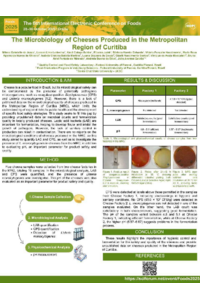
photo_5123221601708084050_y (1).pdf
Bifidobacterial occurrence and species variability in raw milk
Microbiological Evaluation of Stingless Bee Honey from Four Different Species