Event submissions
Published
This submission belongs to the session F. Sustainable Food Security and Food Systems of the event The 6th International Electronic Conference on Foods
Published date
27 Oct, 2025
Academic Editor
'%3e%3cpath%20d='M12.6657%2010.9104C12.4185%2010.325%2012.0599%209.79327%2011.6097%209.34482C11.1609%208.89508%2010.6293%208.5365%2010.0442%208.28888C10.0389%208.28626%2010.0337%208.28495%2010.0285%208.28233C10.8446%207.69279%2011.3752%206.73249%2011.3752%205.64904C11.3752%203.8542%209.92103%202.39999%208.1262%202.39999C6.33136%202.39999%204.87715%203.8542%204.87715%205.64904C4.87715%206.73249%205.40774%207.69279%206.22393%208.28364C6.21869%208.28626%206.21345%208.28757%206.20821%208.29019C5.62129%208.5378%205.09463%208.89284%204.64265%209.34613C4.1929%209.79493%203.83432%2010.3266%203.58671%2010.9117C3.34345%2011.4845%203.21226%2012.0987%203.20023%2012.7209C3.19988%2012.7349%203.20233%2012.7488%203.20744%2012.7619C3.21255%2012.7749%203.22022%2012.7867%203.22998%2012.7968C3.23975%2012.8068%203.25142%2012.8147%203.26431%2012.8202C3.2772%2012.8256%203.29105%2012.8284%203.30504%2012.8284H4.09109C4.14874%2012.8284%204.19459%2012.7825%204.1959%2012.7262C4.2221%2011.7148%204.62823%2010.7676%205.34617%2010.0497C6.08899%209.30683%207.0755%208.89808%208.1262%208.89808C9.17689%208.89808%2010.1634%209.30683%2010.9062%2010.0497C11.6242%2010.7676%2012.0303%2011.7148%2012.0565%2012.7262C12.0578%2012.7838%2012.1037%2012.8284%2012.1613%2012.8284H12.9474C12.9613%2012.8284%2012.9752%2012.8256%2012.9881%2012.8202C13.001%2012.8147%2013.0126%2012.8068%2013.0224%2012.7968C13.0322%2012.7867%2013.0398%2012.7749%2013.0449%2012.7619C13.0501%2012.7488%2013.0525%2012.7349%2013.0522%2012.7209C13.0391%2012.0947%2012.9094%2011.4855%2012.6657%2010.9104ZM8.1262%207.9024C7.52486%207.9024%206.9589%207.6679%206.53312%207.24211C6.10733%206.81633%205.87283%206.25037%205.87283%205.64904C5.87283%205.0477%206.10733%204.48174%206.53312%204.05596C6.9589%203.63018%207.52486%203.39567%208.1262%203.39567C8.72753%203.39567%209.29349%203.63018%209.71927%204.05596C10.1451%204.48174%2010.3796%205.0477%2010.3796%205.64904C10.3796%206.25037%2010.1451%206.81633%209.71927%207.24211C9.29349%207.6679%208.72753%207.9024%208.1262%207.9024Z'%20fill='%235D1EE1'/%3e%3c/g%3e%3c/svg%3e) Arun Bhunia
Arun BhuniaCitation
Daniele Bravoco, Giuseppina di Paola, Teresa D'Amore, Carlo Calabrese, Valeria Lucci, Giuliana Napolitano, Pellegrino Mazzone, Geppino Falco, Safety and Efficacy of an Olive Oil-Derived Nutraceutical in Inflammatory Bowel Disease (IBD) Patient-Derived Organoids: A Sustainable Approach to Precision Medicine, in Proceedings of The 6th International Electronic Conference on Foods, 28 October–30 October 2025, MDPI: Basel, Switzerland
Share
Email
Facebook
Twitter
LinkedIn
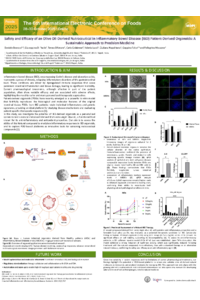
Safety and Efficacy of an Olive Oil-Derived Nutraceutical in Inflammatory Bowel Disease (IBD) Patient-Derived Organoids: A Sustainable Approach to Precision Medicine
'%3e%3cpath%20d='M12.6647%2010.9104C12.4176%2010.325%2012.0589%209.7933%2011.6088%209.34485C11.16%208.89511%2010.6283%208.53653%2010.0432%208.28891C10.038%208.28629%2010.0327%208.28498%2010.0275%208.28236C10.8437%207.69282%2011.3743%206.73252%2011.3743%205.64907C11.3743%203.85423%209.92005%202.40002%208.12522%202.40002C6.33038%202.40002%204.87618%203.85423%204.87618%205.64907C4.87618%206.73252%205.40677%207.69282%206.22296%208.28367C6.21772%208.28629%206.21248%208.2876%206.20724%208.29022C5.62031%208.53783%205.09365%208.89287%204.64167%209.34616C4.19192%209.79496%203.83334%2010.3266%203.58573%2010.9117C3.34247%2011.4846%203.21128%2012.0987%203.19925%2012.721C3.1989%2012.735%203.20135%2012.7489%203.20646%2012.7619C3.21157%2012.7749%203.21924%2012.7868%203.22901%2012.7968C3.23877%2012.8068%203.25045%2012.8148%203.26334%2012.8202C3.27623%2012.8256%203.29007%2012.8284%203.30406%2012.8284H4.09012C4.14776%2012.8284%204.19362%2012.7825%204.19493%2012.7262C4.22113%2011.7148%204.62726%2010.7676%205.34519%2010.0497C6.08802%209.30686%207.07452%208.89811%208.12522%208.89811C9.17592%208.89811%2010.1624%209.30686%2010.9052%2010.0497C11.6232%2010.7676%2012.0293%2011.7148%2012.0555%2012.7262C12.0568%2012.7839%2012.1027%2012.8284%2012.1603%2012.8284H12.9464C12.9604%2012.8284%2012.9742%2012.8256%2012.9871%2012.8202C13%2012.8148%2013.0117%2012.8068%2013.0214%2012.7968C13.0312%2012.7868%2013.0389%2012.7749%2013.044%2012.7619C13.0491%2012.7489%2013.0515%2012.735%2013.0512%2012.721C13.0381%2012.0947%2012.9084%2011.4856%2012.6647%2010.9104ZM8.12522%207.90243C7.52388%207.90243%206.95792%207.66793%206.53214%207.24215C6.10636%206.81636%205.87185%206.2504%205.87185%205.64907C5.87185%205.04773%206.10636%204.48177%206.53214%204.05599C6.95792%203.63021%207.52388%203.3957%208.12522%203.3957C8.72655%203.3957%209.29252%203.63021%209.7183%204.05599C10.1441%204.48177%2010.3786%205.04773%2010.3786%205.64907C10.3786%206.2504%2010.1441%206.81636%209.7183%207.24215C9.29252%207.66793%208.72655%207.90243%208.12522%207.90243Z'%20fill='%235D1EE1'/%3e%3c/g%3e%3c/svg%3e)
Daniele Bravoco 1,2
Giuseppina di Paola 2

Teresa D'Amore 3
Carlo Calabrese 4
Valeria Lucci 5
Giuliana Napolitano 5

Pellegrino Mazzone 2
Geppino Falco 5
1. Dipartimento di Sanità Pubblica e Medicina Preventiva, Università degli Studi di Napoli “Federico II”, 80131 Napoli, Italia.
2. Istituto di Ricerche Genetiche Gaetano Salvatore Biogem Scarl, 83031 Ariano Irpino, Italia.
3. IRCCS-CROB Centro di Riferimento Oncologico della Basilica, 85028 Rionero in Vulture, Italia.
4. Dipartimento di Scienze Mediche e Chirurgiche, Università di Bologna, 40126 Bologna, Italia.
5. Dipartimento di Biologia, Università degli Studi di Napoli “Federico II”, 80126 Napoli, Italia.
Abstract
Inflammatory Bowel Disease (IBD), including Crohn’s disease and ulcerative colitis, is a chronic inflammatory condition of the gastrointestinal tract with complex pathogenesis involving genetic, environmental, microbial, and immune-related factors. Current pharmacological treatments, though effective for some patients, are often associated with limited long-term efficacy and significant side effects. In this context, patient-derived organoids (PDOs) have emerged as advanced 3D in vitro models that replicate the architecture, cellular diversity, and inflammatory profiles of native intestinal tissue. These models offer a powerful platform for personalized medicine and drug screening.
In this study, intestinal organoids were established from biopsies of IBD patients and healthy controls. The IBD-derived organoids retained key pathological features of the disease, including elevated expression of inflammatory markers such as IL-8 and CLDN-1, as well as increased cytokine secretion, confirming their relevance as disease models. These PDOs were then used to evaluate the anti-inflammatory effects of a natural compound derived from extra virgin olive oil, known for its antioxidant and anti-inflammatory properties.
We further evaluated a natural compound derived from extra virgin olive oil rich in stable ozonides for its anti-inflammatory potential. Using a luciferase-based NF-κB reporter system in both 2D cell lines and 3D organoids, we demonstrated that this natural compound significantly attenuates TNFα-induced NF-κB activation. Importantly, this formulation exhibited minimal cytotoxicity at therapeutic concentrations and preserved viability in cell and organoid cultures after MTT assays.
These findings highlight the utility of PDOs as a physiologically relevant model for studying IBD pathogenesis and therapeutic response. Moreover, the olive oil-derived compound emerges as a promising, safe, and sustainable alternative or adjunct to conventional IBD therapies. This work supports the integration of organoid technology with nutraceutical research to advance personalized and less toxic treatment strategies for chronic inflammatory diseases.
Keywords
Organoids
Functional foods
olive oil
Natural molecules
IBD
Ulcerative Colitis
Crohn's disease
Precision medicine
Inflammation
Poster
Foods Conference ppt Daniele Bravoco.pdf
Biopreservative and Antioxidant Potential of Novel Lactic Acid Bacteria Strains from Low-Sodium Vegetable Fermentations
Evaluation of the antimicrobial activity of Melipona quadrifasciata geopropolis against foodborne pathogens