Event submissions
Published
This submission belongs to the session F. Sustainable Food Security and Food Systems of the event The 6th International Electronic Conference on Foods
Published date
27 Oct, 2025
Academic Editor
'%3e%3cpath%20d='M12.6657%2010.9104C12.4185%2010.325%2012.0599%209.79327%2011.6097%209.34482C11.1609%208.89508%2010.6293%208.5365%2010.0442%208.28888C10.0389%208.28626%2010.0337%208.28495%2010.0285%208.28233C10.8446%207.69279%2011.3752%206.73249%2011.3752%205.64904C11.3752%203.8542%209.92103%202.39999%208.1262%202.39999C6.33136%202.39999%204.87715%203.8542%204.87715%205.64904C4.87715%206.73249%205.40774%207.69279%206.22393%208.28364C6.21869%208.28626%206.21345%208.28757%206.20821%208.29019C5.62129%208.5378%205.09463%208.89284%204.64265%209.34613C4.1929%209.79493%203.83432%2010.3266%203.58671%2010.9117C3.34345%2011.4845%203.21226%2012.0987%203.20023%2012.7209C3.19988%2012.7349%203.20233%2012.7488%203.20744%2012.7619C3.21255%2012.7749%203.22022%2012.7867%203.22998%2012.7968C3.23975%2012.8068%203.25142%2012.8147%203.26431%2012.8202C3.2772%2012.8256%203.29105%2012.8284%203.30504%2012.8284H4.09109C4.14874%2012.8284%204.19459%2012.7825%204.1959%2012.7262C4.2221%2011.7148%204.62823%2010.7676%205.34617%2010.0497C6.08899%209.30683%207.0755%208.89808%208.1262%208.89808C9.17689%208.89808%2010.1634%209.30683%2010.9062%2010.0497C11.6242%2010.7676%2012.0303%2011.7148%2012.0565%2012.7262C12.0578%2012.7838%2012.1037%2012.8284%2012.1613%2012.8284H12.9474C12.9613%2012.8284%2012.9752%2012.8256%2012.9881%2012.8202C13.001%2012.8147%2013.0126%2012.8068%2013.0224%2012.7968C13.0322%2012.7867%2013.0398%2012.7749%2013.0449%2012.7619C13.0501%2012.7488%2013.0525%2012.7349%2013.0522%2012.7209C13.0391%2012.0947%2012.9094%2011.4855%2012.6657%2010.9104ZM8.1262%207.9024C7.52486%207.9024%206.9589%207.6679%206.53312%207.24211C6.10733%206.81633%205.87283%206.25037%205.87283%205.64904C5.87283%205.0477%206.10733%204.48174%206.53312%204.05596C6.9589%203.63018%207.52486%203.39567%208.1262%203.39567C8.72753%203.39567%209.29349%203.63018%209.71927%204.05596C10.1451%204.48174%2010.3796%205.0477%2010.3796%205.64904C10.3796%206.25037%2010.1451%206.81633%209.71927%207.24211C9.29349%207.6679%208.72753%207.9024%208.1262%207.9024Z'%20fill='%235D1EE1'/%3e%3c/g%3e%3c/svg%3e) Theodoros Varzakas
Theodoros VarzakasCitation
Samira Negrichi, Salima Taleb, Abdelhakim Ridouh, Ali Debbache, Perceived benefits, risks, and determinants of acceptance among Algerian consumers of insect-based animal feed for poultry, cattle, small ruminants, and fish, in Proceedings of The 6th International Electronic Conference on Foods, 28 October–30 October 2025, MDPI: Basel, Switzerland
Share
Email
Facebook
Twitter
LinkedIn
Perceived benefits, risks, and determinants of acceptance among Algerian consumers of insect-based animal feed for poultry, cattle, small ruminants, and fish

Samira Negrichi 1
'%3e%3cpath%20d='M12.6647%2010.9104C12.4176%2010.325%2012.0589%209.7933%2011.6088%209.34485C11.16%208.89511%2010.6283%208.53653%2010.0432%208.28891C10.038%208.28629%2010.0327%208.28498%2010.0275%208.28236C10.8437%207.69282%2011.3743%206.73252%2011.3743%205.64907C11.3743%203.85423%209.92005%202.40002%208.12522%202.40002C6.33038%202.40002%204.87618%203.85423%204.87618%205.64907C4.87618%206.73252%205.40677%207.69282%206.22296%208.28367C6.21772%208.28629%206.21248%208.2876%206.20724%208.29022C5.62031%208.53783%205.09365%208.89287%204.64167%209.34616C4.19192%209.79496%203.83334%2010.3266%203.58573%2010.9117C3.34247%2011.4846%203.21128%2012.0987%203.19925%2012.721C3.1989%2012.735%203.20135%2012.7489%203.20646%2012.7619C3.21157%2012.7749%203.21924%2012.7868%203.22901%2012.7968C3.23877%2012.8068%203.25045%2012.8148%203.26334%2012.8202C3.27623%2012.8256%203.29007%2012.8284%203.30406%2012.8284H4.09012C4.14776%2012.8284%204.19362%2012.7825%204.19493%2012.7262C4.22113%2011.7148%204.62726%2010.7676%205.34519%2010.0497C6.08802%209.30686%207.07452%208.89811%208.12522%208.89811C9.17592%208.89811%2010.1624%209.30686%2010.9052%2010.0497C11.6232%2010.7676%2012.0293%2011.7148%2012.0555%2012.7262C12.0568%2012.7839%2012.1027%2012.8284%2012.1603%2012.8284H12.9464C12.9604%2012.8284%2012.9742%2012.8256%2012.9871%2012.8202C13%2012.8148%2013.0117%2012.8068%2013.0214%2012.7968C13.0312%2012.7868%2013.0389%2012.7749%2013.044%2012.7619C13.0491%2012.7489%2013.0515%2012.735%2013.0512%2012.721C13.0381%2012.0947%2012.9084%2011.4856%2012.6647%2010.9104ZM8.12522%207.90243C7.52388%207.90243%206.95792%207.66793%206.53214%207.24215C6.10636%206.81636%205.87185%206.2504%205.87185%205.64907C5.87185%205.04773%206.10636%204.48177%206.53214%204.05599C6.95792%203.63021%207.52388%203.3957%208.12522%203.3957C8.72655%203.3957%209.29252%203.63021%209.7183%204.05599C10.1441%204.48177%2010.3786%205.04773%2010.3786%205.64907C10.3786%206.2504%2010.1441%206.81636%209.7183%207.24215C9.29252%207.66793%208.72655%207.90243%208.12522%207.90243Z'%20fill='%235D1EE1'/%3e%3c/g%3e%3c/svg%3e)
Salima Taleb 2,3
Abdelhakim Ridouh 1
Ali Debbache 4
1. Centre de Recherche en Technologies Agroalimentaires (CRTAA), Campus Universitaire Tergua Ouzemour 06000, Bejaia, Algeria
2. Department of Applied Biology, Faculty of Exact Sciences and Sciences of Nature and Life, Echahid Cheikh Larbi Tebessi University, Tebessa, 12000, Algeria
3. Laboratory of Nutrition and Food Technology (LNTA), University of Constantine 1, Constantine, 25000, Algeria
4. Department of Psychology, Faculty of Humanities and Social Sciences, Constantine University, Constantine, 25000, Algeria
Abstract
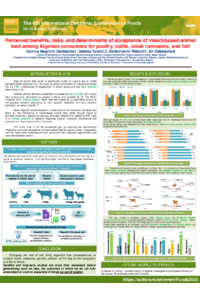
Insects, recognized for their exceptional nutritional profile, represent a promising alternative protein source for use in animal feed. As the global demand for animal-derived food products continues to rise, identifying innovative and sustainable protein solutions has become imperative. Despite their potential, the adoption of insect-based feed faces significant barriers, particularly regarding consumer acceptance and safety concerns. Many individuals are reluctant to embrace unfamiliar animal-origin products, and in Algeria, no research to date has investigated consumer attitudes toward insect-based feed alternatives. This study examines Algerian consumers' perceptions of the benefits and risks of insect-based feed (for poultry, cattle, small ruminants, and fish) and the factors influencing their acceptance. To achieve this, an online survey was conducted targeting Algerian consumers in 2024. Over 250 responses were collected and analyzed using descriptive statistics and logistic regression. Participants showed greater willingness to approve insect-based feed for poultry and fish, with 48% expressing acceptance for each, compared to only 23% approval for its use in bovines and ovines. The most influential factors affecting consumer acceptance were nutritional benefits (55%), disgust (53%), animal welfare (45%), and psychological factors (38%). The analysis of participants' responses revealed varying perceptions regarding the advantages and risks associated with using insects in animal feed. Among the advantages, the most agreed-upon aspects included improved organic waste valorization (44% to 20%), enhanced sustainability (44% to 24%), reduced production costs (46% to 29%), and increased global food availability (38% to 22%). Conversely, participants also highlighted concerns about potential risks, including allergenic reactions in humans (50% to 42%) and animals (50% to 39%), bio-diversity impacts (58% to 51%), microbiological contamination (51% to 45%), chemical residues (40% to 38%), and competition with other agricultural activities (35% to 29%). These concerns indicate a need for rigorous safety assessments, transparent communication about benefits and risks, and public education to address misconceptions.
Keywords
Insect-based feed
consumer acceptance
benefits
risks
food security
Algeria
Poster
5ae0cf28a68ec0adec3cfa34997d5576.pdf
Valorization of milk thistle oilcakes in the culture of Yarroiwa lipolytica yeast
Sustainable cricket farming and the circular economy: diet supplementation with microalgae reared on cricket frass to improve the nutritional profile of crickets