Event submissions
Published
This submission belongs to the session F. Sustainable Food Security and Food Systems of the event The 6th International Electronic Conference on Foods
Published date
27 Oct, 2025
Academic Editor
'%3e%3cpath%20d='M12.6657%2010.9104C12.4185%2010.325%2012.0599%209.79327%2011.6097%209.34482C11.1609%208.89508%2010.6293%208.5365%2010.0442%208.28888C10.0389%208.28626%2010.0337%208.28495%2010.0285%208.28233C10.8446%207.69279%2011.3752%206.73249%2011.3752%205.64904C11.3752%203.8542%209.92103%202.39999%208.1262%202.39999C6.33136%202.39999%204.87715%203.8542%204.87715%205.64904C4.87715%206.73249%205.40774%207.69279%206.22393%208.28364C6.21869%208.28626%206.21345%208.28757%206.20821%208.29019C5.62129%208.5378%205.09463%208.89284%204.64265%209.34613C4.1929%209.79493%203.83432%2010.3266%203.58671%2010.9117C3.34345%2011.4845%203.21226%2012.0987%203.20023%2012.7209C3.19988%2012.7349%203.20233%2012.7488%203.20744%2012.7619C3.21255%2012.7749%203.22022%2012.7867%203.22998%2012.7968C3.23975%2012.8068%203.25142%2012.8147%203.26431%2012.8202C3.2772%2012.8256%203.29105%2012.8284%203.30504%2012.8284H4.09109C4.14874%2012.8284%204.19459%2012.7825%204.1959%2012.7262C4.2221%2011.7148%204.62823%2010.7676%205.34617%2010.0497C6.08899%209.30683%207.0755%208.89808%208.1262%208.89808C9.17689%208.89808%2010.1634%209.30683%2010.9062%2010.0497C11.6242%2010.7676%2012.0303%2011.7148%2012.0565%2012.7262C12.0578%2012.7838%2012.1037%2012.8284%2012.1613%2012.8284H12.9474C12.9613%2012.8284%2012.9752%2012.8256%2012.9881%2012.8202C13.001%2012.8147%2013.0126%2012.8068%2013.0224%2012.7968C13.0322%2012.7867%2013.0398%2012.7749%2013.0449%2012.7619C13.0501%2012.7488%2013.0525%2012.7349%2013.0522%2012.7209C13.0391%2012.0947%2012.9094%2011.4855%2012.6657%2010.9104ZM8.1262%207.9024C7.52486%207.9024%206.9589%207.6679%206.53312%207.24211C6.10733%206.81633%205.87283%206.25037%205.87283%205.64904C5.87283%205.0477%206.10733%204.48174%206.53312%204.05596C6.9589%203.63018%207.52486%203.39567%208.1262%203.39567C8.72753%203.39567%209.29349%203.63018%209.71927%204.05596C10.1451%204.48174%2010.3796%205.0477%2010.3796%205.64904C10.3796%206.25037%2010.1451%206.81633%209.71927%207.24211C9.29349%207.6679%208.72753%207.9024%208.1262%207.9024Z'%20fill='%235D1EE1'/%3e%3c/g%3e%3c/svg%3e) Víctor Manuel Pérez Puyana
Víctor Manuel Pérez PuyanaCitation
Orquidea Vasconcelos Santos, Mayara Galvão Martins, Helen Cristina Oliveira Palheta, Jade Vitória Duarte de Carvalho, Railanni dos Santos Cantão, Andrei de Oliveira Ramos, Amanda Ramos Soares, Application of agro-industrial biomasses as a strategy to increase the sustainable bioeconomy in the Amazon, in Proceedings of The 6th International Electronic Conference on Foods, 28 October–30 October 2025, MDPI: Basel, Switzerland
Share
Email
Facebook
Twitter
LinkedIn
Application of agro-industrial biomasses as a strategy to increase the sustainable bioeconomy in the Amazon
'%3e%3cpath%20d='M12.6647%2010.9104C12.4176%2010.325%2012.0589%209.7933%2011.6088%209.34485C11.16%208.89511%2010.6283%208.53653%2010.0432%208.28891C10.038%208.28629%2010.0327%208.28498%2010.0275%208.28236C10.8437%207.69282%2011.3743%206.73252%2011.3743%205.64907C11.3743%203.85423%209.92005%202.40002%208.12522%202.40002C6.33038%202.40002%204.87618%203.85423%204.87618%205.64907C4.87618%206.73252%205.40677%207.69282%206.22296%208.28367C6.21772%208.28629%206.21248%208.2876%206.20724%208.29022C5.62031%208.53783%205.09365%208.89287%204.64167%209.34616C4.19192%209.79496%203.83334%2010.3266%203.58573%2010.9117C3.34247%2011.4846%203.21128%2012.0987%203.19925%2012.721C3.1989%2012.735%203.20135%2012.7489%203.20646%2012.7619C3.21157%2012.7749%203.21924%2012.7868%203.22901%2012.7968C3.23877%2012.8068%203.25045%2012.8148%203.26334%2012.8202C3.27623%2012.8256%203.29007%2012.8284%203.30406%2012.8284H4.09012C4.14776%2012.8284%204.19362%2012.7825%204.19493%2012.7262C4.22113%2011.7148%204.62726%2010.7676%205.34519%2010.0497C6.08802%209.30686%207.07452%208.89811%208.12522%208.89811C9.17592%208.89811%2010.1624%209.30686%2010.9052%2010.0497C11.6232%2010.7676%2012.0293%2011.7148%2012.0555%2012.7262C12.0568%2012.7839%2012.1027%2012.8284%2012.1603%2012.8284H12.9464C12.9604%2012.8284%2012.9742%2012.8256%2012.9871%2012.8202C13%2012.8148%2013.0117%2012.8068%2013.0214%2012.7968C13.0312%2012.7868%2013.0389%2012.7749%2013.044%2012.7619C13.0491%2012.7489%2013.0515%2012.735%2013.0512%2012.721C13.0381%2012.0947%2012.9084%2011.4856%2012.6647%2010.9104ZM8.12522%207.90243C7.52388%207.90243%206.95792%207.66793%206.53214%207.24215C6.10636%206.81636%205.87185%206.2504%205.87185%205.64907C5.87185%205.04773%206.10636%204.48177%206.53214%204.05599C6.95792%203.63021%207.52388%203.3957%208.12522%203.3957C8.72655%203.3957%209.29252%203.63021%209.7183%204.05599C10.1441%204.48177%2010.3786%205.04773%2010.3786%205.64907C10.3786%206.2504%2010.1441%206.81636%209.7183%207.24215C9.29252%207.66793%208.72655%207.90243%208.12522%207.90243Z'%20fill='%235D1EE1'/%3e%3c/g%3e%3c/svg%3e)
Orquidea Vasconcelos Santos 1
Mayara Galvão Martins 2
Helen Cristina Oliveira Palheta 3
Jade Vitória Duarte de Carvalho 3
Railanni dos Santos Cantão 4
Andrei de Oliveira Ramos 4
Amanda Ramos Soares 4
1. Federal University of Pará, Belém, 66075-110, Brazil
2. Instituto Mamirauá de desenvolvimento Sustentável – IMDS-CNPQ, Tefé, 69553-225, Brazil
3. Graduate Program in Food Science and Technology (PPGCTA), Federal University of Pará (UFPA), Belém, 66075-110, Brazil.
4. Institute of Health Sciences, Faculty of Nutrition, Federal University of Pará, Belém, 66075-110, Brazil.
Abstract
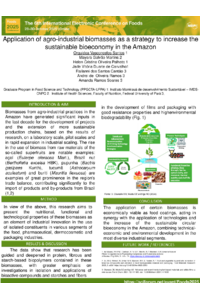
Biomasses from agro-industrial practices in the Amazon have generated significant inputs in the last decade for the development of projects and the extension of more sustainable production chains, based on the results of research, on a laboratory scale, pilot scales and in rapid expansion in industrial scaling. The rise in the use of biomass from raw materials of the so-called superfruits are notable examples: açaí (Euterpe oleracea Mart.), Brazil nut (Bertholletia excelsa HBK), pupunha (Bactris gasipaes Kunth), tucumã (Astrocaryum aculeatum) and buriti (Mauritia flexuosa) are examples of great prominence in the region's trade balance, contributing significantly to the import of products and by-products from Brazil. In view of the above, this research aims to present the nutritional, functional and technological properties of these biomasses as an element of industrial innovation in the use of isolated constituents in various segments of the food, pharmaceutical, dermocosmetic and packaging industries. The data show that research has been guided and deepened in protein, fibrous and starch-based biopolymers contained in these biomasses, with greater emphasis on investigations in isolation and applications of bioactive compounds and starches and fibers in the development of films and packaging with good resistance properties and high environmental biodegradability, being economically viable as food coatings, acting in synergy with the application of technologies and the increase of the sustainable circular bioeconomy in the Amazon, combining techno-economic and environmental development in the most diverse industrial segments.
Keywords
Keywords: Biomass
Amazon
sustainability
Poster
5ae0cf28a68ec0adec3cfa34997d5576.pdf
Spontaneously Fermented Foods as Reservoirs of Probiotic Microorganisms: Tradition Meets Functionality
Castanea sativa Agri-Food By-Products: A Sustainable Approach