Event submissions
Published
This submission belongs to the session F. Sustainable Food Security and Food Systems of the event The 6th International Electronic Conference on Foods
Published date
27 Oct, 2025
Academic Editor
'%3e%3cpath%20d='M12.6657%2010.9104C12.4185%2010.325%2012.0599%209.79327%2011.6097%209.34482C11.1609%208.89508%2010.6293%208.5365%2010.0442%208.28888C10.0389%208.28626%2010.0337%208.28495%2010.0285%208.28233C10.8446%207.69279%2011.3752%206.73249%2011.3752%205.64904C11.3752%203.8542%209.92103%202.39999%208.1262%202.39999C6.33136%202.39999%204.87715%203.8542%204.87715%205.64904C4.87715%206.73249%205.40774%207.69279%206.22393%208.28364C6.21869%208.28626%206.21345%208.28757%206.20821%208.29019C5.62129%208.5378%205.09463%208.89284%204.64265%209.34613C4.1929%209.79493%203.83432%2010.3266%203.58671%2010.9117C3.34345%2011.4845%203.21226%2012.0987%203.20023%2012.7209C3.19988%2012.7349%203.20233%2012.7488%203.20744%2012.7619C3.21255%2012.7749%203.22022%2012.7867%203.22998%2012.7968C3.23975%2012.8068%203.25142%2012.8147%203.26431%2012.8202C3.2772%2012.8256%203.29105%2012.8284%203.30504%2012.8284H4.09109C4.14874%2012.8284%204.19459%2012.7825%204.1959%2012.7262C4.2221%2011.7148%204.62823%2010.7676%205.34617%2010.0497C6.08899%209.30683%207.0755%208.89808%208.1262%208.89808C9.17689%208.89808%2010.1634%209.30683%2010.9062%2010.0497C11.6242%2010.7676%2012.0303%2011.7148%2012.0565%2012.7262C12.0578%2012.7838%2012.1037%2012.8284%2012.1613%2012.8284H12.9474C12.9613%2012.8284%2012.9752%2012.8256%2012.9881%2012.8202C13.001%2012.8147%2013.0126%2012.8068%2013.0224%2012.7968C13.0322%2012.7867%2013.0398%2012.7749%2013.0449%2012.7619C13.0501%2012.7488%2013.0525%2012.7349%2013.0522%2012.7209C13.0391%2012.0947%2012.9094%2011.4855%2012.6657%2010.9104ZM8.1262%207.9024C7.52486%207.9024%206.9589%207.6679%206.53312%207.24211C6.10733%206.81633%205.87283%206.25037%205.87283%205.64904C5.87283%205.0477%206.10733%204.48174%206.53312%204.05596C6.9589%203.63018%207.52486%203.39567%208.1262%203.39567C8.72753%203.39567%209.29349%203.63018%209.71927%204.05596C10.1451%204.48174%2010.3796%205.0477%2010.3796%205.64904C10.3796%206.25037%2010.1451%206.81633%209.71927%207.24211C9.29349%207.6679%208.72753%207.9024%208.1262%207.9024Z'%20fill='%235D1EE1'/%3e%3c/g%3e%3c/svg%3e) Víctor Manuel Pérez Puyana
Víctor Manuel Pérez PuyanaCitation
Joana Martins, Juliana Garcia, Rafaela Guimarães, Maria José Saavedra, Maria José Alves, Castanea sativa Agri-Food By-Products: A Sustainable Approach, in Proceedings of The 6th International Electronic Conference on Foods, 28 October–30 October 2025, MDPI: Basel, Switzerland
Share
Email
Facebook
Twitter
LinkedIn
Castanea sativa Agri-Food By-Products: A Sustainable Approach
'%3e%3cpath%20d='M12.6647%2010.9104C12.4176%2010.325%2012.0589%209.7933%2011.6088%209.34485C11.16%208.89511%2010.6283%208.53653%2010.0432%208.28891C10.038%208.28629%2010.0327%208.28498%2010.0275%208.28236C10.8437%207.69282%2011.3743%206.73252%2011.3743%205.64907C11.3743%203.85423%209.92005%202.40002%208.12522%202.40002C6.33038%202.40002%204.87618%203.85423%204.87618%205.64907C4.87618%206.73252%205.40677%207.69282%206.22296%208.28367C6.21772%208.28629%206.21248%208.2876%206.20724%208.29022C5.62031%208.53783%205.09365%208.89287%204.64167%209.34616C4.19192%209.79496%203.83334%2010.3266%203.58573%2010.9117C3.34247%2011.4846%203.21128%2012.0987%203.19925%2012.721C3.1989%2012.735%203.20135%2012.7489%203.20646%2012.7619C3.21157%2012.7749%203.21924%2012.7868%203.22901%2012.7968C3.23877%2012.8068%203.25045%2012.8148%203.26334%2012.8202C3.27623%2012.8256%203.29007%2012.8284%203.30406%2012.8284H4.09012C4.14776%2012.8284%204.19362%2012.7825%204.19493%2012.7262C4.22113%2011.7148%204.62726%2010.7676%205.34519%2010.0497C6.08802%209.30686%207.07452%208.89811%208.12522%208.89811C9.17592%208.89811%2010.1624%209.30686%2010.9052%2010.0497C11.6232%2010.7676%2012.0293%2011.7148%2012.0555%2012.7262C12.0568%2012.7839%2012.1027%2012.8284%2012.1603%2012.8284H12.9464C12.9604%2012.8284%2012.9742%2012.8256%2012.9871%2012.8202C13%2012.8148%2013.0117%2012.8068%2013.0214%2012.7968C13.0312%2012.7868%2013.0389%2012.7749%2013.044%2012.7619C13.0491%2012.7489%2013.0515%2012.735%2013.0512%2012.721C13.0381%2012.0947%2012.9084%2011.4856%2012.6647%2010.9104ZM8.12522%207.90243C7.52388%207.90243%206.95792%207.66793%206.53214%207.24215C6.10636%206.81636%205.87185%206.2504%205.87185%205.64907C5.87185%205.04773%206.10636%204.48177%206.53214%204.05599C6.95792%203.63021%207.52388%203.3957%208.12522%203.3957C8.72655%203.3957%209.29252%203.63021%209.7183%204.05599C10.1441%204.48177%2010.3786%205.04773%2010.3786%205.64907C10.3786%206.2504%2010.1441%206.81636%209.7183%207.24215C9.29252%207.66793%208.72655%207.90243%208.12522%207.90243Z'%20fill='%235D1EE1'/%3e%3c/g%3e%3c/svg%3e)
Joana Martins 1,2,3,4,5

Juliana Garcia 1,2,5
Rafaela Guimarães 1,5

Maria José Saavedra 2,3,4
Maria José Alves 1,5,6,7
1. Centre for the Valorisation and Transfer of Water Technology, AquaValor, Chaves, 5400-342, Portugal
2. Centre for the Research and Technology of Agroenvironmental and Biological Sciences, CITAB, Inov4Agro, University of Trás-os-Montes and Alto Douro, UTAD, Quinta de Prados - Vila Real, 5000-801, Portugal
3. Veterinary and Animal Research Centre and Associate Laboratory for Animal and Veterinary Science (AL4AnimalS), CECAV, University of Trás-os-Montes and Alto Douro, Vila Real, 5000-801, Portugal
4. AB2Unit - Antimicrobials, Biocides & Biofilms Unit and Veterinary Sciences Department, University of Trás-os-Montes and Alto Douro (UTAD), 5001-801 Vila Real, Portugal
5. Research Centre for Active Living & Wellbeing (LiveWell), Polytechnic Institute of Bragança, Bragança, 5300-253, Portugal
6. Mountain Research Centre (CIMO), Polytechnic Institute of Bragança, Bragança, 5300-253, Portugal
7. Associated Laboratory for Sustainability and Technology in Mountain Regions (SusTEC), Polytechnic Institute of Bragança, Campus of Santa Apolónia, Bragança, 5300-253, Portugal
Abstract
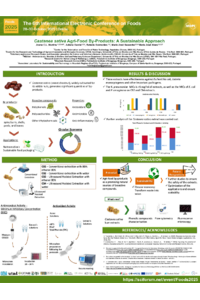
Castanea sativa (sweet chestnut), widely cultivated for its edible nuts, generates significant quantities of by-products, such as burs, shells, and skins, often discarded despite their potential as valuable sources of bioactive compounds [1]. Emerging research highlights the richness of chestnut by-products in polyphenols, polysaccharides, and other phytochemicals, which possess notable antioxidant, antimicrobial, and anti-inflammatory properties [1,2]. These characteristics make C. sativa burs particularly attractive for applications in functional foods, nutraceuticals, and sustainable food packaging, supporting circular economy efforts and adding value to chestnut production chains.
In this context, the present study aimed to evaluate the bioactive potential of Castanea sativa (sweet chestnut) burs, an undervalued by-product of chestnut processing. Crude extracts were obtained using two extraction methods, conventional solid–liquid extraction and ultrasound-assisted extraction, employing both water and an ethanol/water mixture as solvents. All extracts were subsequently freeze-dried. The antimicrobial activity of the extracts was assessed using the minimum inhibitory concentration (MIC) method against key foodborne and clinical pathogens, including Staphylococcus aureus, Listeria monocytogenes, Pseudomonas aeruginosa, Escherichia coli, and Klebsiella pneumoniae. MIC values ranged from 0.250 to 2.5 mg/mL, demonstrating the extract’s antimicrobial efficacy. Antioxidant capacity was evaluated using three complementary assays. The ABTS assay yielded Trolox Equivalent Antioxidant Capacity (TEAC) values between 448.68 and 854.59 mg Trolox/g of lyophilized extract, while the FRAP assay demonstrated values ranging from 570.01 to 936.52 mg Trolox/g of lyophilized extract. Total phenolic content, quantified using the Folin–Ciocalteu method, ranged from 5.12 to 15.59 mg of gallic acid equivalents (GAE)/g. Additional phenolic compound analysis was also performed.
Overall, these results highlight the potential of C. sativa bur extracts as a sustainable source of bioactive compounds with promising antimicrobial and antioxidant properties, supporting their application in food preservation, functional product development, and circular economy initiatives within the agri-food industry.
Keywords
Castanea sativa
By-Products
Bioactive potential
Circular Economy
Sustainability
Poster
IECF'25_POSTER_JM.pdf
Application of agro-industrial biomasses as a strategy to increase the sustainable bioeconomy in the Amazon
Innovative technological potential of Lachancea thermotolerans in the fermentation of table olives