Event submissions
Published
This submission belongs to the session B. Nutritional and Functional Foods of the event The 6th International Electronic Conference on Foods
Published date
27 Oct, 2025
Academic Editor
'%3e%3cpath%20d='M12.6657%2010.9104C12.4185%2010.325%2012.0599%209.79327%2011.6097%209.34482C11.1609%208.89508%2010.6293%208.5365%2010.0442%208.28888C10.0389%208.28626%2010.0337%208.28495%2010.0285%208.28233C10.8446%207.69279%2011.3752%206.73249%2011.3752%205.64904C11.3752%203.8542%209.92103%202.39999%208.1262%202.39999C6.33136%202.39999%204.87715%203.8542%204.87715%205.64904C4.87715%206.73249%205.40774%207.69279%206.22393%208.28364C6.21869%208.28626%206.21345%208.28757%206.20821%208.29019C5.62129%208.5378%205.09463%208.89284%204.64265%209.34613C4.1929%209.79493%203.83432%2010.3266%203.58671%2010.9117C3.34345%2011.4845%203.21226%2012.0987%203.20023%2012.7209C3.19988%2012.7349%203.20233%2012.7488%203.20744%2012.7619C3.21255%2012.7749%203.22022%2012.7867%203.22998%2012.7968C3.23975%2012.8068%203.25142%2012.8147%203.26431%2012.8202C3.2772%2012.8256%203.29105%2012.8284%203.30504%2012.8284H4.09109C4.14874%2012.8284%204.19459%2012.7825%204.1959%2012.7262C4.2221%2011.7148%204.62823%2010.7676%205.34617%2010.0497C6.08899%209.30683%207.0755%208.89808%208.1262%208.89808C9.17689%208.89808%2010.1634%209.30683%2010.9062%2010.0497C11.6242%2010.7676%2012.0303%2011.7148%2012.0565%2012.7262C12.0578%2012.7838%2012.1037%2012.8284%2012.1613%2012.8284H12.9474C12.9613%2012.8284%2012.9752%2012.8256%2012.9881%2012.8202C13.001%2012.8147%2013.0126%2012.8068%2013.0224%2012.7968C13.0322%2012.7867%2013.0398%2012.7749%2013.0449%2012.7619C13.0501%2012.7488%2013.0525%2012.7349%2013.0522%2012.7209C13.0391%2012.0947%2012.9094%2011.4855%2012.6657%2010.9104ZM8.1262%207.9024C7.52486%207.9024%206.9589%207.6679%206.53312%207.24211C6.10733%206.81633%205.87283%206.25037%205.87283%205.64904C5.87283%205.0477%206.10733%204.48174%206.53312%204.05596C6.9589%203.63018%207.52486%203.39567%208.1262%203.39567C8.72753%203.39567%209.29349%203.63018%209.71927%204.05596C10.1451%204.48174%2010.3796%205.0477%2010.3796%205.64904C10.3796%206.25037%2010.1451%206.81633%209.71927%207.24211C9.29349%207.6679%208.72753%207.9024%208.1262%207.9024Z'%20fill='%235D1EE1'/%3e%3c/g%3e%3c/svg%3e) Antonello Santini
Antonello SantiniCitation
Patricia Bermúdez Gómez, Manuel Viuda Martos, Juana Fernández López, Raquel Lucas González, Margarita Pérez Clavijo, Impact of Sodium and Starch Reduction on the Mineral Profile and Bioaccessibility of Mortadella Enriched with Agaricus bisporus and Pleurotus ostreatus By-Products, in Proceedings of The 6th International Electronic Conference on Foods, 28 October–30 October 2025, MDPI: Basel, Switzerland
Share
Email
Facebook
Twitter
LinkedIn
Impact of Sodium and Starch Reduction on the Mineral Profile and Bioaccessibility of Mortadella Enriched with Agaricus bisporus and Pleurotus ostreatus By-Products

Patricia Bermúdez Gómez 1

Manuel Viuda Martos 2

Juana Fernández López 2

Raquel Lucas González 2
'%3e%3cpath%20d='M12.6647%2010.9104C12.4176%2010.325%2012.0589%209.7933%2011.6088%209.34485C11.16%208.89511%2010.6283%208.53653%2010.0432%208.28891C10.038%208.28629%2010.0327%208.28498%2010.0275%208.28236C10.8437%207.69282%2011.3743%206.73252%2011.3743%205.64907C11.3743%203.85423%209.92005%202.40002%208.12522%202.40002C6.33038%202.40002%204.87618%203.85423%204.87618%205.64907C4.87618%206.73252%205.40677%207.69282%206.22296%208.28367C6.21772%208.28629%206.21248%208.2876%206.20724%208.29022C5.62031%208.53783%205.09365%208.89287%204.64167%209.34616C4.19192%209.79496%203.83334%2010.3266%203.58573%2010.9117C3.34247%2011.4846%203.21128%2012.0987%203.19925%2012.721C3.1989%2012.735%203.20135%2012.7489%203.20646%2012.7619C3.21157%2012.7749%203.21924%2012.7868%203.22901%2012.7968C3.23877%2012.8068%203.25045%2012.8148%203.26334%2012.8202C3.27623%2012.8256%203.29007%2012.8284%203.30406%2012.8284H4.09012C4.14776%2012.8284%204.19362%2012.7825%204.19493%2012.7262C4.22113%2011.7148%204.62726%2010.7676%205.34519%2010.0497C6.08802%209.30686%207.07452%208.89811%208.12522%208.89811C9.17592%208.89811%2010.1624%209.30686%2010.9052%2010.0497C11.6232%2010.7676%2012.0293%2011.7148%2012.0555%2012.7262C12.0568%2012.7839%2012.1027%2012.8284%2012.1603%2012.8284H12.9464C12.9604%2012.8284%2012.9742%2012.8256%2012.9871%2012.8202C13%2012.8148%2013.0117%2012.8068%2013.0214%2012.7968C13.0312%2012.7868%2013.0389%2012.7749%2013.044%2012.7619C13.0491%2012.7489%2013.0515%2012.735%2013.0512%2012.721C13.0381%2012.0947%2012.9084%2011.4856%2012.6647%2010.9104ZM8.12522%207.90243C7.52388%207.90243%206.95792%207.66793%206.53214%207.24215C6.10636%206.81636%205.87185%206.2504%205.87185%205.64907C5.87185%205.04773%206.10636%204.48177%206.53214%204.05599C6.95792%203.63021%207.52388%203.3957%208.12522%203.3957C8.72655%203.3957%209.29252%203.63021%209.7183%204.05599C10.1441%204.48177%2010.3786%205.04773%2010.3786%205.64907C10.3786%206.2504%2010.1441%206.81636%209.7183%207.24215C9.29252%207.66793%208.72655%207.90243%208.12522%207.90243Z'%20fill='%235D1EE1'/%3e%3c/g%3e%3c/svg%3e)
Margarita Pérez Clavijo 1
1. Mushroom Technological Research Center of La Rioja (CTICH), Carretera Calahorra, km 4, 26560 Autol, La Rioja, Spain
2. Institute for Agri-Food and Agri-Environmental Research and Innovation, Miguel Hernández University (CIAGRO-UMH), Ctra. Beniel km 3.2, 03312 Orihuela, Alicante, Spain
Abstract
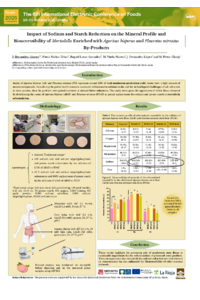
Mushroom stems, which represent around 20% of total mushroom production, are frequently discarded despite their valuable nutritional content. At the same time, high sodium consumption—primarily from processed foods—continues to pose a major global public health issue. This study addresses both global problems by investigating the application of edible flours obtained by dehydrating the stems of Agaricus bisporus (ABSF) and Pleurotus ostreatus (POSF) as partial replacements for sodium chloride, sodium tripolyphosphate, and potato starch in mortadella formulations.
Five prototypes were produced: one control with a traditional recipe; two formulations with a 50% sodium reduction and potato starch substitution using either ABSF or POSF; and two with a 50% sodium reduction along with a complete (100%) replacement of potato starch using the same mushroom flours. Mineral analysis was conducted on all mortadella samples using ICP-MS. All prototypes were digested following the INFOGEST method, and the mineral profile was also determined in all intestinal phases of the mortadella digestion to calculate mineral bioaccesibility.
Results demonstrated an effective sodium reduction of up to 49%, qualifying the reformulated products for a “reduced sodium” label under European Regulation (EC) No. 1924/2006. The ABSF formulation notably increased calcium content (from 13.22 to 37.71 mg/100g, p < 0.05). However, in vitro digestion tests showed that calcium and zinc bioaccessibility remained below quantification limits in all samples. In contrast, the bioaccessibility of copper, magnesium, and manganese significantly increased in the mushroom-enriched samples compared to the control.
These results highlight the promising role of mushroom stem flours as sustainable ingredients for the reformulation of processed meat products. Their incorporation not only improves the nutritional profile—particularly through sodium reduction and mineral enhancement—but also increases the bioaccessibility of copper, magnesium, and manganese. This study aligns with the principles of sustainability and circular economy by revalorizing an underutilized agro-industrial by-product.
Keywords
mushroom stem
low-sodium
meat products
mineral bioaccessibility
functional ingredients
food sustainability
Poster
Patricia_Bermudez_Poster_IECF.pdf
The in vitro bioactive properties of fermented brewer's spent grain with Lactiplantibacillus plantarum: aerobic vs anaerobic processes
Bioremediation of Bacteria, Histamine, and Animal DNA by Black Soldier Fly Larvae for Safe Food Waste Valorisation