Event submissions
Published
This submission belongs to the session C. Food Quality and Safety of the event The 6th International Electronic Conference on Foods
Published date
27 Oct, 2025
Academic Editor
'%3e%3cpath%20d='M12.6657%2010.9104C12.4185%2010.325%2012.0599%209.79327%2011.6097%209.34482C11.1609%208.89508%2010.6293%208.5365%2010.0442%208.28888C10.0389%208.28626%2010.0337%208.28495%2010.0285%208.28233C10.8446%207.69279%2011.3752%206.73249%2011.3752%205.64904C11.3752%203.8542%209.92103%202.39999%208.1262%202.39999C6.33136%202.39999%204.87715%203.8542%204.87715%205.64904C4.87715%206.73249%205.40774%207.69279%206.22393%208.28364C6.21869%208.28626%206.21345%208.28757%206.20821%208.29019C5.62129%208.5378%205.09463%208.89284%204.64265%209.34613C4.1929%209.79493%203.83432%2010.3266%203.58671%2010.9117C3.34345%2011.4845%203.21226%2012.0987%203.20023%2012.7209C3.19988%2012.7349%203.20233%2012.7488%203.20744%2012.7619C3.21255%2012.7749%203.22022%2012.7867%203.22998%2012.7968C3.23975%2012.8068%203.25142%2012.8147%203.26431%2012.8202C3.2772%2012.8256%203.29105%2012.8284%203.30504%2012.8284H4.09109C4.14874%2012.8284%204.19459%2012.7825%204.1959%2012.7262C4.2221%2011.7148%204.62823%2010.7676%205.34617%2010.0497C6.08899%209.30683%207.0755%208.89808%208.1262%208.89808C9.17689%208.89808%2010.1634%209.30683%2010.9062%2010.0497C11.6242%2010.7676%2012.0303%2011.7148%2012.0565%2012.7262C12.0578%2012.7838%2012.1037%2012.8284%2012.1613%2012.8284H12.9474C12.9613%2012.8284%2012.9752%2012.8256%2012.9881%2012.8202C13.001%2012.8147%2013.0126%2012.8068%2013.0224%2012.7968C13.0322%2012.7867%2013.0398%2012.7749%2013.0449%2012.7619C13.0501%2012.7488%2013.0525%2012.7349%2013.0522%2012.7209C13.0391%2012.0947%2012.9094%2011.4855%2012.6657%2010.9104ZM8.1262%207.9024C7.52486%207.9024%206.9589%207.6679%206.53312%207.24211C6.10733%206.81633%205.87283%206.25037%205.87283%205.64904C5.87283%205.0477%206.10733%204.48174%206.53312%204.05596C6.9589%203.63018%207.52486%203.39567%208.1262%203.39567C8.72753%203.39567%209.29349%203.63018%209.71927%204.05596C10.1451%204.48174%2010.3796%205.0477%2010.3796%205.64904C10.3796%206.25037%2010.1451%206.81633%209.71927%207.24211C9.29349%207.6679%208.72753%207.9024%208.1262%207.9024Z'%20fill='%235D1EE1'/%3e%3c/g%3e%3c/svg%3e) Susana Casal
Susana CasalCitation
Sara Sousa, Virgínia Cruz Fernandes, Carolina Camacho, Maria Sapatinha, Carla Pires, António Marques, Ana Rita A. Ribeiro, Maria Leonor Nunes, Valentina Fernandes Domingues, Cristina Delerue-Matos, Monitoring of Persistent and Emergent Pollutants in black scabbard fish Aphanopus carbo by-products and protein hydrolysates, in Proceedings of The 6th International Electronic Conference on Foods, 28 October–30 October 2025, MDPI: Basel, Switzerland
Share
Email
Facebook
Twitter
LinkedIn
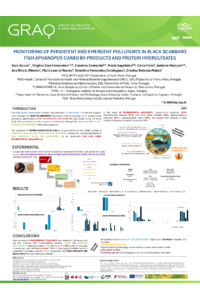
Monitoring of Persistent and Emergent Pollutants in black scabbard fish Aphanopus carbo by-products and protein hydrolysates
'%3e%3cpath%20d='M12.6647%2010.9104C12.4176%2010.325%2012.0589%209.7933%2011.6088%209.34485C11.16%208.89511%2010.6283%208.53653%2010.0432%208.28891C10.038%208.28629%2010.0327%208.28498%2010.0275%208.28236C10.8437%207.69282%2011.3743%206.73252%2011.3743%205.64907C11.3743%203.85423%209.92005%202.40002%208.12522%202.40002C6.33038%202.40002%204.87618%203.85423%204.87618%205.64907C4.87618%206.73252%205.40677%207.69282%206.22296%208.28367C6.21772%208.28629%206.21248%208.2876%206.20724%208.29022C5.62031%208.53783%205.09365%208.89287%204.64167%209.34616C4.19192%209.79496%203.83334%2010.3266%203.58573%2010.9117C3.34247%2011.4846%203.21128%2012.0987%203.19925%2012.721C3.1989%2012.735%203.20135%2012.7489%203.20646%2012.7619C3.21157%2012.7749%203.21924%2012.7868%203.22901%2012.7968C3.23877%2012.8068%203.25045%2012.8148%203.26334%2012.8202C3.27623%2012.8256%203.29007%2012.8284%203.30406%2012.8284H4.09012C4.14776%2012.8284%204.19362%2012.7825%204.19493%2012.7262C4.22113%2011.7148%204.62726%2010.7676%205.34519%2010.0497C6.08802%209.30686%207.07452%208.89811%208.12522%208.89811C9.17592%208.89811%2010.1624%209.30686%2010.9052%2010.0497C11.6232%2010.7676%2012.0293%2011.7148%2012.0555%2012.7262C12.0568%2012.7839%2012.1027%2012.8284%2012.1603%2012.8284H12.9464C12.9604%2012.8284%2012.9742%2012.8256%2012.9871%2012.8202C13%2012.8148%2013.0117%2012.8068%2013.0214%2012.7968C13.0312%2012.7868%2013.0389%2012.7749%2013.044%2012.7619C13.0491%2012.7489%2013.0515%2012.735%2013.0512%2012.721C13.0381%2012.0947%2012.9084%2011.4856%2012.6647%2010.9104ZM8.12522%207.90243C7.52388%207.90243%206.95792%207.66793%206.53214%207.24215C6.10636%206.81636%205.87185%206.2504%205.87185%205.64907C5.87185%205.04773%206.10636%204.48177%206.53214%204.05599C6.95792%203.63021%207.52388%203.3957%208.12522%203.3957C8.72655%203.3957%209.29252%203.63021%209.7183%204.05599C10.1441%204.48177%2010.3786%205.04773%2010.3786%205.64907C10.3786%206.2504%2010.1441%206.81636%209.7183%207.24215C9.29252%207.66793%208.72655%207.90243%208.12522%207.90243Z'%20fill='%235D1EE1'/%3e%3c/g%3e%3c/svg%3e)
Sara Sousa 1

Virgínia Cruz Fernandes 1,2
Carolina Camacho 3,4

Maria Sapatinha 4,5

Carla Pires 4
António Marques 3,4
Ana Rita A. Ribeiro 6

Maria Leonor Nunes 3
Valentina Fernandes Domingues 1

Cristina Delerue-Matos 1
1. REQUIMTE/LAQV, ISEP, Polytechnic of Porto, 4249-015, Porto, Portugal
2. RISE-Health, Center for Translational Health and Medical Biotechnology Research (TBIO), ESS, Polytechnic of Porto, 4200-072, Porto, Portugal
3. CIIMAR/CIMAR-LA - Interdisciplinary Centre of Marine and Environmental Research, 4450-208 Matosinhos, Portugal
4. IPMA, I.P. – Portuguese Institute for the Sea and Atmosphere, 1495-165 Algés, Portugal
5. Department of Chemistry, Nova School of Science and Technology, Nova University Lisbon, Campus da Caparica, 2829-516 Caparica, Portugal
6. B2E - Blue Bioeconomy CoLAB, 4450-718 Leça da Palmeira, Portugal
Abstract
The Portuguese population consumes approximately 2.5 times more fish than the EU average. Black scabbardfish (Aphanopus carbo, BS) is a popular fish species, commercially available as whole/gutted or in portions/fillets. During processing, approximately 30–40% of by-products are generated (heads, bones, skins). These by-products are often discarded or undervalued, although they can be a valuable source of bioactive ingredients with many applications. The production of protein hydrolysates (PHs) is of great interest as they exhibit a variety of important bioactive and technological properties, making them potential ingredients for new functional foods and supplements. Their incorporation into food and animal feeds offers multiple benefits, yet these by-products can also carry environmental pollutants (EPs).
In this study, 40 EPs were analysed in BS by-products and their freeze-dried PHs. A single QuEChERS extraction followed by dispersive solid-phase extraction clean-up was employed, coupled with gas chromatography using either flame photometric detection or electron capture detection. This approach enabled the determination of organochlorine pesticides, polychlorinated biphenyls, brominated flame retardants, organophosphorus pesticides, organophosphate esters, and dioxins.
Trace amounts of EPs were detected in all by-products and PHs analysed. However, most concentrations remained below the EC’s maximum residue limits, except for DDE in the PH one-stage enzymatic hydrolysis with ProtanaPrime® (PH_P). These findings suggest that PHs from BS by-products can be safely incorporated into food products and animal feed (PH_P up to 30% due to DDE). Continued surveillance and regulatory action of EPs are crucial to promote a blue circular economy aligned with OneHealth principles.
This work received support and help from FCT/MCTES(LA/P/0008/2020-DOI10.54499/LA/P/0008/2020,UIDP/50006/2020-DOI10.54499/UIDP/50006/2020,UIDB/50006/2020-DOI10.54499/UIDB/50006/2020), through national funds. This work has been developed within the scope of the BlueBioeconomyInnovationPact (NºC644915664-00000026), financed by NextGenerationEU, under the incentive line “Agendas for Business Innovation” of the Recovery and Resilience Plan.
Keywords
contaminants of emerging concern
environmental monitoring
fish by-products
food safety
persistent organic pollutants
Poster
Poster_FOOD.pdf
POTENTIAL OF CYCLIC VOLTAMMETRY FINGERPRINTING USING SCREEN-PRINTED ELECTRODES TO ASSESS SPANISH HONEY BOTANICAL VARIETIES
Integrated metabolomics and network pharmacology to explore the mechanisms for the antioxidant activity of Passiflora edulis peels