Event submissions
Published
This submission belongs to the session B. Nutritional and Functional Foods of the event The 6th International Electronic Conference on Foods
Published date
27 Oct, 2025
Academic Editor
'%3e%3cpath%20d='M12.6657%2010.9104C12.4185%2010.325%2012.0599%209.79327%2011.6097%209.34482C11.1609%208.89508%2010.6293%208.5365%2010.0442%208.28888C10.0389%208.28626%2010.0337%208.28495%2010.0285%208.28233C10.8446%207.69279%2011.3752%206.73249%2011.3752%205.64904C11.3752%203.8542%209.92103%202.39999%208.1262%202.39999C6.33136%202.39999%204.87715%203.8542%204.87715%205.64904C4.87715%206.73249%205.40774%207.69279%206.22393%208.28364C6.21869%208.28626%206.21345%208.28757%206.20821%208.29019C5.62129%208.5378%205.09463%208.89284%204.64265%209.34613C4.1929%209.79493%203.83432%2010.3266%203.58671%2010.9117C3.34345%2011.4845%203.21226%2012.0987%203.20023%2012.7209C3.19988%2012.7349%203.20233%2012.7488%203.20744%2012.7619C3.21255%2012.7749%203.22022%2012.7867%203.22998%2012.7968C3.23975%2012.8068%203.25142%2012.8147%203.26431%2012.8202C3.2772%2012.8256%203.29105%2012.8284%203.30504%2012.8284H4.09109C4.14874%2012.8284%204.19459%2012.7825%204.1959%2012.7262C4.2221%2011.7148%204.62823%2010.7676%205.34617%2010.0497C6.08899%209.30683%207.0755%208.89808%208.1262%208.89808C9.17689%208.89808%2010.1634%209.30683%2010.9062%2010.0497C11.6242%2010.7676%2012.0303%2011.7148%2012.0565%2012.7262C12.0578%2012.7838%2012.1037%2012.8284%2012.1613%2012.8284H12.9474C12.9613%2012.8284%2012.9752%2012.8256%2012.9881%2012.8202C13.001%2012.8147%2013.0126%2012.8068%2013.0224%2012.7968C13.0322%2012.7867%2013.0398%2012.7749%2013.0449%2012.7619C13.0501%2012.7488%2013.0525%2012.7349%2013.0522%2012.7209C13.0391%2012.0947%2012.9094%2011.4855%2012.6657%2010.9104ZM8.1262%207.9024C7.52486%207.9024%206.9589%207.6679%206.53312%207.24211C6.10733%206.81633%205.87283%206.25037%205.87283%205.64904C5.87283%205.0477%206.10733%204.48174%206.53312%204.05596C6.9589%203.63018%207.52486%203.39567%208.1262%203.39567C8.72753%203.39567%209.29349%203.63018%209.71927%204.05596C10.1451%204.48174%2010.3796%205.0477%2010.3796%205.64904C10.3796%206.25037%2010.1451%206.81633%209.71927%207.24211C9.29349%207.6679%208.72753%207.9024%208.1262%207.9024Z'%20fill='%235D1EE1'/%3e%3c/g%3e%3c/svg%3e) Antonello Santini
Antonello SantiniCitation
Jesica Blajman, Pierina Scarafia, Mariana Lingua, María Estela Tarchini, Ariel Risso, María Virginia Zbrun, Monitoring probiotic lactic acid bacteria strains during sauerkraut production by pulsed-field gel electrophoresis., in Proceedings of The 6th International Electronic Conference on Foods, 28 October–30 October 2025, MDPI: Basel, Switzerland
Share
Email
Facebook
Twitter
LinkedIn
Monitoring probiotic lactic acid bacteria strains during sauerkraut production by pulsed-field gel electrophoresis.
'%3e%3cpath%20d='M12.6647%2010.9104C12.4176%2010.325%2012.0589%209.7933%2011.6088%209.34485C11.16%208.89511%2010.6283%208.53653%2010.0432%208.28891C10.038%208.28629%2010.0327%208.28498%2010.0275%208.28236C10.8437%207.69282%2011.3743%206.73252%2011.3743%205.64907C11.3743%203.85423%209.92005%202.40002%208.12522%202.40002C6.33038%202.40002%204.87618%203.85423%204.87618%205.64907C4.87618%206.73252%205.40677%207.69282%206.22296%208.28367C6.21772%208.28629%206.21248%208.2876%206.20724%208.29022C5.62031%208.53783%205.09365%208.89287%204.64167%209.34616C4.19192%209.79496%203.83334%2010.3266%203.58573%2010.9117C3.34247%2011.4846%203.21128%2012.0987%203.19925%2012.721C3.1989%2012.735%203.20135%2012.7489%203.20646%2012.7619C3.21157%2012.7749%203.21924%2012.7868%203.22901%2012.7968C3.23877%2012.8068%203.25045%2012.8148%203.26334%2012.8202C3.27623%2012.8256%203.29007%2012.8284%203.30406%2012.8284H4.09012C4.14776%2012.8284%204.19362%2012.7825%204.19493%2012.7262C4.22113%2011.7148%204.62726%2010.7676%205.34519%2010.0497C6.08802%209.30686%207.07452%208.89811%208.12522%208.89811C9.17592%208.89811%2010.1624%209.30686%2010.9052%2010.0497C11.6232%2010.7676%2012.0293%2011.7148%2012.0555%2012.7262C12.0568%2012.7839%2012.1027%2012.8284%2012.1603%2012.8284H12.9464C12.9604%2012.8284%2012.9742%2012.8256%2012.9871%2012.8202C13%2012.8148%2013.0117%2012.8068%2013.0214%2012.7968C13.0312%2012.7868%2013.0389%2012.7749%2013.044%2012.7619C13.0491%2012.7489%2013.0515%2012.735%2013.0512%2012.721C13.0381%2012.0947%2012.9084%2011.4856%2012.6647%2010.9104ZM8.12522%207.90243C7.52388%207.90243%206.95792%207.66793%206.53214%207.24215C6.10636%206.81636%205.87185%206.2504%205.87185%205.64907C5.87185%205.04773%206.10636%204.48177%206.53214%204.05599C6.95792%203.63021%207.52388%203.3957%208.12522%203.3957C8.72655%203.3957%209.29252%203.63021%209.7183%204.05599C10.1441%204.48177%2010.3786%205.04773%2010.3786%205.64907C10.3786%206.2504%2010.1441%206.81636%209.7183%207.24215C9.29252%207.66793%208.72655%207.90243%208.12522%207.90243Z'%20fill='%235D1EE1'/%3e%3c/g%3e%3c/svg%3e)
Jesica Blajman 1,2
Pierina Scarafia 2
Mariana Lingua 1
María Estela Tarchini 2
Ariel Risso 1
María Virginia Zbrun 1
1. Instituto de Investigación de la Cadena Láctea (IdICaL, CONICET-INTA), Ruta 34 Km. 227, CP 2300 Rafaela, Santa Fe, Argentina.
2. Universidad Nacional de Rafaela, Bv. Presidente Julio A. Roca 989, CP 2300 Rafaela, Santa Fe, Argentina.
Abstract
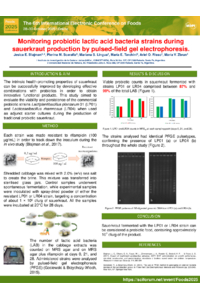
The intrinsic health-promoting properties of sauerkraut can be successfully improved by developing effective combinations with probiotics in order to obtain innovative functional products. This study aimed to evaluate the viability and persistence of the commercial probiotic strains Lactiplantibacillus plantarum 01 (LP01) and Lacticaseibacillus rhamnosus (LR04) when used as adjunct starter cultures during the production of traditional probiotic sauerkraut.
Each strain was made resistant to rifampicin (100 µg/mL) in order to track down the inoculum during the in vivo study. Shredded cabbage was mixed with 2.0% (w/v) sea salt to create the brine. This mixture was transferred into sterilised glass jars. Control samples underwent spontaneous fermentation, while experimental samples were inoculated with spray-dried powder of either the resistant LP01 or LR04 strain, targeting a concentration of about 1 × 10⁶ cfu/g of sauerkraut. All the samples were incubated at 20°C for 28 days. The number of lactic acid bacteria (LAB) in the cabbage extracts was counted on MRS agar and on MRS agar plus rifampicin at days 0, 21, and 28. The administered strains were monitored by pulsed-field gel electrophoresis (PFGE) to confirm the persistence and genotypic identity of the isolates.
Both probiotic strains maintained high viability and predominance during the fermentation process, with only a slight but significant decline by day 28. After 21 days of fermentation, LP01 and LR04 showed viable counts of 7.43 and 7.94 log₁₀ cfu/g, respectively. At day 28, the counts decreased to 7.09 and 7.24 log₁₀ cfu/g (p < 0.001). The rifampicin-resistant colonies accounted for 87% to 99% of the total LAB population in the inoculated samples. The strains analysed had identical PFGE pulsetypes, confirming the presence of LP01 or LR04 throughout the whole study. In conclusion, sauerkraut fermented with the LP01 or LR04 strain can be considered a probiotic food, containing approximately 107 cfu/g of the product.
Keywords
Lactic acid bacteria
probiotic
sauerkraut
controlled fermentation
pulsed-field gel electrophoresis.
Poster
Poster Foods Conference 2025 - PFGE.pdf
Tropane alkaloid contamination of gluten-free cereal food
Characterization of functional polysaccharides extracted from pineapple stem and peel by-products