Event submissions
Published
This submission belongs to the session G. Food Biotechnology of the event The 6th International Electronic Conference on Foods
Published date
27 Oct, 2025
Academic Editor
'%3e%3cpath%20d='M12.6657%2010.9104C12.4185%2010.325%2012.0599%209.79327%2011.6097%209.34482C11.1609%208.89508%2010.6293%208.5365%2010.0442%208.28888C10.0389%208.28626%2010.0337%208.28495%2010.0285%208.28233C10.8446%207.69279%2011.3752%206.73249%2011.3752%205.64904C11.3752%203.8542%209.92103%202.39999%208.1262%202.39999C6.33136%202.39999%204.87715%203.8542%204.87715%205.64904C4.87715%206.73249%205.40774%207.69279%206.22393%208.28364C6.21869%208.28626%206.21345%208.28757%206.20821%208.29019C5.62129%208.5378%205.09463%208.89284%204.64265%209.34613C4.1929%209.79493%203.83432%2010.3266%203.58671%2010.9117C3.34345%2011.4845%203.21226%2012.0987%203.20023%2012.7209C3.19988%2012.7349%203.20233%2012.7488%203.20744%2012.7619C3.21255%2012.7749%203.22022%2012.7867%203.22998%2012.7968C3.23975%2012.8068%203.25142%2012.8147%203.26431%2012.8202C3.2772%2012.8256%203.29105%2012.8284%203.30504%2012.8284H4.09109C4.14874%2012.8284%204.19459%2012.7825%204.1959%2012.7262C4.2221%2011.7148%204.62823%2010.7676%205.34617%2010.0497C6.08899%209.30683%207.0755%208.89808%208.1262%208.89808C9.17689%208.89808%2010.1634%209.30683%2010.9062%2010.0497C11.6242%2010.7676%2012.0303%2011.7148%2012.0565%2012.7262C12.0578%2012.7838%2012.1037%2012.8284%2012.1613%2012.8284H12.9474C12.9613%2012.8284%2012.9752%2012.8256%2012.9881%2012.8202C13.001%2012.8147%2013.0126%2012.8068%2013.0224%2012.7968C13.0322%2012.7867%2013.0398%2012.7749%2013.0449%2012.7619C13.0501%2012.7488%2013.0525%2012.7349%2013.0522%2012.7209C13.0391%2012.0947%2012.9094%2011.4855%2012.6657%2010.9104ZM8.1262%207.9024C7.52486%207.9024%206.9589%207.6679%206.53312%207.24211C6.10733%206.81633%205.87283%206.25037%205.87283%205.64904C5.87283%205.0477%206.10733%204.48174%206.53312%204.05596C6.9589%203.63018%207.52486%203.39567%208.1262%203.39567C8.72753%203.39567%209.29349%203.63018%209.71927%204.05596C10.1451%204.48174%2010.3796%205.0477%2010.3796%205.64904C10.3796%206.25037%2010.1451%206.81633%209.71927%207.24211C9.29349%207.6679%208.72753%207.9024%208.1262%207.9024Z'%20fill='%235D1EE1'/%3e%3c/g%3e%3c/svg%3e) Yonghui Li
Yonghui LiCitation
Mai Magdy Abdelrazeq, Exploring the Potential of Ulva, Jania, and Padina Seaweeds for Sustainable Diets and Food Security Solutions: A Biochemical and Sensory Study, in Proceedings of The 6th International Electronic Conference on Foods, 28 October–30 October 2025, MDPI: Basel, Switzerland
Share
Email
Facebook
Twitter
LinkedIn
Exploring the Potential of Ulva, Jania, and Padina Seaweeds for Sustainable Diets and Food Security Solutions: A Biochemical and Sensory Study
'%3e%3cpath%20d='M12.6647%2010.9104C12.4176%2010.325%2012.0589%209.7933%2011.6088%209.34485C11.16%208.89511%2010.6283%208.53653%2010.0432%208.28891C10.038%208.28629%2010.0327%208.28498%2010.0275%208.28236C10.8437%207.69282%2011.3743%206.73252%2011.3743%205.64907C11.3743%203.85423%209.92005%202.40002%208.12522%202.40002C6.33038%202.40002%204.87618%203.85423%204.87618%205.64907C4.87618%206.73252%205.40677%207.69282%206.22296%208.28367C6.21772%208.28629%206.21248%208.2876%206.20724%208.29022C5.62031%208.53783%205.09365%208.89287%204.64167%209.34616C4.19192%209.79496%203.83334%2010.3266%203.58573%2010.9117C3.34247%2011.4846%203.21128%2012.0987%203.19925%2012.721C3.1989%2012.735%203.20135%2012.7489%203.20646%2012.7619C3.21157%2012.7749%203.21924%2012.7868%203.22901%2012.7968C3.23877%2012.8068%203.25045%2012.8148%203.26334%2012.8202C3.27623%2012.8256%203.29007%2012.8284%203.30406%2012.8284H4.09012C4.14776%2012.8284%204.19362%2012.7825%204.19493%2012.7262C4.22113%2011.7148%204.62726%2010.7676%205.34519%2010.0497C6.08802%209.30686%207.07452%208.89811%208.12522%208.89811C9.17592%208.89811%2010.1624%209.30686%2010.9052%2010.0497C11.6232%2010.7676%2012.0293%2011.7148%2012.0555%2012.7262C12.0568%2012.7839%2012.1027%2012.8284%2012.1603%2012.8284H12.9464C12.9604%2012.8284%2012.9742%2012.8256%2012.9871%2012.8202C13%2012.8148%2013.0117%2012.8068%2013.0214%2012.7968C13.0312%2012.7868%2013.0389%2012.7749%2013.044%2012.7619C13.0491%2012.7489%2013.0515%2012.735%2013.0512%2012.721C13.0381%2012.0947%2012.9084%2011.4856%2012.6647%2010.9104ZM8.12522%207.90243C7.52388%207.90243%206.95792%207.66793%206.53214%207.24215C6.10636%206.81636%205.87185%206.2504%205.87185%205.64907C5.87185%205.04773%206.10636%204.48177%206.53214%204.05599C6.95792%203.63021%207.52388%203.3957%208.12522%203.3957C8.72655%203.3957%209.29252%203.63021%209.7183%204.05599C10.1441%204.48177%2010.3786%205.04773%2010.3786%205.64907C10.3786%206.2504%2010.1441%206.81636%209.7183%207.24215C9.29252%207.66793%208.72655%207.90243%208.12522%207.90243Z'%20fill='%235D1EE1'/%3e%3c/g%3e%3c/svg%3e)
Mai Magdy Abdelrazeq 1
1. Fats and Oils Department, The National Research Center, Dokki, Cairo 12622, Egypt
Abstract
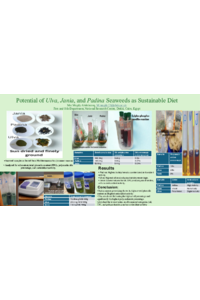
This study aligns with Sustainable Development Goals (SDGs) 1, 2, 3, 12 and 13: Zero-Poverty, No-Hunger, Good-Health, Responsible Consumption and production, and Climate-Action. It investigated the potential of three macroalgae, Ulva linza (green, Chlorophyceae), Jania rubens (red, Rhodophyceae), and Padina pavonica (brown, Phaeophyceae), as sustainable dietary sources rich in macro- and micronutrients, with a specific focus on excluding oil content. The research comprised two components: (1) a biochemical analysis of lipid content and composition, and (2) a sensory evaluation of salted Nori green seaweed samples. Lipid extraction using the Soxhlet methodology revealed low oil yields across all species: Ulva (0.5%), Padina (0.2%), and Jania (0.2%). The low oil amounts were confirmed by the phosphovanillin spectrophotometric method, highlighting the need for biotechnological interventions to enhance lipid production, particularly polyunsaturated omega-3 fatty acids (PUFAs), whose presence was confirmed using GC-MS (specifically Eicosapentaenoic Acid "EPA" C20:5n-3, Docosahexaenoic Acid "DHA" C22:6n-3, and Alpha-linolenic Acid "ALA" C18:3n-3). Notably, Padina and Jania exhibited a fishy aroma, while Ulva presented a distinct rosy scent, although the three species possess distinct PUFA, particularly Omega 3 FAs. A sensory study was conducted using a cross-sectional observational design with 40 participants, where we assessed the appearance, sound, taste, aroma, texture, and overall acceptance of roasted organic (green seaweed) samples, with further statistical analysis using the parametric ANOVA test in SPSS. Results indicated the potential of seaweed as a dietary component, although it requires taste and texture modifications. Furthermore, the sensory evaluation revealed a need for increased awareness regarding seaweed farming and consumption, highlighting the need for behavioral changes to facilitate the integration of seaweed into mainstream diets. Recommendations include developing tailored recipes targeting youth preferences to promote future adoption and educational initiatives to highlight the environmental and nutritional benefits of seaweed. The sensory survey underscored the necessity of improving palatability and conducting public awareness campaigns to maximize seaweed's contribution to global food security.
Keywords
Seaweed
Sustainable Diet
Global Hunger
Gas Chromatography
Phosphovanillin method
Total lipid
Sensory test
Poster
poster seaweeds.pdf
Oregano and cinnamon essential oils as natural antimicrobials: unraveling the physiological response of Staphylococcus aureus
Seeds of Color: Cholinesterase-Inhibitory and Antioxidant Activities of Pigmented Fruit Seed Oils