Event submissions
Published
This submission belongs to the session B. Nutritional and Functional Foods of the event The 6th International Electronic Conference on Foods
Published date
27 Oct, 2025
Academic Editor
'%3e%3cpath%20d='M12.6657%2010.9104C12.4185%2010.325%2012.0599%209.79327%2011.6097%209.34482C11.1609%208.89508%2010.6293%208.5365%2010.0442%208.28888C10.0389%208.28626%2010.0337%208.28495%2010.0285%208.28233C10.8446%207.69279%2011.3752%206.73249%2011.3752%205.64904C11.3752%203.8542%209.92103%202.39999%208.1262%202.39999C6.33136%202.39999%204.87715%203.8542%204.87715%205.64904C4.87715%206.73249%205.40774%207.69279%206.22393%208.28364C6.21869%208.28626%206.21345%208.28757%206.20821%208.29019C5.62129%208.5378%205.09463%208.89284%204.64265%209.34613C4.1929%209.79493%203.83432%2010.3266%203.58671%2010.9117C3.34345%2011.4845%203.21226%2012.0987%203.20023%2012.7209C3.19988%2012.7349%203.20233%2012.7488%203.20744%2012.7619C3.21255%2012.7749%203.22022%2012.7867%203.22998%2012.7968C3.23975%2012.8068%203.25142%2012.8147%203.26431%2012.8202C3.2772%2012.8256%203.29105%2012.8284%203.30504%2012.8284H4.09109C4.14874%2012.8284%204.19459%2012.7825%204.1959%2012.7262C4.2221%2011.7148%204.62823%2010.7676%205.34617%2010.0497C6.08899%209.30683%207.0755%208.89808%208.1262%208.89808C9.17689%208.89808%2010.1634%209.30683%2010.9062%2010.0497C11.6242%2010.7676%2012.0303%2011.7148%2012.0565%2012.7262C12.0578%2012.7838%2012.1037%2012.8284%2012.1613%2012.8284H12.9474C12.9613%2012.8284%2012.9752%2012.8256%2012.9881%2012.8202C13.001%2012.8147%2013.0126%2012.8068%2013.0224%2012.7968C13.0322%2012.7867%2013.0398%2012.7749%2013.0449%2012.7619C13.0501%2012.7488%2013.0525%2012.7349%2013.0522%2012.7209C13.0391%2012.0947%2012.9094%2011.4855%2012.6657%2010.9104ZM8.1262%207.9024C7.52486%207.9024%206.9589%207.6679%206.53312%207.24211C6.10733%206.81633%205.87283%206.25037%205.87283%205.64904C5.87283%205.0477%206.10733%204.48174%206.53312%204.05596C6.9589%203.63018%207.52486%203.39567%208.1262%203.39567C8.72753%203.39567%209.29349%203.63018%209.71927%204.05596C10.1451%204.48174%2010.3796%205.0477%2010.3796%205.64904C10.3796%206.25037%2010.1451%206.81633%209.71927%207.24211C9.29349%207.6679%208.72753%207.9024%208.1262%207.9024Z'%20fill='%235D1EE1'/%3e%3c/g%3e%3c/svg%3e) Manuel Viuda-Martos
Manuel Viuda-MartosCitation
Yiwen Gong, Yutong Li, Hexiang Qiu, Dan Wu, Haomiao Ma, Li Fan, Hongxia Cai, Yan Pan, Bo Xian, Capsaicin enhances hypothermia tolerance and accelerates recovery from hypothermic shock, in Proceedings of The 6th International Electronic Conference on Foods, 28 October–30 October 2025, MDPI: Basel, Switzerland
Share
Email
Facebook
Twitter
LinkedIn
Capsaicin enhances hypothermia tolerance and accelerates recovery from hypothermic shock
'%3e%3cpath%20d='M12.6647%2010.9104C12.4176%2010.325%2012.0589%209.7933%2011.6088%209.34485C11.16%208.89511%2010.6283%208.53653%2010.0432%208.28891C10.038%208.28629%2010.0327%208.28498%2010.0275%208.28236C10.8437%207.69282%2011.3743%206.73252%2011.3743%205.64907C11.3743%203.85423%209.92005%202.40002%208.12522%202.40002C6.33038%202.40002%204.87618%203.85423%204.87618%205.64907C4.87618%206.73252%205.40677%207.69282%206.22296%208.28367C6.21772%208.28629%206.21248%208.2876%206.20724%208.29022C5.62031%208.53783%205.09365%208.89287%204.64167%209.34616C4.19192%209.79496%203.83334%2010.3266%203.58573%2010.9117C3.34247%2011.4846%203.21128%2012.0987%203.19925%2012.721C3.1989%2012.735%203.20135%2012.7489%203.20646%2012.7619C3.21157%2012.7749%203.21924%2012.7868%203.22901%2012.7968C3.23877%2012.8068%203.25045%2012.8148%203.26334%2012.8202C3.27623%2012.8256%203.29007%2012.8284%203.30406%2012.8284H4.09012C4.14776%2012.8284%204.19362%2012.7825%204.19493%2012.7262C4.22113%2011.7148%204.62726%2010.7676%205.34519%2010.0497C6.08802%209.30686%207.07452%208.89811%208.12522%208.89811C9.17592%208.89811%2010.1624%209.30686%2010.9052%2010.0497C11.6232%2010.7676%2012.0293%2011.7148%2012.0555%2012.7262C12.0568%2012.7839%2012.1027%2012.8284%2012.1603%2012.8284H12.9464C12.9604%2012.8284%2012.9742%2012.8256%2012.9871%2012.8202C13%2012.8148%2013.0117%2012.8068%2013.0214%2012.7968C13.0312%2012.7868%2013.0389%2012.7749%2013.044%2012.7619C13.0491%2012.7489%2013.0515%2012.735%2013.0512%2012.721C13.0381%2012.0947%2012.9084%2011.4856%2012.6647%2010.9104ZM8.12522%207.90243C7.52388%207.90243%206.95792%207.66793%206.53214%207.24215C6.10636%206.81636%205.87185%206.2504%205.87185%205.64907C5.87185%205.04773%206.10636%204.48177%206.53214%204.05599C6.95792%203.63021%207.52388%203.3957%208.12522%203.3957C8.72655%203.3957%209.29252%203.63021%209.7183%204.05599C10.1441%204.48177%2010.3786%205.04773%2010.3786%205.64907C10.3786%206.2504%2010.1441%206.81636%209.7183%207.24215C9.29252%207.66793%208.72655%207.90243%208.12522%207.90243Z'%20fill='%235D1EE1'/%3e%3c/g%3e%3c/svg%3e)
Yiwen Gong 1
Yutong Li 1
Hexiang Qiu 1
Dan Wu 1
Haomiao Ma 1
Li Fan 1
Hongxia Cai 1

Yan Pan 1
Bo Xian 1
1. Laboratory of Aging Research, School of Medicine, University of Electronic Science and Technology of China, Chengdu 610056, China
Abstract
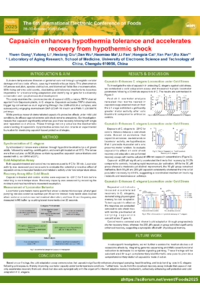
Capsaicin, a natural bioactive component extracted from chili peppers, is important in food flavoring and food preparation. Currently, the global climate is changing rapidly, extreme cold wave events occur frequently, and direct cell damage and secondary ice crystal effects triggered by low-temperature stress seriously threaten the survival of organisms, so analyzing the cold tolerance mechanism is of great significance for biological protection and low-temperature medicine. As an important model organism in pharmaceutical research, Cryptococcus hidradii is of great significance in the testing of functional foods. In this study, we used Cryptobacterium hidradii as a model to investigate the protective effect of capsaicin, a natural food active ingredient, in low-temperature stress. A control group and three experimental groups (capsaicin concentrations of 10 μM, 50 μM, and 250 μM) were set up to compare the locomotor indexes of different groups of nematodes after treatment at 4°C, 30 min, and we found that different concentrations of capsaicin enhanced the locomotor ability of nematodes at low temperatures, with a significant enhancement of the head bobbing, body bending, and pharyngeal pumping rate. In the -20°C, 5 min cold shock recovery experiment, capsaicin was able to shorten the recovery time of nematodes. In three consecutive cold shock experiments, the recovery rate of nematodes increased significantly, showing adaptation to cold shock, and capsaicin was able to accelerate the adaptation of nematodes to cold shock recovery. The study showed that capsaicin could enhance the nematode's locomotor ability in the low-temperature environment, promote the nematode's recovery after cold shock, and synergize with the nematode's adaptive memory to promote the self-protection and adaptation to the nematode in the low-temperature environment.
Keywords
Capsaicin
low-temperature stress
Caenorhabditis elegans
Functional Foods
Poster
poster.pdf
Picroside I prolongs lifespan and enhances muscle vigor in C. elegans: a study on the potential of an anti-aging functional food ingredient
Antioxidant Peptides Released by the Simulated Digestion of a Novel Chickpea Genotype (GB Cappuccino): A First Insight