Event submissions
Published
This submission belongs to the session H. Foods as Medicine of the event The 6th International Electronic Conference on Foods
Published date
27 Oct, 2025
Academic Editor
'%3e%3cpath%20d='M12.6657%2010.9104C12.4185%2010.325%2012.0599%209.79327%2011.6097%209.34482C11.1609%208.89508%2010.6293%208.5365%2010.0442%208.28888C10.0389%208.28626%2010.0337%208.28495%2010.0285%208.28233C10.8446%207.69279%2011.3752%206.73249%2011.3752%205.64904C11.3752%203.8542%209.92103%202.39999%208.1262%202.39999C6.33136%202.39999%204.87715%203.8542%204.87715%205.64904C4.87715%206.73249%205.40774%207.69279%206.22393%208.28364C6.21869%208.28626%206.21345%208.28757%206.20821%208.29019C5.62129%208.5378%205.09463%208.89284%204.64265%209.34613C4.1929%209.79493%203.83432%2010.3266%203.58671%2010.9117C3.34345%2011.4845%203.21226%2012.0987%203.20023%2012.7209C3.19988%2012.7349%203.20233%2012.7488%203.20744%2012.7619C3.21255%2012.7749%203.22022%2012.7867%203.22998%2012.7968C3.23975%2012.8068%203.25142%2012.8147%203.26431%2012.8202C3.2772%2012.8256%203.29105%2012.8284%203.30504%2012.8284H4.09109C4.14874%2012.8284%204.19459%2012.7825%204.1959%2012.7262C4.2221%2011.7148%204.62823%2010.7676%205.34617%2010.0497C6.08899%209.30683%207.0755%208.89808%208.1262%208.89808C9.17689%208.89808%2010.1634%209.30683%2010.9062%2010.0497C11.6242%2010.7676%2012.0303%2011.7148%2012.0565%2012.7262C12.0578%2012.7838%2012.1037%2012.8284%2012.1613%2012.8284H12.9474C12.9613%2012.8284%2012.9752%2012.8256%2012.9881%2012.8202C13.001%2012.8147%2013.0126%2012.8068%2013.0224%2012.7968C13.0322%2012.7867%2013.0398%2012.7749%2013.0449%2012.7619C13.0501%2012.7488%2013.0525%2012.7349%2013.0522%2012.7209C13.0391%2012.0947%2012.9094%2011.4855%2012.6657%2010.9104ZM8.1262%207.9024C7.52486%207.9024%206.9589%207.6679%206.53312%207.24211C6.10733%206.81633%205.87283%206.25037%205.87283%205.64904C5.87283%205.0477%206.10733%204.48174%206.53312%204.05596C6.9589%203.63018%207.52486%203.39567%208.1262%203.39567C8.72753%203.39567%209.29349%203.63018%209.71927%204.05596C10.1451%204.48174%2010.3796%205.0477%2010.3796%205.64904C10.3796%206.25037%2010.1451%206.81633%209.71927%207.24211C9.29349%207.6679%208.72753%207.9024%208.1262%207.9024Z'%20fill='%235D1EE1'/%3e%3c/g%3e%3c/svg%3e) Antonello Santini
Antonello SantiniCitation
Isaac Oluseun Adejumo, Olufemi A. Adebiyi, Immunomodulatory potential of probiotic bacteria: implications for human and animal health, in Proceedings of The 6th International Electronic Conference on Foods, 28 October–30 October 2025, MDPI: Basel, Switzerland
Share
Email
Facebook
Twitter
LinkedIn
Immunomodulatory potential of probiotic bacteria: implications for human and animal health

Isaac Oluseun Adejumo 1
'%3e%3cpath%20d='M12.6647%2010.9104C12.4176%2010.325%2012.0589%209.7933%2011.6088%209.34485C11.16%208.89511%2010.6283%208.53653%2010.0432%208.28891C10.038%208.28629%2010.0327%208.28498%2010.0275%208.28236C10.8437%207.69282%2011.3743%206.73252%2011.3743%205.64907C11.3743%203.85423%209.92005%202.40002%208.12522%202.40002C6.33038%202.40002%204.87618%203.85423%204.87618%205.64907C4.87618%206.73252%205.40677%207.69282%206.22296%208.28367C6.21772%208.28629%206.21248%208.2876%206.20724%208.29022C5.62031%208.53783%205.09365%208.89287%204.64167%209.34616C4.19192%209.79496%203.83334%2010.3266%203.58573%2010.9117C3.34247%2011.4846%203.21128%2012.0987%203.19925%2012.721C3.1989%2012.735%203.20135%2012.7489%203.20646%2012.7619C3.21157%2012.7749%203.21924%2012.7868%203.22901%2012.7968C3.23877%2012.8068%203.25045%2012.8148%203.26334%2012.8202C3.27623%2012.8256%203.29007%2012.8284%203.30406%2012.8284H4.09012C4.14776%2012.8284%204.19362%2012.7825%204.19493%2012.7262C4.22113%2011.7148%204.62726%2010.7676%205.34519%2010.0497C6.08802%209.30686%207.07452%208.89811%208.12522%208.89811C9.17592%208.89811%2010.1624%209.30686%2010.9052%2010.0497C11.6232%2010.7676%2012.0293%2011.7148%2012.0555%2012.7262C12.0568%2012.7839%2012.1027%2012.8284%2012.1603%2012.8284H12.9464C12.9604%2012.8284%2012.9742%2012.8256%2012.9871%2012.8202C13%2012.8148%2013.0117%2012.8068%2013.0214%2012.7968C13.0312%2012.7868%2013.0389%2012.7749%2013.044%2012.7619C13.0491%2012.7489%2013.0515%2012.735%2013.0512%2012.721C13.0381%2012.0947%2012.9084%2011.4856%2012.6647%2010.9104ZM8.12522%207.90243C7.52388%207.90243%206.95792%207.66793%206.53214%207.24215C6.10636%206.81636%205.87185%206.2504%205.87185%205.64907C5.87185%205.04773%206.10636%204.48177%206.53214%204.05599C6.95792%203.63021%207.52388%203.3957%208.12522%203.3957C8.72655%203.3957%209.29252%203.63021%209.7183%204.05599C10.1441%204.48177%2010.3786%205.04773%2010.3786%205.64907C10.3786%206.2504%2010.1441%206.81636%209.7183%207.24215C9.29252%207.66793%208.72655%207.90243%208.12522%207.90243Z'%20fill='%235D1EE1'/%3e%3c/g%3e%3c/svg%3e)
Olufemi A. Adebiyi 1
1. Department of Animal Science, University of Ibadan, Ibadan, 200005, Nigeria
Abstract
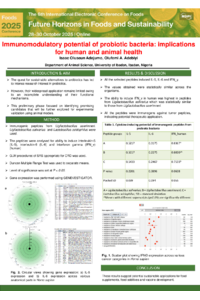
The use of antibiotics in human nutrition and livestock production as growth promoters in some parts of the world has faced restrictions owing to growing concerns regarding their use, necessitating research efforts and substantial funding dedicated to finding cost-effective and sustainable alternatives. This quest for sustainable alternatives to antibiotics has led to an intense research interest in probiotics. However, their widespread application remains limited owing to an incomplete understanding of their functional mechanisms. This preliminary study focused on identifying promising candidates that will be further explored for experimental validation using animal models. This study investigated the immunogenic peptides derived from the following probiotic bacterial species: Ligilactobacillus saerimneri (GVGNDRRPVNAKNIKKRRAQ, GFDTDRYFEENKNEYDWGKP, EKYHLIEAEGIKRVTEEFIW, DNKVPVHVKGVEYAANAEDS, PLVLGVLFIATGYISYATYR, DVGSLLINHVLTSTLVMKQA); Ligilactobacillus salivarius (FSKEVADRANVENIEPGLIR, TLDKLEINTEEFMDFQKAFM, VRAKNYNAAETQVKVSVIAN, LYLVEYFINNKLHNMIVRAK, QRVHITNLYGLSGVAGLAQK, ALLDELREGTLDKLEINTEE), and Lactobacillus acidophilus (MKDYRLFLIDLDGTVYRG, CKDYRLFLIDLDGTVYRG, DKDYRLFLIDLDGTVYRG, EKDYRLFLIDLDGTVYRG, FKDYRLFLIDLDGTVYRG, NKDYRLFLIDLDGTVYRG). L. saerimneri was isolated from the cecum of a 20-day-old chicken, while L. salivarius was isolated from the feces of swine. They were specifically investigated for their ability to induce interleukin-5 (IL-5), interleukin-6 (IL-6), and interferon gamma (IFN_γ) as key cytokines involved in immune modulation. The study was approved by the Ethics Committee, Monogastric Animal Management and Behaviour, Department of Animal Science, University of Ibadan, Nigeria (MAMB02Bio25). All the selected peptides induced IL-5, IL-6, and IFN_γ. The ability to induce IFN_γ in humans was highest in peptides from Ligilactobacillus salivarius (0.8367), which is statistically similar to peptides from Ligilactobacillus saerimneri (0.800). Peptides from Lactobacillus acidophilus obtained the lowest value (0.7533). L. salivarius and L. saerimneri peptides are 100% immunogenic against tumor peptides, while L. acidophilus peptides are 66% immunogenic. These results suggest their potential sustainable applications as food supplements, feed additives, and as part of vaccine development, providing promising avenues for antibiotic alternatives.
Keywords
antibiotics
feed additive
food supplement
immune modulation
probiotics
vaccines
Poster
Foods_2025_Adejumo_and_Adebiyi.pdf
The profile of metabolites of ellagitannins in the context of insomnia occurrence in peri- and postmenopausal women: A preliminary cross-sectional study
Characterization of Magarine Derived from Pili (Canarium ovatum) Nuts: Analyzing Its Composition, Viscosity, and Thermal Properties