Event submissions
Published
This submission belongs to the session H. Foods as Medicine of the event The 6th International Electronic Conference on Foods
Published date
27 Oct, 2025
Academic Editor
'%3e%3cpath%20d='M12.6657%2010.9104C12.4185%2010.325%2012.0599%209.79327%2011.6097%209.34482C11.1609%208.89508%2010.6293%208.5365%2010.0442%208.28888C10.0389%208.28626%2010.0337%208.28495%2010.0285%208.28233C10.8446%207.69279%2011.3752%206.73249%2011.3752%205.64904C11.3752%203.8542%209.92103%202.39999%208.1262%202.39999C6.33136%202.39999%204.87715%203.8542%204.87715%205.64904C4.87715%206.73249%205.40774%207.69279%206.22393%208.28364C6.21869%208.28626%206.21345%208.28757%206.20821%208.29019C5.62129%208.5378%205.09463%208.89284%204.64265%209.34613C4.1929%209.79493%203.83432%2010.3266%203.58671%2010.9117C3.34345%2011.4845%203.21226%2012.0987%203.20023%2012.7209C3.19988%2012.7349%203.20233%2012.7488%203.20744%2012.7619C3.21255%2012.7749%203.22022%2012.7867%203.22998%2012.7968C3.23975%2012.8068%203.25142%2012.8147%203.26431%2012.8202C3.2772%2012.8256%203.29105%2012.8284%203.30504%2012.8284H4.09109C4.14874%2012.8284%204.19459%2012.7825%204.1959%2012.7262C4.2221%2011.7148%204.62823%2010.7676%205.34617%2010.0497C6.08899%209.30683%207.0755%208.89808%208.1262%208.89808C9.17689%208.89808%2010.1634%209.30683%2010.9062%2010.0497C11.6242%2010.7676%2012.0303%2011.7148%2012.0565%2012.7262C12.0578%2012.7838%2012.1037%2012.8284%2012.1613%2012.8284H12.9474C12.9613%2012.8284%2012.9752%2012.8256%2012.9881%2012.8202C13.001%2012.8147%2013.0126%2012.8068%2013.0224%2012.7968C13.0322%2012.7867%2013.0398%2012.7749%2013.0449%2012.7619C13.0501%2012.7488%2013.0525%2012.7349%2013.0522%2012.7209C13.0391%2012.0947%2012.9094%2011.4855%2012.6657%2010.9104ZM8.1262%207.9024C7.52486%207.9024%206.9589%207.6679%206.53312%207.24211C6.10733%206.81633%205.87283%206.25037%205.87283%205.64904C5.87283%205.0477%206.10733%204.48174%206.53312%204.05596C6.9589%203.63018%207.52486%203.39567%208.1262%203.39567C8.72753%203.39567%209.29349%203.63018%209.71927%204.05596C10.1451%204.48174%2010.3796%205.0477%2010.3796%205.64904C10.3796%206.25037%2010.1451%206.81633%209.71927%207.24211C9.29349%207.6679%208.72753%207.9024%208.1262%207.9024Z'%20fill='%235D1EE1'/%3e%3c/g%3e%3c/svg%3e) Antonello Santini
Antonello SantiniCitation
Nika Lovrinčević Pavlović, Ivan Miškulin, Ivana Kotromanović Šimić, Darko Kotromanović, Ivan Vukoja, Matea Matić Ličanin, Jelena Kovačević, Maja Miškulin, Nutritive Synergy and Dietary Biodiversity as Determinants of Long-Term Health Outcomes, in Proceedings of The 6th International Electronic Conference on Foods, 28 October–30 October 2025, MDPI: Basel, Switzerland
Share
Email
Facebook
Twitter
LinkedIn
Nutritive Synergy and Dietary Biodiversity as Determinants of Long-Term Health Outcomes

Nika Lovrinčević Pavlović 1

Ivan Miškulin 1
'%3e%3cpath%20d='M12.6647%2010.9104C12.4176%2010.325%2012.0589%209.7933%2011.6088%209.34485C11.16%208.89511%2010.6283%208.53653%2010.0432%208.28891C10.038%208.28629%2010.0327%208.28498%2010.0275%208.28236C10.8437%207.69282%2011.3743%206.73252%2011.3743%205.64907C11.3743%203.85423%209.92005%202.40002%208.12522%202.40002C6.33038%202.40002%204.87618%203.85423%204.87618%205.64907C4.87618%206.73252%205.40677%207.69282%206.22296%208.28367C6.21772%208.28629%206.21248%208.2876%206.20724%208.29022C5.62031%208.53783%205.09365%208.89287%204.64167%209.34616C4.19192%209.79496%203.83334%2010.3266%203.58573%2010.9117C3.34247%2011.4846%203.21128%2012.0987%203.19925%2012.721C3.1989%2012.735%203.20135%2012.7489%203.20646%2012.7619C3.21157%2012.7749%203.21924%2012.7868%203.22901%2012.7968C3.23877%2012.8068%203.25045%2012.8148%203.26334%2012.8202C3.27623%2012.8256%203.29007%2012.8284%203.30406%2012.8284H4.09012C4.14776%2012.8284%204.19362%2012.7825%204.19493%2012.7262C4.22113%2011.7148%204.62726%2010.7676%205.34519%2010.0497C6.08802%209.30686%207.07452%208.89811%208.12522%208.89811C9.17592%208.89811%2010.1624%209.30686%2010.9052%2010.0497C11.6232%2010.7676%2012.0293%2011.7148%2012.0555%2012.7262C12.0568%2012.7839%2012.1027%2012.8284%2012.1603%2012.8284H12.9464C12.9604%2012.8284%2012.9742%2012.8256%2012.9871%2012.8202C13%2012.8148%2013.0117%2012.8068%2013.0214%2012.7968C13.0312%2012.7868%2013.0389%2012.7749%2013.044%2012.7619C13.0491%2012.7489%2013.0515%2012.735%2013.0512%2012.721C13.0381%2012.0947%2012.9084%2011.4856%2012.6647%2010.9104ZM8.12522%207.90243C7.52388%207.90243%206.95792%207.66793%206.53214%207.24215C6.10636%206.81636%205.87185%206.2504%205.87185%205.64907C5.87185%205.04773%206.10636%204.48177%206.53214%204.05599C6.95792%203.63021%207.52388%203.3957%208.12522%203.3957C8.72655%203.3957%209.29252%203.63021%209.7183%204.05599C10.1441%204.48177%2010.3786%205.04773%2010.3786%205.64907C10.3786%206.2504%2010.1441%206.81636%209.7183%207.24215C9.29252%207.66793%208.72655%207.90243%208.12522%207.90243Z'%20fill='%235D1EE1'/%3e%3c/g%3e%3c/svg%3e)
Ivana Kotromanović Šimić 1
Darko Kotromanović 1
Ivan Vukoja 1
Matea Matić Ličanin 1
Jelena Kovačević 1
Maja Miškulin 1
1. Department of Public Health, Faculty of Medicine Osijek, The Josip Juraj Strossmayer University of Osijek, 31000, Osijek, Croatia
Abstract
Introduction
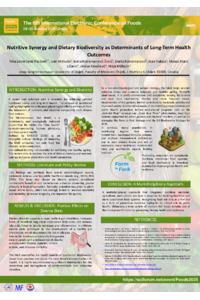
A varied and balanced diet is essential for achieving an optimal nutritional status and long-term health. The concept of nutritional synergy highlights the enhanced physiological effects that result from the interaction of nutrients and bioactive compounds from diverse food sources. This review aims to explore the role of dietary diversity and nutrient synergy in disease prevention and health promotion.
Methods
This review synthesizes findings from recent epidemiological studies, systematic reviews, and key public health documents (e.g., those published by the WHO, FAO, and EFSA). The focus is placed on dietary patterns considered nutritionally beneficial and on initiatives aimed at promoting greater diversity in food consumption.
Results
Dietary diversity supports a more resilient gut microbiota, increases levels of beneficial long-chain unsaturated fatty acids, and reduces bile acids linked to insulin resistance and inflammation. In children, diverse diets contribute to the development of a healthy gut microbiome, which may reduce the risk of allergies later in life. Evidence consistently links greater dietary variety with a reduced risk of obesity, cardiovascular disease, diabetes, certain cancers, and all-cause mortality. The Mediterranean diet exemplifies the health benefits of traditional, biodiversity-based food practices. Additional examples include educational programs like the “Colorful Plate” initiative, local food systems supported by urban gardens and farmers’ markets, and EU strategies such as the “Farm to Fork Strategy” and the “EU Biodiversity Strategy for 2030.”
Conclusions
A multidisciplinary approach that integrates nutrition, medicine, agriculture, and cultural practices is essential for building healthier and more sustainable food systems. Recognizing food not only as a fuel but as a form of preventive medicine highlights its critical role in maintaining public health. Ultimately, a wide variety of nutrient-rich foods remains one of the most powerful tools for promoting lifelong health and resilience.
Keywords
Diet
Nutritional Status
Gastrointestinal Microbiome
Chronic Disease/prevention & control
Mediterranean Diet
Public Health
Biodiversity
Health Promotion
Poster
Lovrincevic Pavlovic Nika_6th Foods conference.pdf
Comparative Study of Oxidative Stability in Almond and Hazelnut Cultivars Based on Volatile Compound Monitoring
A refined hazardous chemical acute exposure assessment method development using nationwide Japan dietary survey data