Event submissions
Published
This submission belongs to the session B. Nutritional and Functional Foods of the event The 6th International Electronic Conference on Foods
Published date
27 Oct, 2025
Academic Editor
'%3e%3cpath%20d='M12.6657%2010.9104C12.4185%2010.325%2012.0599%209.79327%2011.6097%209.34482C11.1609%208.89508%2010.6293%208.5365%2010.0442%208.28888C10.0389%208.28626%2010.0337%208.28495%2010.0285%208.28233C10.8446%207.69279%2011.3752%206.73249%2011.3752%205.64904C11.3752%203.8542%209.92103%202.39999%208.1262%202.39999C6.33136%202.39999%204.87715%203.8542%204.87715%205.64904C4.87715%206.73249%205.40774%207.69279%206.22393%208.28364C6.21869%208.28626%206.21345%208.28757%206.20821%208.29019C5.62129%208.5378%205.09463%208.89284%204.64265%209.34613C4.1929%209.79493%203.83432%2010.3266%203.58671%2010.9117C3.34345%2011.4845%203.21226%2012.0987%203.20023%2012.7209C3.19988%2012.7349%203.20233%2012.7488%203.20744%2012.7619C3.21255%2012.7749%203.22022%2012.7867%203.22998%2012.7968C3.23975%2012.8068%203.25142%2012.8147%203.26431%2012.8202C3.2772%2012.8256%203.29105%2012.8284%203.30504%2012.8284H4.09109C4.14874%2012.8284%204.19459%2012.7825%204.1959%2012.7262C4.2221%2011.7148%204.62823%2010.7676%205.34617%2010.0497C6.08899%209.30683%207.0755%208.89808%208.1262%208.89808C9.17689%208.89808%2010.1634%209.30683%2010.9062%2010.0497C11.6242%2010.7676%2012.0303%2011.7148%2012.0565%2012.7262C12.0578%2012.7838%2012.1037%2012.8284%2012.1613%2012.8284H12.9474C12.9613%2012.8284%2012.9752%2012.8256%2012.9881%2012.8202C13.001%2012.8147%2013.0126%2012.8068%2013.0224%2012.7968C13.0322%2012.7867%2013.0398%2012.7749%2013.0449%2012.7619C13.0501%2012.7488%2013.0525%2012.7349%2013.0522%2012.7209C13.0391%2012.0947%2012.9094%2011.4855%2012.6657%2010.9104ZM8.1262%207.9024C7.52486%207.9024%206.9589%207.6679%206.53312%207.24211C6.10733%206.81633%205.87283%206.25037%205.87283%205.64904C5.87283%205.0477%206.10733%204.48174%206.53312%204.05596C6.9589%203.63018%207.52486%203.39567%208.1262%203.39567C8.72753%203.39567%209.29349%203.63018%209.71927%204.05596C10.1451%204.48174%2010.3796%205.0477%2010.3796%205.64904C10.3796%206.25037%2010.1451%206.81633%209.71927%207.24211C9.29349%207.6679%208.72753%207.9024%208.1262%207.9024Z'%20fill='%235D1EE1'/%3e%3c/g%3e%3c/svg%3e) Manuel Viuda-Martos
Manuel Viuda-MartosCitation
Neeraj Kumari, Sunil Puri, Integrative Profiling of Nutritional and Phytochemical Constituents in Bombax ceiba L. Flowers for Fortified Food Development, in Proceedings of The 6th International Electronic Conference on Foods, 28 October–30 October 2025, MDPI: Basel, Switzerland
Share
Email
Facebook
Twitter
LinkedIn
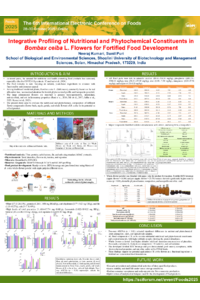
Integrative Profiling of Nutritional and Phytochemical Constituents in Bombax ceiba L. Flowers for Fortified Food Development
'%3e%3cpath%20d='M12.6647%2010.9104C12.4176%2010.325%2012.0589%209.7933%2011.6088%209.34485C11.16%208.89511%2010.6283%208.53653%2010.0432%208.28891C10.038%208.28629%2010.0327%208.28498%2010.0275%208.28236C10.8437%207.69282%2011.3743%206.73252%2011.3743%205.64907C11.3743%203.85423%209.92005%202.40002%208.12522%202.40002C6.33038%202.40002%204.87618%203.85423%204.87618%205.64907C4.87618%206.73252%205.40677%207.69282%206.22296%208.28367C6.21772%208.28629%206.21248%208.2876%206.20724%208.29022C5.62031%208.53783%205.09365%208.89287%204.64167%209.34616C4.19192%209.79496%203.83334%2010.3266%203.58573%2010.9117C3.34247%2011.4846%203.21128%2012.0987%203.19925%2012.721C3.1989%2012.735%203.20135%2012.7489%203.20646%2012.7619C3.21157%2012.7749%203.21924%2012.7868%203.22901%2012.7968C3.23877%2012.8068%203.25045%2012.8148%203.26334%2012.8202C3.27623%2012.8256%203.29007%2012.8284%203.30406%2012.8284H4.09012C4.14776%2012.8284%204.19362%2012.7825%204.19493%2012.7262C4.22113%2011.7148%204.62726%2010.7676%205.34519%2010.0497C6.08802%209.30686%207.07452%208.89811%208.12522%208.89811C9.17592%208.89811%2010.1624%209.30686%2010.9052%2010.0497C11.6232%2010.7676%2012.0293%2011.7148%2012.0555%2012.7262C12.0568%2012.7839%2012.1027%2012.8284%2012.1603%2012.8284H12.9464C12.9604%2012.8284%2012.9742%2012.8256%2012.9871%2012.8202C13%2012.8148%2013.0117%2012.8068%2013.0214%2012.7968C13.0312%2012.7868%2013.0389%2012.7749%2013.044%2012.7619C13.0491%2012.7489%2013.0515%2012.735%2013.0512%2012.721C13.0381%2012.0947%2012.9084%2011.4856%2012.6647%2010.9104ZM8.12522%207.90243C7.52388%207.90243%206.95792%207.66793%206.53214%207.24215C6.10636%206.81636%205.87185%206.2504%205.87185%205.64907C5.87185%205.04773%206.10636%204.48177%206.53214%204.05599C6.95792%203.63021%207.52388%203.3957%208.12522%203.3957C8.72655%203.3957%209.29252%203.63021%209.7183%204.05599C10.1441%204.48177%2010.3786%205.04773%2010.3786%205.64907C10.3786%206.2504%2010.1441%206.81636%209.7183%207.24215C9.29252%207.66793%208.72655%207.90243%208.12522%207.90243Z'%20fill='%235D1EE1'/%3e%3c/g%3e%3c/svg%3e)
Neeraj Kumari 1
Sunil Puri 2
1. School of Biological and Environmental Sciences, Shoolini University of Biotechnology and Management Sciences, Solan, Himachal Pradesh, 173229, India
2. School of Biological and Environmental Sciences, Shoolini University of Biotechnology and Management Sciences, Solan, Himachal Pradesh, 173229, India
Abstract
Bombax ceiba L. is a large deciduous tree of the Malvaceae family known for its large, showy, crimson-red flowers. The present study aims to evaluate the nutritional and phytochemical composition of different flower components (flower buds, sepals, petals, and whole flower) of B. ceiba for its potential as a food product. Standardized methods for the quantification of nutritional components, minerals, and phytochemical profile were used. Additionally, LC-MS and GC-MS techniques were further employed to identify the bioactive compounds present in different flower parts of B. ceiba. The nutritional analysis revealed a rich fiber content across all parts (up to 19.25%), with moderate levels of protein (1.76 mg BSA/g) and carbohydrates (3.77-5.02 mg GE/g). Ash and fat content ranged from 5.47–7.07% and 3.13–8.27%, respectively. Phytochemical evaluation showed high levels of phenolics (up to 67.77 mg GAE/g), flavonoids (up to 89.02 mg QE/g), tannins (up to 86.55 mg/g), and saponins (up to 9.70 mg/g). ICP-OES mineral analysis of the whole flower highlighted its richness in phosphorus (4574.64 mg/kg), calcium (166.56 mg/kg), and iron (87.19 mg/kg). Furthermore, LC-MS and GC-MS profiling revealed the presence of notable compounds including n-hexadecanoic acid, vitexin, mangiferin, among others, which contribute to the flower’s functional and therapeutic potential. Based on the integrative findings, the whole flower was selected for the development of two fortified food products: a Ready-to-Serve (RTS) beverage and jam. In both products, B. ceiba flower pulp was blended with apple pulp in varying proportions (0–100%) to formulate value-added combinations. These fortified products were successfully developed and evaluated as part of the current study for various parameters including total soluble solids, titrable acidity, pH, and total flavonoid and phenolic content. Thus, the study highlights the potential of B. ceiba flower as a sustainable and functional ingredient in food formulations.
Keywords
Bombax ceiba
LC-MS
bioactives
fortified food
sustainability
GC-MS
Poster
Poster template mdpi.pdf
Innovative lab-on-chip for the rapid detection of polyphenolic compounds in olives and their derivatives
EVALUATION OF OLIVE SEED POWDER IN THE DEVELOPMENT OF BIO-BASED PACKAGING MATERIALS