Event submissions
Published
This submission belongs to the session E. Chemistry and Physicochemical Properties of the event The 6th International Electronic Conference on Foods
Published date
27 Oct, 2025
Academic Editor
'%3e%3cpath%20d='M12.6657%2010.9104C12.4185%2010.325%2012.0599%209.79327%2011.6097%209.34482C11.1609%208.89508%2010.6293%208.5365%2010.0442%208.28888C10.0389%208.28626%2010.0337%208.28495%2010.0285%208.28233C10.8446%207.69279%2011.3752%206.73249%2011.3752%205.64904C11.3752%203.8542%209.92103%202.39999%208.1262%202.39999C6.33136%202.39999%204.87715%203.8542%204.87715%205.64904C4.87715%206.73249%205.40774%207.69279%206.22393%208.28364C6.21869%208.28626%206.21345%208.28757%206.20821%208.29019C5.62129%208.5378%205.09463%208.89284%204.64265%209.34613C4.1929%209.79493%203.83432%2010.3266%203.58671%2010.9117C3.34345%2011.4845%203.21226%2012.0987%203.20023%2012.7209C3.19988%2012.7349%203.20233%2012.7488%203.20744%2012.7619C3.21255%2012.7749%203.22022%2012.7867%203.22998%2012.7968C3.23975%2012.8068%203.25142%2012.8147%203.26431%2012.8202C3.2772%2012.8256%203.29105%2012.8284%203.30504%2012.8284H4.09109C4.14874%2012.8284%204.19459%2012.7825%204.1959%2012.7262C4.2221%2011.7148%204.62823%2010.7676%205.34617%2010.0497C6.08899%209.30683%207.0755%208.89808%208.1262%208.89808C9.17689%208.89808%2010.1634%209.30683%2010.9062%2010.0497C11.6242%2010.7676%2012.0303%2011.7148%2012.0565%2012.7262C12.0578%2012.7838%2012.1037%2012.8284%2012.1613%2012.8284H12.9474C12.9613%2012.8284%2012.9752%2012.8256%2012.9881%2012.8202C13.001%2012.8147%2013.0126%2012.8068%2013.0224%2012.7968C13.0322%2012.7867%2013.0398%2012.7749%2013.0449%2012.7619C13.0501%2012.7488%2013.0525%2012.7349%2013.0522%2012.7209C13.0391%2012.0947%2012.9094%2011.4855%2012.6657%2010.9104ZM8.1262%207.9024C7.52486%207.9024%206.9589%207.6679%206.53312%207.24211C6.10733%206.81633%205.87283%206.25037%205.87283%205.64904C5.87283%205.0477%206.10733%204.48174%206.53312%204.05596C6.9589%203.63018%207.52486%203.39567%208.1262%203.39567C8.72753%203.39567%209.29349%203.63018%209.71927%204.05596C10.1451%204.48174%2010.3796%205.0477%2010.3796%205.64904C10.3796%206.25037%2010.1451%206.81633%209.71927%207.24211C9.29349%207.6679%208.72753%207.9024%208.1262%207.9024Z'%20fill='%235D1EE1'/%3e%3c/g%3e%3c/svg%3e) Joana Amaral
Joana AmaralCitation
Belkis Tekguler, İlkay Koca, Hojjat Pashazadeh, Ali Ali Redha, Bulent Karadeniz, Chemical Composition, Antioxidant Capacity, and Volatile Profile of Laser trilobum (Kefe Cumin) Seeds Grown in Turkey, in Proceedings of The 6th International Electronic Conference on Foods, 28 October–30 October 2025, MDPI: Basel, Switzerland
Share
Email
Facebook
Twitter
LinkedIn
Chemical Composition, Antioxidant Capacity, and Volatile Profile of Laser trilobum (Kefe Cumin) Seeds Grown in Turkey
'%3e%3cpath%20d='M12.6647%2010.9104C12.4176%2010.325%2012.0589%209.7933%2011.6088%209.34485C11.16%208.89511%2010.6283%208.53653%2010.0432%208.28891C10.038%208.28629%2010.0327%208.28498%2010.0275%208.28236C10.8437%207.69282%2011.3743%206.73252%2011.3743%205.64907C11.3743%203.85423%209.92005%202.40002%208.12522%202.40002C6.33038%202.40002%204.87618%203.85423%204.87618%205.64907C4.87618%206.73252%205.40677%207.69282%206.22296%208.28367C6.21772%208.28629%206.21248%208.2876%206.20724%208.29022C5.62031%208.53783%205.09365%208.89287%204.64167%209.34616C4.19192%209.79496%203.83334%2010.3266%203.58573%2010.9117C3.34247%2011.4846%203.21128%2012.0987%203.19925%2012.721C3.1989%2012.735%203.20135%2012.7489%203.20646%2012.7619C3.21157%2012.7749%203.21924%2012.7868%203.22901%2012.7968C3.23877%2012.8068%203.25045%2012.8148%203.26334%2012.8202C3.27623%2012.8256%203.29007%2012.8284%203.30406%2012.8284H4.09012C4.14776%2012.8284%204.19362%2012.7825%204.19493%2012.7262C4.22113%2011.7148%204.62726%2010.7676%205.34519%2010.0497C6.08802%209.30686%207.07452%208.89811%208.12522%208.89811C9.17592%208.89811%2010.1624%209.30686%2010.9052%2010.0497C11.6232%2010.7676%2012.0293%2011.7148%2012.0555%2012.7262C12.0568%2012.7839%2012.1027%2012.8284%2012.1603%2012.8284H12.9464C12.9604%2012.8284%2012.9742%2012.8256%2012.9871%2012.8202C13%2012.8148%2013.0117%2012.8068%2013.0214%2012.7968C13.0312%2012.7868%2013.0389%2012.7749%2013.044%2012.7619C13.0491%2012.7489%2013.0515%2012.735%2013.0512%2012.721C13.0381%2012.0947%2012.9084%2011.4856%2012.6647%2010.9104ZM8.12522%207.90243C7.52388%207.90243%206.95792%207.66793%206.53214%207.24215C6.10636%206.81636%205.87185%206.2504%205.87185%205.64907C5.87185%205.04773%206.10636%204.48177%206.53214%204.05599C6.95792%203.63021%207.52388%203.3957%208.12522%203.3957C8.72655%203.3957%209.29252%203.63021%209.7183%204.05599C10.1441%204.48177%2010.3786%205.04773%2010.3786%205.64907C10.3786%206.2504%2010.1441%206.81636%209.7183%207.24215C9.29252%207.66793%208.72655%207.90243%208.12522%207.90243Z'%20fill='%235D1EE1'/%3e%3c/g%3e%3c/svg%3e)
Belkis Tekguler 1
İlkay Koca 1

Hojjat Pashazadeh 2
Ali Ali Redha 3,4
Bulent Karadeniz 5
1. Food Engineering Department, Engineering Faculty, Ondokuz Mayıs University, Samsun, 55139, Turkey
2. Department of Gastronomy and Culinary Arts, Art and Design Faculty, Istanbul Nisantası University, Istanbul, 34398, Turkey
3. Department of Public Health and Sport Sciences, Faculty of Health and Life Sciences, University of Exeter Medical School, University of Exeter, Exeter, EX1 2LU, UK
4. Centre for Nutrition and Food Sciences, Queensland Alliance for Agriculture and Food Innovation (QAAFI), The University of Queensland, Brisbane, QLD 4072, Australia
5. Food Institute, TUBITAK MAM, Gebze Campus, Kocaeli, 41470, Turkey
Abstract
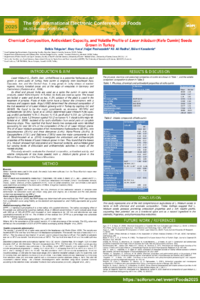
Laser trilobum (L.) Borkh., locally known as "Kefe kimyonu," is a perennial herb of the Umbelliferae family that is traditionally used in Turkey as a cumin substitute in culinary and folk medicinal applications. This study aimed to evaluate the chemical composition, antioxidant activity, and volatile compounds of ripe fruits (seeds) from L. trilobum plants grown in the Mersin/Adana region of the Taurus Mountains. Seven different seed samples were analyzed for their physicochemical and bioactive properties. The color values (L*, a*, b*) averaged 38.60 ± 2.65, 13.65 ± 3.47, and 1.34 ± 1.02, respectively. The seeds had a moisture content of 10.41 ± 1.16%, ash content of 10.00 ± 0.83%, crude fat content of 15.02 ± 2.55%, and crude protein content of 18.77 ± 1.32%. The total phenolic content was 7.91 ± 1.70 mg GAE/g, while the iron-reducing antioxidant power (FRAP) and DPPH radical scavenging capacity (IC₅₀) were 38.89 ± 20.97 mmol Fe²⁺/g and 298.24 ± 88.05 µg/mL, respectively. Volatile compound profiling via solid-phase microextraction (SPME) coupled with GC-MS revealed 20 major components, with limonene (47.99 ± 15.46%), α-pinene (19.19 ± 4.87%), and 1-cyclohexen-1-carboxaldehyde, 4-(1-methylhethenyl) (5.88 ± 2.46%) being the most abundant. This study represents one of the first comprehensive evaluations of L. trilobum seeds in terms of both chemical and aromatic composition. These findings suggest that L. trilobum seeds possess promising antioxidant properties and a rich volatile profile, supporting their potential use as a functional spice and as a natural ingredient in the cosmetic, fragrance, and pharmaceutical industries.
Keywords
Laser trilobum
Kefe cumin
volatile compounds
antioxidant activity
phenolics
SPME-GC-MS
traditional spice.
Poster
poster.pdf
Advancing Cold Brew Coffee through Probiotic Integration
Shelf-life and consumer acceptance of rice and tiger nut plant-based fermented beverages