Event submissions
Published
This submission belongs to the session A. Food Technology and Engineering of the event The 6th International Electronic Conference on Foods
Published date
27 Oct, 2025
Academic Editor
'%3e%3cpath%20d='M12.6657%2010.9104C12.4185%2010.325%2012.0599%209.79327%2011.6097%209.34482C11.1609%208.89508%2010.6293%208.5365%2010.0442%208.28888C10.0389%208.28626%2010.0337%208.28495%2010.0285%208.28233C10.8446%207.69279%2011.3752%206.73249%2011.3752%205.64904C11.3752%203.8542%209.92103%202.39999%208.1262%202.39999C6.33136%202.39999%204.87715%203.8542%204.87715%205.64904C4.87715%206.73249%205.40774%207.69279%206.22393%208.28364C6.21869%208.28626%206.21345%208.28757%206.20821%208.29019C5.62129%208.5378%205.09463%208.89284%204.64265%209.34613C4.1929%209.79493%203.83432%2010.3266%203.58671%2010.9117C3.34345%2011.4845%203.21226%2012.0987%203.20023%2012.7209C3.19988%2012.7349%203.20233%2012.7488%203.20744%2012.7619C3.21255%2012.7749%203.22022%2012.7867%203.22998%2012.7968C3.23975%2012.8068%203.25142%2012.8147%203.26431%2012.8202C3.2772%2012.8256%203.29105%2012.8284%203.30504%2012.8284H4.09109C4.14874%2012.8284%204.19459%2012.7825%204.1959%2012.7262C4.2221%2011.7148%204.62823%2010.7676%205.34617%2010.0497C6.08899%209.30683%207.0755%208.89808%208.1262%208.89808C9.17689%208.89808%2010.1634%209.30683%2010.9062%2010.0497C11.6242%2010.7676%2012.0303%2011.7148%2012.0565%2012.7262C12.0578%2012.7838%2012.1037%2012.8284%2012.1613%2012.8284H12.9474C12.9613%2012.8284%2012.9752%2012.8256%2012.9881%2012.8202C13.001%2012.8147%2013.0126%2012.8068%2013.0224%2012.7968C13.0322%2012.7867%2013.0398%2012.7749%2013.0449%2012.7619C13.0501%2012.7488%2013.0525%2012.7349%2013.0522%2012.7209C13.0391%2012.0947%2012.9094%2011.4855%2012.6657%2010.9104ZM8.1262%207.9024C7.52486%207.9024%206.9589%207.6679%206.53312%207.24211C6.10733%206.81633%205.87283%206.25037%205.87283%205.64904C5.87283%205.0477%206.10733%204.48174%206.53312%204.05596C6.9589%203.63018%207.52486%203.39567%208.1262%203.39567C8.72753%203.39567%209.29349%203.63018%209.71927%204.05596C10.1451%204.48174%2010.3796%205.0477%2010.3796%205.64904C10.3796%206.25037%2010.1451%206.81633%209.71927%207.24211C9.29349%207.6679%208.72753%207.9024%208.1262%207.9024Z'%20fill='%235D1EE1'/%3e%3c/g%3e%3c/svg%3e) Elsa Gonçalves
Elsa GonçalvesCitation
Junhe Yu, Heping Cui, Imre Blank, Frank Oliver, Xiaoming Zhang, A Novel Maillard Intermediate as a Flavor Precursor and Color Modulator: Thermal Behavior and Processing Adaptability of an Alanine–Xylose Amadori Rearrangement Product in Model and Meat Systems, in Proceedings of The 6th International Electronic Conference on Foods, 28 October–30 October 2025, MDPI: Basel, Switzerland
Share
Email
Facebook
Twitter
LinkedIn
A Novel Maillard Intermediate as a Flavor Precursor and Color Modulator: Thermal Behavior and Processing Adaptability of an Alanine–Xylose Amadori Rearrangement Product in Model and Meat Systems

Junhe Yu 1
'%3e%3cpath%20d='M12.6647%2010.9104C12.4176%2010.325%2012.0589%209.7933%2011.6088%209.34485C11.16%208.89511%2010.6283%208.53653%2010.0432%208.28891C10.038%208.28629%2010.0327%208.28498%2010.0275%208.28236C10.8437%207.69282%2011.3743%206.73252%2011.3743%205.64907C11.3743%203.85423%209.92005%202.40002%208.12522%202.40002C6.33038%202.40002%204.87618%203.85423%204.87618%205.64907C4.87618%206.73252%205.40677%207.69282%206.22296%208.28367C6.21772%208.28629%206.21248%208.2876%206.20724%208.29022C5.62031%208.53783%205.09365%208.89287%204.64167%209.34616C4.19192%209.79496%203.83334%2010.3266%203.58573%2010.9117C3.34247%2011.4846%203.21128%2012.0987%203.19925%2012.721C3.1989%2012.735%203.20135%2012.7489%203.20646%2012.7619C3.21157%2012.7749%203.21924%2012.7868%203.22901%2012.7968C3.23877%2012.8068%203.25045%2012.8148%203.26334%2012.8202C3.27623%2012.8256%203.29007%2012.8284%203.30406%2012.8284H4.09012C4.14776%2012.8284%204.19362%2012.7825%204.19493%2012.7262C4.22113%2011.7148%204.62726%2010.7676%205.34519%2010.0497C6.08802%209.30686%207.07452%208.89811%208.12522%208.89811C9.17592%208.89811%2010.1624%209.30686%2010.9052%2010.0497C11.6232%2010.7676%2012.0293%2011.7148%2012.0555%2012.7262C12.0568%2012.7839%2012.1027%2012.8284%2012.1603%2012.8284H12.9464C12.9604%2012.8284%2012.9742%2012.8256%2012.9871%2012.8202C13%2012.8148%2013.0117%2012.8068%2013.0214%2012.7968C13.0312%2012.7868%2013.0389%2012.7749%2013.044%2012.7619C13.0491%2012.7489%2013.0515%2012.735%2013.0512%2012.721C13.0381%2012.0947%2012.9084%2011.4856%2012.6647%2010.9104ZM8.12522%207.90243C7.52388%207.90243%206.95792%207.66793%206.53214%207.24215C6.10636%206.81636%205.87185%206.2504%205.87185%205.64907C5.87185%205.04773%206.10636%204.48177%206.53214%204.05599C6.95792%203.63021%207.52388%203.3957%208.12522%203.3957C8.72655%203.3957%209.29252%203.63021%209.7183%204.05599C10.1441%204.48177%2010.3786%205.04773%2010.3786%205.64907C10.3786%206.2504%2010.1441%206.81636%209.7183%207.24215C9.29252%207.66793%208.72655%207.90243%208.12522%207.90243Z'%20fill='%235D1EE1'/%3e%3c/g%3e%3c/svg%3e)
Heping Cui 2
Imre Blank 3
Frank Oliver 4
Xiaoming Zhang 2
1. Laboratory for Functional Foods and Human Health, Center for Excellence in Post-Harvest Technologies, North Carolina Agricultural and Technical State University, North Carolina Research Campus, 500 Laureate Way, Kannapolis, North Carolina 28081, USA
2. State Key Laboratory of Food Science and Technology, School of Food Science and Technology, Jiangnan University, 1800 Lihu Road, Wuxi, Jiangsu 214122, China.
3. Zhejiang Yiming Food Co., LTD., Jiuting Center Huting North Street No.199, Shanghai 201600, China
4. Chair of Food Chemistry and Molecular Sensory Science, Technical University of Munich, Lise-Meitner-Strasse 34, D-85354 Freising-Weihenstephan, Germany
Abstract
Amadori rearrangement products (ARPs), as stable intermediates of the Maillard reaction, offer potential for controlled flavor generation and color modulation in thermally processed foods. This study investigated the flavor–color formation and thermal processing adaptability of an alanine–xylose ARP (AX-ARP) under varying temperatures (100–160 °C), pH values (4.5–10.5), and precursor ratios using aqueous model systems and a meat matrix. Volatile compounds were analyzed via headspace solid-phase microextraction coupled with gas chromatography–mass spectrometry (HS–SPME–GC–MS), and flavor profiles were characterized by means of an electronic nose and principal component analysis (PCA). In model systems, AX-ARP produced 1.8–5.4 times more total volatile compounds (TVCs) than its precursor mixture (AX) at 100–140 °C, with furfural and pyrroles being dominant. Pyrazines were only generated above 120 °C or under alkaline pH. Alanine addition (ARP–alanine molar ratio = 1:3) significantly increased pyrazine content (from 0.52 to 5.54 μg/L), while excess xylose suppressed overall TVC production. Color measurements showed that browning intensity (A420) and a* values increased significantly under acidic conditions and precursor supplementation. In the meat matrix (chicken sausage), the roasting, microwave, and frying treatments enhanced ARP-derived flavor release, with frying yielding the highest TVCs (274.6 μg/L). Across all cooking methods, AX-ARP addition significantly suppressed lipid oxidation markers in meat, reducing levels of hexanal by 88–99% and those of nonanal by 72–97% compared to controls. Since lipid oxidation contributes to rancidity, off-flavors, and reduced shelf life, this suppression highlights the potential of AX-ARP to enhance both the sensory quality and storage stability of meat products. PCA showed that pH, precursor ratio, and cooking method significantly influenced the flavor profile of AX-ARP, with alkaline conditions shifting it closer to that of its AX precursor. These findings highlight the potential of alanine–xylose ARP as a novel flavor precursor and color modulator for thermally processed meat products.
Keywords
Amadori rearrangement product
Maillard reaction
flavor precursors
color formation
thermal processing
model system
meat matrix
HS-SPME–GC–MS
electronic nose
Poster
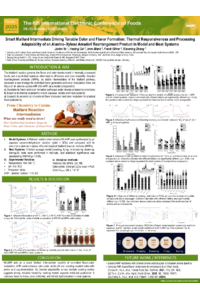
Junhe Yu-poster-foods-2025.pdf
Proposal of a Digital Maturity Model to Assess the Impact of Agriculture 4.0 Technologies on Small- and Medium-Sized Rural Properties: A Case Study in the Agrotechnological District (DAT) of Caconde (Brazil)
The influence of storage conditions on selected physical properties of freeze-dried carrot snacks covered with edible films based on pork gelatin.