Event submissions
Published
This submission belongs to the session C. Food Quality and Safety of the event The 6th International Electronic Conference on Foods
Published date
28 Oct, 2025
Academic Editor
'%3e%3cpath%20d='M12.6657%2010.9104C12.4185%2010.325%2012.0599%209.79327%2011.6097%209.34482C11.1609%208.89508%2010.6293%208.5365%2010.0442%208.28888C10.0389%208.28626%2010.0337%208.28495%2010.0285%208.28233C10.8446%207.69279%2011.3752%206.73249%2011.3752%205.64904C11.3752%203.8542%209.92103%202.39999%208.1262%202.39999C6.33136%202.39999%204.87715%203.8542%204.87715%205.64904C4.87715%206.73249%205.40774%207.69279%206.22393%208.28364C6.21869%208.28626%206.21345%208.28757%206.20821%208.29019C5.62129%208.5378%205.09463%208.89284%204.64265%209.34613C4.1929%209.79493%203.83432%2010.3266%203.58671%2010.9117C3.34345%2011.4845%203.21226%2012.0987%203.20023%2012.7209C3.19988%2012.7349%203.20233%2012.7488%203.20744%2012.7619C3.21255%2012.7749%203.22022%2012.7867%203.22998%2012.7968C3.23975%2012.8068%203.25142%2012.8147%203.26431%2012.8202C3.2772%2012.8256%203.29105%2012.8284%203.30504%2012.8284H4.09109C4.14874%2012.8284%204.19459%2012.7825%204.1959%2012.7262C4.2221%2011.7148%204.62823%2010.7676%205.34617%2010.0497C6.08899%209.30683%207.0755%208.89808%208.1262%208.89808C9.17689%208.89808%2010.1634%209.30683%2010.9062%2010.0497C11.6242%2010.7676%2012.0303%2011.7148%2012.0565%2012.7262C12.0578%2012.7838%2012.1037%2012.8284%2012.1613%2012.8284H12.9474C12.9613%2012.8284%2012.9752%2012.8256%2012.9881%2012.8202C13.001%2012.8147%2013.0126%2012.8068%2013.0224%2012.7968C13.0322%2012.7867%2013.0398%2012.7749%2013.0449%2012.7619C13.0501%2012.7488%2013.0525%2012.7349%2013.0522%2012.7209C13.0391%2012.0947%2012.9094%2011.4855%2012.6657%2010.9104ZM8.1262%207.9024C7.52486%207.9024%206.9589%207.6679%206.53312%207.24211C6.10733%206.81633%205.87283%206.25037%205.87283%205.64904C5.87283%205.0477%206.10733%204.48174%206.53312%204.05596C6.9589%203.63018%207.52486%203.39567%208.1262%203.39567C8.72753%203.39567%209.29349%203.63018%209.71927%204.05596C10.1451%204.48174%2010.3796%205.0477%2010.3796%205.64904C10.3796%206.25037%2010.1451%206.81633%209.71927%207.24211C9.29349%207.6679%208.72753%207.9024%208.1262%207.9024Z'%20fill='%235D1EE1'/%3e%3c/g%3e%3c/svg%3e) Susana Casal
Susana CasalCitation
Ana Micaela Solivella Poveda, Marta Rodríguez Soriano, Marcos Rodríguez Estrada, Marina Cano Lamadrid, Esther Sendra Nadal, Fish-based pureed baby foods: A scientific literature review on metal(oid) levels and limited availability in the Spanish market, in Proceedings of The 6th International Electronic Conference on Foods, 28 October–30 October 2025, MDPI: Basel, Switzerland
Share
Email
Facebook
Twitter
LinkedIn
Fish-based pureed baby foods: A scientific literature review on metal(oid) levels and limited availability in the Spanish market
'%3e%3cpath%20d='M12.6647%2010.9104C12.4176%2010.325%2012.0589%209.7933%2011.6088%209.34485C11.16%208.89511%2010.6283%208.53653%2010.0432%208.28891C10.038%208.28629%2010.0327%208.28498%2010.0275%208.28236C10.8437%207.69282%2011.3743%206.73252%2011.3743%205.64907C11.3743%203.85423%209.92005%202.40002%208.12522%202.40002C6.33038%202.40002%204.87618%203.85423%204.87618%205.64907C4.87618%206.73252%205.40677%207.69282%206.22296%208.28367C6.21772%208.28629%206.21248%208.2876%206.20724%208.29022C5.62031%208.53783%205.09365%208.89287%204.64167%209.34616C4.19192%209.79496%203.83334%2010.3266%203.58573%2010.9117C3.34247%2011.4846%203.21128%2012.0987%203.19925%2012.721C3.1989%2012.735%203.20135%2012.7489%203.20646%2012.7619C3.21157%2012.7749%203.21924%2012.7868%203.22901%2012.7968C3.23877%2012.8068%203.25045%2012.8148%203.26334%2012.8202C3.27623%2012.8256%203.29007%2012.8284%203.30406%2012.8284H4.09012C4.14776%2012.8284%204.19362%2012.7825%204.19493%2012.7262C4.22113%2011.7148%204.62726%2010.7676%205.34519%2010.0497C6.08802%209.30686%207.07452%208.89811%208.12522%208.89811C9.17592%208.89811%2010.1624%209.30686%2010.9052%2010.0497C11.6232%2010.7676%2012.0293%2011.7148%2012.0555%2012.7262C12.0568%2012.7839%2012.1027%2012.8284%2012.1603%2012.8284H12.9464C12.9604%2012.8284%2012.9742%2012.8256%2012.9871%2012.8202C13%2012.8148%2013.0117%2012.8068%2013.0214%2012.7968C13.0312%2012.7868%2013.0389%2012.7749%2013.044%2012.7619C13.0491%2012.7489%2013.0515%2012.735%2013.0512%2012.721C13.0381%2012.0947%2012.9084%2011.4856%2012.6647%2010.9104ZM8.12522%207.90243C7.52388%207.90243%206.95792%207.66793%206.53214%207.24215C6.10636%206.81636%205.87185%206.2504%205.87185%205.64907C5.87185%205.04773%206.10636%204.48177%206.53214%204.05599C6.95792%203.63021%207.52388%203.3957%208.12522%203.3957C8.72655%203.3957%209.29252%203.63021%209.7183%204.05599C10.1441%204.48177%2010.3786%205.04773%2010.3786%205.64907C10.3786%206.2504%2010.1441%206.81636%209.7183%207.24215C9.29252%207.66793%208.72655%207.90243%208.12522%207.90243Z'%20fill='%235D1EE1'/%3e%3c/g%3e%3c/svg%3e)
Ana Micaela Solivella Poveda 1
Marta Rodríguez Soriano 1
Marcos Rodríguez Estrada 1

Marina Cano Lamadrid 1

Esther Sendra Nadal 1
1. Instituto de Investigación e Innovación Agroalimentario y Agroambiental (CIAGRO-UMH). Universidad Miguel Hernández de Elche, Ctra Beniel km. 3.2, 03312, Orihuela, Alicante, Spain
Abstract
Fish is a recommended food in early childhood due to its high content of essential nutrients, particularly omega-3 fatty acids, which are positively associated with cognitive development. However, fish may also be a source of exposure to toxic metal(loid)s, such as Hg and As, which can pose health risks. This study had two main objectives: (i) to conduct a literature review on the levels of metal(loid)s in commercial pureed baby foods (PBFs); and (ii) to assess the availability and labelling information of fish-based PBFs in the Spanish market. This study followed the methodology of a scoping review, conducted in accordance with the PRISMA Extension for Scoping Reviews (PRISMA-ScR). The PRISMA 2020 guidelines and checklist were followed throughout the process. On the other hand, the supply of fish-based PBFs in the Spanish market was compiled, as well as information on their labelling. The examined studies (n=11) showed that fish-based PBFs had the highest mean concentrations of As and Hg, while meat- and vegetable-based PBFs showed higher levels of Cd and Pb, sometimes exceeding legal limits. Fish-based PBFs represented only 12.04-13.13 % of the total Spanish market supply, with a fish content frequently around 8%. Most of these products also included potato (≈ 80 %), carrot (≈ 70 %), and rice (≈ 65 %). Despite the well-documented neurodevelopmental benefits of fish consumption during childhood, the limited availability of fish-based PBFs suggests a nutritional gap. While legislation establishes maximum permissible limits for metal(oid)s in baby foods, efforts should focus on minimizing their presence to ensure infant health, following the strategy “Closer to Zero”.
Keywords
infant soft meals
heavy metals
food composition
infants
toddlers
non-essential elements
Poster
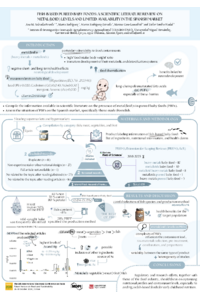
Ana M. Solivella-Poveda_Poster 6th International Electronic Conference on Foods.pdf
Use of Chenopodium pallidicaule grains to obtain a novel flour fermented by Monascus ruber in solid-state fermentation
Flavonoid-Rich Plant Matrices Selectively Modulate Human Gut Microbiota: An Integrated In Vitro Analysis Using MICODE