Event submissions
EventsThe 1st International Electronic Conference on Medicinal Chemistry and Pharmaceutics
Published
This submission belongs to the session S5. Natural Products and Biopharmaceuticals of the event The 1st International Electronic Conference on Medicinal Chemistry and Pharmaceutics
Published date
29 Oct, 2025
Academic Editor
'%3e%3cpath%20d='M12.6657%2010.9104C12.4185%2010.325%2012.0599%209.79327%2011.6097%209.34482C11.1609%208.89508%2010.6293%208.5365%2010.0442%208.28888C10.0389%208.28626%2010.0337%208.28495%2010.0285%208.28233C10.8446%207.69279%2011.3752%206.73249%2011.3752%205.64904C11.3752%203.8542%209.92103%202.39999%208.1262%202.39999C6.33136%202.39999%204.87715%203.8542%204.87715%205.64904C4.87715%206.73249%205.40774%207.69279%206.22393%208.28364C6.21869%208.28626%206.21345%208.28757%206.20821%208.29019C5.62129%208.5378%205.09463%208.89284%204.64265%209.34613C4.1929%209.79493%203.83432%2010.3266%203.58671%2010.9117C3.34345%2011.4845%203.21226%2012.0987%203.20023%2012.7209C3.19988%2012.7349%203.20233%2012.7488%203.20744%2012.7619C3.21255%2012.7749%203.22022%2012.7867%203.22998%2012.7968C3.23975%2012.8068%203.25142%2012.8147%203.26431%2012.8202C3.2772%2012.8256%203.29105%2012.8284%203.30504%2012.8284H4.09109C4.14874%2012.8284%204.19459%2012.7825%204.1959%2012.7262C4.2221%2011.7148%204.62823%2010.7676%205.34617%2010.0497C6.08899%209.30683%207.0755%208.89808%208.1262%208.89808C9.17689%208.89808%2010.1634%209.30683%2010.9062%2010.0497C11.6242%2010.7676%2012.0303%2011.7148%2012.0565%2012.7262C12.0578%2012.7838%2012.1037%2012.8284%2012.1613%2012.8284H12.9474C12.9613%2012.8284%2012.9752%2012.8256%2012.9881%2012.8202C13.001%2012.8147%2013.0126%2012.8068%2013.0224%2012.7968C13.0322%2012.7867%2013.0398%2012.7749%2013.0449%2012.7619C13.0501%2012.7488%2013.0525%2012.7349%2013.0522%2012.7209C13.0391%2012.0947%2012.9094%2011.4855%2012.6657%2010.9104ZM8.1262%207.9024C7.52486%207.9024%206.9589%207.6679%206.53312%207.24211C6.10733%206.81633%205.87283%206.25037%205.87283%205.64904C5.87283%205.0477%206.10733%204.48174%206.53312%204.05596C6.9589%203.63018%207.52486%203.39567%208.1262%203.39567C8.72753%203.39567%209.29349%203.63018%209.71927%204.05596C10.1451%204.48174%2010.3796%205.0477%2010.3796%205.64904C10.3796%206.25037%2010.1451%206.81633%209.71927%207.24211C9.29349%207.6679%208.72753%207.9024%208.1262%207.9024Z'%20fill='%235D1EE1'/%3e%3c/g%3e%3c/svg%3e) Anna Rita Bilia
Anna Rita BiliaCitation
Sulbha Gopal Patil, Dr.Sunila Atul Patil, Mrs.Amruta Nilesh Patil, Dr. Sunil Pandit Pawar, Emerging Trends in Herbal Drug Delivery: Innovations and Applications, in Proceedings of The 1st International Electronic Conference on Medicinal Chemistry and Pharmaceutics, 1 November–30 November 2025, MDPI: Basel, Switzerland
Share
Email
Facebook
Twitter
LinkedIn
Emerging Trends in Herbal Drug Delivery: Innovations and Applications
'%3e%3cpath%20d='M12.6647%2010.9104C12.4176%2010.325%2012.0589%209.7933%2011.6088%209.34485C11.16%208.89511%2010.6283%208.53653%2010.0432%208.28891C10.038%208.28629%2010.0327%208.28498%2010.0275%208.28236C10.8437%207.69282%2011.3743%206.73252%2011.3743%205.64907C11.3743%203.85423%209.92005%202.40002%208.12522%202.40002C6.33038%202.40002%204.87618%203.85423%204.87618%205.64907C4.87618%206.73252%205.40677%207.69282%206.22296%208.28367C6.21772%208.28629%206.21248%208.2876%206.20724%208.29022C5.62031%208.53783%205.09365%208.89287%204.64167%209.34616C4.19192%209.79496%203.83334%2010.3266%203.58573%2010.9117C3.34247%2011.4846%203.21128%2012.0987%203.19925%2012.721C3.1989%2012.735%203.20135%2012.7489%203.20646%2012.7619C3.21157%2012.7749%203.21924%2012.7868%203.22901%2012.7968C3.23877%2012.8068%203.25045%2012.8148%203.26334%2012.8202C3.27623%2012.8256%203.29007%2012.8284%203.30406%2012.8284H4.09012C4.14776%2012.8284%204.19362%2012.7825%204.19493%2012.7262C4.22113%2011.7148%204.62726%2010.7676%205.34519%2010.0497C6.08802%209.30686%207.07452%208.89811%208.12522%208.89811C9.17592%208.89811%2010.1624%209.30686%2010.9052%2010.0497C11.6232%2010.7676%2012.0293%2011.7148%2012.0555%2012.7262C12.0568%2012.7839%2012.1027%2012.8284%2012.1603%2012.8284H12.9464C12.9604%2012.8284%2012.9742%2012.8256%2012.9871%2012.8202C13%2012.8148%2013.0117%2012.8068%2013.0214%2012.7968C13.0312%2012.7868%2013.0389%2012.7749%2013.044%2012.7619C13.0491%2012.7489%2013.0515%2012.735%2013.0512%2012.721C13.0381%2012.0947%2012.9084%2011.4856%2012.6647%2010.9104ZM8.12522%207.90243C7.52388%207.90243%206.95792%207.66793%206.53214%207.24215C6.10636%206.81636%205.87185%206.2504%205.87185%205.64907C5.87185%205.04773%206.10636%204.48177%206.53214%204.05599C6.95792%203.63021%207.52388%203.3957%208.12522%203.3957C8.72655%203.3957%209.29252%203.63021%209.7183%204.05599C10.1441%204.48177%2010.3786%205.04773%2010.3786%205.64907C10.3786%206.2504%2010.1441%206.81636%209.7183%207.24215C9.29252%207.66793%208.72655%207.90243%208.12522%207.90243Z'%20fill='%235D1EE1'/%3e%3c/g%3e%3c/svg%3e)
Sulbha Gopal Patil 1
Dr.Sunila Atul Patil 2
Mrs.Amruta Nilesh Patil 2
Dr. Sunil Pandit Pawar 3
1. Department of Pharmaceutics,P.S.G.V.P.Mandal’s College of Pharmacy,Shahada,Dist.-Nandurbar, Maharashtra-425409, India
2. Department of Pharmaceutical Chemistry, P.S.G.V.P.Mandal’s College of Pharmacy, Shahada, Dist.-Nandurbar, Maharashtra-425409, India
3. Department of Pharmacognosy, P.S.G.V.P.Mandal’s College of Pharmacy, Shahada, Dist.-Nandurbar, Maharashtra-425409, India
Abstract
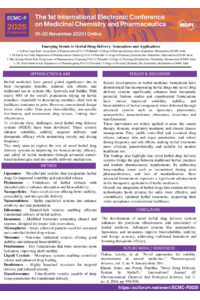
In recent years, herbal medicines have garnered worldwide attention from both people and researchers due to their aesthetic value, improved patient compliance, and significant therapeutic effects. Herbal drugs can be more effectively utilized by incorporating them into modern dosage forms. This can be achieved through the design of novel herbal ingredient drug delivery systems, which represent innovative approaches addressing the limitations of traditional drug delivery systems. Implementing novel drug delivery technologies in herbal medicine has the potential to enhance efficacy and reduce the side effects associated with various herbal compounds and herbs.These formulations offer several advantages over traditional methods, including improved solubility and bioavailability, reduced toxicity, controlled drug delivery, and protection of plant actives from degradation. Moreover, they exhibit drug-targeting properties that enhance selectivity, delivery precision, and overall effectiveness, often allowing for dose reduction. These advancements not only increase safety but also promote patient compliance.Various novel herbal drug delivery systems include liposomes, phytosomes, nanoemulsions, nanoparticles, ethosomes, and transferosomes, each offering unique benefits. For instance, liposomes and nanoparticles can encapsulate poorly water-soluble herbal extracts, enhancing their absorption and stability. Phytosomes improve the bioavailability of polyphenolic compounds, while nanoemulsions enhance skin penetration in topical applications. These systems not only protect active constituents from environmental degradation but also improve therapeutic indices by ensuring site-specific delivery.Furthermore, these technologies can be applied to both traditional herbal formulations and modern herbal products, bridging the gap between conventional herbal therapy and advanced pharmaceutical science. With continued research and development, novel herbal drug delivery systems are poised to revolutionize the way herbal medicines are administered, making them safer, more effective, and more acceptable to modern consumers.
Keywords
Novel herbal drug delivery system
Traditional formulations
therapeutic effects
efficacy.
Poster
9fdfd51d-7ca4-4f34-9ac1-3f275164b29a (1).pdf
Preliminary Studies on Plant-derived Natural Indicators for Pharmaceutical Applications
Phytochemical Profiling, Antioxidant Activity, and Toxicological Assessment of Abies marocana Trab. Woody Biomass: Pharmacognostic Evaluation of an Endemic Moroccan Species