Event submissions
EventsThe 1st International Electronic Conference on Medicinal Chemistry and Pharmaceutics
Published
This submission belongs to the session S5. Natural Products and Biopharmaceuticals of the event The 1st International Electronic Conference on Medicinal Chemistry and Pharmaceutics
Published date
29 Oct, 2025
Academic Editor
'%3e%3cpath%20d='M12.6657%2010.9104C12.4185%2010.325%2012.0599%209.79327%2011.6097%209.34482C11.1609%208.89508%2010.6293%208.5365%2010.0442%208.28888C10.0389%208.28626%2010.0337%208.28495%2010.0285%208.28233C10.8446%207.69279%2011.3752%206.73249%2011.3752%205.64904C11.3752%203.8542%209.92103%202.39999%208.1262%202.39999C6.33136%202.39999%204.87715%203.8542%204.87715%205.64904C4.87715%206.73249%205.40774%207.69279%206.22393%208.28364C6.21869%208.28626%206.21345%208.28757%206.20821%208.29019C5.62129%208.5378%205.09463%208.89284%204.64265%209.34613C4.1929%209.79493%203.83432%2010.3266%203.58671%2010.9117C3.34345%2011.4845%203.21226%2012.0987%203.20023%2012.7209C3.19988%2012.7349%203.20233%2012.7488%203.20744%2012.7619C3.21255%2012.7749%203.22022%2012.7867%203.22998%2012.7968C3.23975%2012.8068%203.25142%2012.8147%203.26431%2012.8202C3.2772%2012.8256%203.29105%2012.8284%203.30504%2012.8284H4.09109C4.14874%2012.8284%204.19459%2012.7825%204.1959%2012.7262C4.2221%2011.7148%204.62823%2010.7676%205.34617%2010.0497C6.08899%209.30683%207.0755%208.89808%208.1262%208.89808C9.17689%208.89808%2010.1634%209.30683%2010.9062%2010.0497C11.6242%2010.7676%2012.0303%2011.7148%2012.0565%2012.7262C12.0578%2012.7838%2012.1037%2012.8284%2012.1613%2012.8284H12.9474C12.9613%2012.8284%2012.9752%2012.8256%2012.9881%2012.8202C13.001%2012.8147%2013.0126%2012.8068%2013.0224%2012.7968C13.0322%2012.7867%2013.0398%2012.7749%2013.0449%2012.7619C13.0501%2012.7488%2013.0525%2012.7349%2013.0522%2012.7209C13.0391%2012.0947%2012.9094%2011.4855%2012.6657%2010.9104ZM8.1262%207.9024C7.52486%207.9024%206.9589%207.6679%206.53312%207.24211C6.10733%206.81633%205.87283%206.25037%205.87283%205.64904C5.87283%205.0477%206.10733%204.48174%206.53312%204.05596C6.9589%203.63018%207.52486%203.39567%208.1262%203.39567C8.72753%203.39567%209.29349%203.63018%209.71927%204.05596C10.1451%204.48174%2010.3796%205.0477%2010.3796%205.64904C10.3796%206.25037%2010.1451%206.81633%209.71927%207.24211C9.29349%207.6679%208.72753%207.9024%208.1262%207.9024Z'%20fill='%235D1EE1'/%3e%3c/g%3e%3c/svg%3e) Gill Diamond
Gill DiamondCitation
Gregório Tolovi, Carol Cristine Inácio, Guilherme Augusto Arenso Barbosa, Arissa Kubota, Álvaro Antonio Felipe Soares, Maria Raquel Marçal Natali, Célia Regina de Godoy Gomes, Effects of Copaiba Oil on Myocardial Morphology in Streptozotocin-Induced Diabetic Rats, in Proceedings of The 1st International Electronic Conference on Medicinal Chemistry and Pharmaceutics, 1 November–30 November 2025, MDPI: Basel, Switzerland
Share
Email
Facebook
Twitter
LinkedIn
Effects of Copaiba Oil on Myocardial Morphology in Streptozotocin-Induced Diabetic Rats
'%3e%3cpath%20d='M12.6647%2010.9104C12.4176%2010.325%2012.0589%209.7933%2011.6088%209.34485C11.16%208.89511%2010.6283%208.53653%2010.0432%208.28891C10.038%208.28629%2010.0327%208.28498%2010.0275%208.28236C10.8437%207.69282%2011.3743%206.73252%2011.3743%205.64907C11.3743%203.85423%209.92005%202.40002%208.12522%202.40002C6.33038%202.40002%204.87618%203.85423%204.87618%205.64907C4.87618%206.73252%205.40677%207.69282%206.22296%208.28367C6.21772%208.28629%206.21248%208.2876%206.20724%208.29022C5.62031%208.53783%205.09365%208.89287%204.64167%209.34616C4.19192%209.79496%203.83334%2010.3266%203.58573%2010.9117C3.34247%2011.4846%203.21128%2012.0987%203.19925%2012.721C3.1989%2012.735%203.20135%2012.7489%203.20646%2012.7619C3.21157%2012.7749%203.21924%2012.7868%203.22901%2012.7968C3.23877%2012.8068%203.25045%2012.8148%203.26334%2012.8202C3.27623%2012.8256%203.29007%2012.8284%203.30406%2012.8284H4.09012C4.14776%2012.8284%204.19362%2012.7825%204.19493%2012.7262C4.22113%2011.7148%204.62726%2010.7676%205.34519%2010.0497C6.08802%209.30686%207.07452%208.89811%208.12522%208.89811C9.17592%208.89811%2010.1624%209.30686%2010.9052%2010.0497C11.6232%2010.7676%2012.0293%2011.7148%2012.0555%2012.7262C12.0568%2012.7839%2012.1027%2012.8284%2012.1603%2012.8284H12.9464C12.9604%2012.8284%2012.9742%2012.8256%2012.9871%2012.8202C13%2012.8148%2013.0117%2012.8068%2013.0214%2012.7968C13.0312%2012.7868%2013.0389%2012.7749%2013.044%2012.7619C13.0491%2012.7489%2013.0515%2012.735%2013.0512%2012.721C13.0381%2012.0947%2012.9084%2011.4856%2012.6647%2010.9104ZM8.12522%207.90243C7.52388%207.90243%206.95792%207.66793%206.53214%207.24215C6.10636%206.81636%205.87185%206.2504%205.87185%205.64907C5.87185%205.04773%206.10636%204.48177%206.53214%204.05599C6.95792%203.63021%207.52388%203.3957%208.12522%203.3957C8.72655%203.3957%209.29252%203.63021%209.7183%204.05599C10.1441%204.48177%2010.3786%205.04773%2010.3786%205.64907C10.3786%206.2504%2010.1441%206.81636%209.7183%207.24215C9.29252%207.66793%208.72655%207.90243%208.12522%207.90243Z'%20fill='%235D1EE1'/%3e%3c/g%3e%3c/svg%3e)
Gregório Tolovi 1
Carol Cristine Inácio 1
Guilherme Augusto Arenso Barbosa 1
Arissa Kubota 1
Álvaro Antonio Felipe Soares 1
Maria Raquel Marçal Natali 1
Célia Regina de Godoy Gomes 1
1. Department of Morphological Sciences (DCM), Universidade Estadual de Maringá (UEM), Maringá, Paraná, 87020-900, Brazil.
Abstract
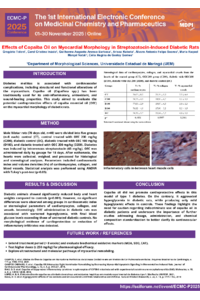
Introduction: Diabetes mellitus is associated with cardiovascular complications, including structural and functional alterations of the myocardium. Copaiba oil (Copaifera spp.) has been traditionally used for its anti-inflammatory, antioxidant, and wound-healing properties. This study aimed to evaluate the potential cardioprotective effects of copaiba essential oil (OEC) on the myocardial morphology of diabetic rats.
Methods: Male Wistar rats (70 days old, n=40) were divided into five groups (n=8 each): control (CT), control treated with OEC 200 mg/kg (C200), diabetic control (DC), diabetic treated with OEC 100 mg/kg (D100), and diabetic treated with OEC 200 mg/kg (D200). Diabetes was induced by intravenous streptozotocin (65 mg/kg). OEC was administered daily by gavage for 18 days. After euthanasia, the hearts were collected, weighed, and processed for histological and stereological analyses. Parameters included cardiosomatic index and volume densities (Vv) of cardiomyocytes, collagen, and blood vessels. Statistical analysis was performed using ANOVA with Tukey’s post-test (p<0.05).
Results: Diabetic animals showed significantly reduced body and heart weights compared to controls (p<0.001). However, no significant differences were observed among groups in cardiosomatic index or stereological parameters of cardiomyocytes, collagen, and vessels. Interestingly, OEC administration in diabetic rats was associated with worsened hyperglycemia, with final blood glucose levels exceeding those of untreated diabetic controls. No morphological evidence of cardioprotection or reduction of inflammatory infiltrates was detected.
Conclusion: Copaiba oil did not promote cardioprotective effects in this model of type 1 diabetes. On the contrary, it aggravated hyperglycemia in diabetic rats, while producing only mild hypoglycemic effects in controls. These findings highlight the need for caution regarding indiscriminate use of copaiba oil in diabetic patients and underscore the importance of further studies addressing dosage, administration, and chemical composition standardization to better clarify its cardiovascular effects.
Keywords
Copaiba oil
Diabetes mellitus
Cardiomyopathy
Myocardial morphology
Wistar rats
Hyperglycemia
Poster
Effects of Copaiba Oil on Myocardial Morphology.pdf
Effect of Copaiba Oil on the Thoracic Aorta of Streptozotocin-induced Diabetic Rats
Parmeliaceae Lichens as Sources of Antioxidant Metabolites with Pharmacological Value