Event submissions
EventsThe 1st International Electronic Conference on Medicinal Chemistry and Pharmaceutics
Published
This submission belongs to the session S5. Natural Products and Biopharmaceuticals of the event The 1st International Electronic Conference on Medicinal Chemistry and Pharmaceutics
Published date
29 Oct, 2025
Academic Editor
'%3e%3cpath%20d='M12.6657%2010.9104C12.4185%2010.325%2012.0599%209.79327%2011.6097%209.34482C11.1609%208.89508%2010.6293%208.5365%2010.0442%208.28888C10.0389%208.28626%2010.0337%208.28495%2010.0285%208.28233C10.8446%207.69279%2011.3752%206.73249%2011.3752%205.64904C11.3752%203.8542%209.92103%202.39999%208.1262%202.39999C6.33136%202.39999%204.87715%203.8542%204.87715%205.64904C4.87715%206.73249%205.40774%207.69279%206.22393%208.28364C6.21869%208.28626%206.21345%208.28757%206.20821%208.29019C5.62129%208.5378%205.09463%208.89284%204.64265%209.34613C4.1929%209.79493%203.83432%2010.3266%203.58671%2010.9117C3.34345%2011.4845%203.21226%2012.0987%203.20023%2012.7209C3.19988%2012.7349%203.20233%2012.7488%203.20744%2012.7619C3.21255%2012.7749%203.22022%2012.7867%203.22998%2012.7968C3.23975%2012.8068%203.25142%2012.8147%203.26431%2012.8202C3.2772%2012.8256%203.29105%2012.8284%203.30504%2012.8284H4.09109C4.14874%2012.8284%204.19459%2012.7825%204.1959%2012.7262C4.2221%2011.7148%204.62823%2010.7676%205.34617%2010.0497C6.08899%209.30683%207.0755%208.89808%208.1262%208.89808C9.17689%208.89808%2010.1634%209.30683%2010.9062%2010.0497C11.6242%2010.7676%2012.0303%2011.7148%2012.0565%2012.7262C12.0578%2012.7838%2012.1037%2012.8284%2012.1613%2012.8284H12.9474C12.9613%2012.8284%2012.9752%2012.8256%2012.9881%2012.8202C13.001%2012.8147%2013.0126%2012.8068%2013.0224%2012.7968C13.0322%2012.7867%2013.0398%2012.7749%2013.0449%2012.7619C13.0501%2012.7488%2013.0525%2012.7349%2013.0522%2012.7209C13.0391%2012.0947%2012.9094%2011.4855%2012.6657%2010.9104ZM8.1262%207.9024C7.52486%207.9024%206.9589%207.6679%206.53312%207.24211C6.10733%206.81633%205.87283%206.25037%205.87283%205.64904C5.87283%205.0477%206.10733%204.48174%206.53312%204.05596C6.9589%203.63018%207.52486%203.39567%208.1262%203.39567C8.72753%203.39567%209.29349%203.63018%209.71927%204.05596C10.1451%204.48174%2010.3796%205.0477%2010.3796%205.64904C10.3796%206.25037%2010.1451%206.81633%209.71927%207.24211C9.29349%207.6679%208.72753%207.9024%208.1262%207.9024Z'%20fill='%235D1EE1'/%3e%3c/g%3e%3c/svg%3e) Ilkay Erdogan Orhan
Ilkay Erdogan OrhanCitation
Bandar Aldawish, Sahar S Alghamdi, Jehan Alamre, Arwa Alsubait, Abdullah R Alanzi, Mohammed Al Rudhyyan, Fares Althobiti, Abdulrahman Almadi, Afrah F Mohammed, Exploring Terrestrial and Marine Fungi for New Anticancer Agents from Saudi Arabia’s Ecosystem, in Proceedings of The 1st International Electronic Conference on Medicinal Chemistry and Pharmaceutics, 1 November–30 November 2025, MDPI: Basel, Switzerland
Share
Email
Facebook
Twitter
LinkedIn
Exploring Terrestrial and Marine Fungi for New Anticancer Agents from Saudi Arabia’s Ecosystem
'%3e%3cpath%20d='M12.6647%2010.9104C12.4176%2010.325%2012.0589%209.7933%2011.6088%209.34485C11.16%208.89511%2010.6283%208.53653%2010.0432%208.28891C10.038%208.28629%2010.0327%208.28498%2010.0275%208.28236C10.8437%207.69282%2011.3743%206.73252%2011.3743%205.64907C11.3743%203.85423%209.92005%202.40002%208.12522%202.40002C6.33038%202.40002%204.87618%203.85423%204.87618%205.64907C4.87618%206.73252%205.40677%207.69282%206.22296%208.28367C6.21772%208.28629%206.21248%208.2876%206.20724%208.29022C5.62031%208.53783%205.09365%208.89287%204.64167%209.34616C4.19192%209.79496%203.83334%2010.3266%203.58573%2010.9117C3.34247%2011.4846%203.21128%2012.0987%203.19925%2012.721C3.1989%2012.735%203.20135%2012.7489%203.20646%2012.7619C3.21157%2012.7749%203.21924%2012.7868%203.22901%2012.7968C3.23877%2012.8068%203.25045%2012.8148%203.26334%2012.8202C3.27623%2012.8256%203.29007%2012.8284%203.30406%2012.8284H4.09012C4.14776%2012.8284%204.19362%2012.7825%204.19493%2012.7262C4.22113%2011.7148%204.62726%2010.7676%205.34519%2010.0497C6.08802%209.30686%207.07452%208.89811%208.12522%208.89811C9.17592%208.89811%2010.1624%209.30686%2010.9052%2010.0497C11.6232%2010.7676%2012.0293%2011.7148%2012.0555%2012.7262C12.0568%2012.7839%2012.1027%2012.8284%2012.1603%2012.8284H12.9464C12.9604%2012.8284%2012.9742%2012.8256%2012.9871%2012.8202C13%2012.8148%2013.0117%2012.8068%2013.0214%2012.7968C13.0312%2012.7868%2013.0389%2012.7749%2013.044%2012.7619C13.0491%2012.7489%2013.0515%2012.735%2013.0512%2012.721C13.0381%2012.0947%2012.9084%2011.4856%2012.6647%2010.9104ZM8.12522%207.90243C7.52388%207.90243%206.95792%207.66793%206.53214%207.24215C6.10636%206.81636%205.87185%206.2504%205.87185%205.64907C5.87185%205.04773%206.10636%204.48177%206.53214%204.05599C6.95792%203.63021%207.52388%203.3957%208.12522%203.3957C8.72655%203.3957%209.29252%203.63021%209.7183%204.05599C10.1441%204.48177%2010.3786%205.04773%2010.3786%205.64907C10.3786%206.2504%2010.1441%206.81636%209.7183%207.24215C9.29252%207.66793%208.72655%207.90243%208.12522%207.90243Z'%20fill='%235D1EE1'/%3e%3c/g%3e%3c/svg%3e)
Bandar Aldawish 1
Sahar S Alghamdi 1,2,3
Jehan Alamre 3
Arwa Alsubait 2,4
Abdullah R Alanzi 5
Mohammed Al Rudhyyan 1
Fares Althobiti 1
Abdulrahman Almadi 1
Afrah F Mohammed 6,7
1. College of Pharmacy, King Saud Bin Abdulaziz University for Health Sciences, Riyadh, Kingdom of Saudi Arabia
2. Medical Research Core Facility and Platforms, King Abdullah International Medical Research Center (KAIMRC), Ministry of National Guard Health Affairs, Riyadh, Kingdom of Saudi Arabia
3. National Guard Hospital, Riyadh, Kingdom of Saudi Arabia
4. Department of Clinical, Laboratory Sciences, College of Applied Medical Sciences, King Saud Bin Abdulaziz University for Health Sciences, Riyadh, Kingdom of Saudi Arabia
5. Department of Pharmacognosy, College of Pharmacy, King Saud University, Riyadh, Saudi Arabia
6. Department of Biology, College of Science, Princess Nourah bint Abdulrahman University, Riyadh, Saudi Arabia.
7. Microbiology and Immunology Unit, Natural and Health Sciences Research Center, Princess Nourah bint Abdulrahman University, Riyadh, Saudi Arabia
Abstract
Background
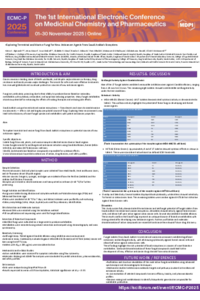
Cancer is a major global health concern, with 24,485 new cases and 10,518 deaths in Saudi Arabia in 2020. Fungi produce bioactive compounds with anticancer and antimicrobial potential. This study investigates fungal metabolites from Saudi soil to identify novel therapeutic agents, addressing gaps found in our previous systematic review.
Methods
Seventeen fungal strains were isolated from soil samples collected at five locations in Riyadh and Hail. Samples were plated on Potato Dextrose Agar, incubated to obtain pure cultures, and extracted using a yeast malt extract medium. The cytotoxic effects of the extracts were assessed via an MTT assay against MDA-MB-231 (breast cancer) and HCT-116 (colorectal cancer) cell lines. Additionally, antimicrobial activity was evaluated against Methicillin-resistant Staphylococcus aureus (MRSA), Candida spp., and Escherichia coli at concentrations ranging from 0.3 mg/mL to 5 mg/mL.
Results
The fungal extracts exhibited notable cytotoxicity against MDA-MB-231 cells, with IC50 values ranging from 28.55 to 83.35 μg/mL. Additionally, six extracts tested against HCT-116 cells demonstrated potent activity, with IC50 values between 22.25 and 71.63 μg/mL. In antimicrobial testing, initial results showed no significant activity against MRSA, Candida spp., or E. coli, which may be due to the low concentrations used. Further testing at higher concentrations is planned to explore potential antimicrobial effects.
Conclusion
This study highlights Saudi soil fungi as a promising source of anticancer agents. Although antimicrobial activity was insignificant at low concentrations, further testing is needed. Exploring regional biodiversity may lead to new drug discoveries, and future research will focus on identifying active compounds and their mechanisms of action.
Keywords
Fungal metabolites
Anticancer
Tumor growth
Saudi Arabian fungi
Poster
fe49dbe333cab5083215d7ebcc14de06 copy.pdf
Non-invasive anti-wrinkle electrospun nanofiber patch containing physalis stem cells extract and liposomal vitamin C
Computational identification of Penduletin and Chrysosplenol D from Artemisia annua as potential natural inhibitors of AKT1 in cancer therapy