Event submissions
EventsThe 1st International Electronic Conference on Medicinal Chemistry and Pharmaceutics
Published
This submission belongs to the session S5. Natural Products and Biopharmaceuticals of the event The 1st International Electronic Conference on Medicinal Chemistry and Pharmaceutics
Published date
29 Oct, 2025
Academic Editor
'%3e%3cpath%20d='M12.6657%2010.9104C12.4185%2010.325%2012.0599%209.79327%2011.6097%209.34482C11.1609%208.89508%2010.6293%208.5365%2010.0442%208.28888C10.0389%208.28626%2010.0337%208.28495%2010.0285%208.28233C10.8446%207.69279%2011.3752%206.73249%2011.3752%205.64904C11.3752%203.8542%209.92103%202.39999%208.1262%202.39999C6.33136%202.39999%204.87715%203.8542%204.87715%205.64904C4.87715%206.73249%205.40774%207.69279%206.22393%208.28364C6.21869%208.28626%206.21345%208.28757%206.20821%208.29019C5.62129%208.5378%205.09463%208.89284%204.64265%209.34613C4.1929%209.79493%203.83432%2010.3266%203.58671%2010.9117C3.34345%2011.4845%203.21226%2012.0987%203.20023%2012.7209C3.19988%2012.7349%203.20233%2012.7488%203.20744%2012.7619C3.21255%2012.7749%203.22022%2012.7867%203.22998%2012.7968C3.23975%2012.8068%203.25142%2012.8147%203.26431%2012.8202C3.2772%2012.8256%203.29105%2012.8284%203.30504%2012.8284H4.09109C4.14874%2012.8284%204.19459%2012.7825%204.1959%2012.7262C4.2221%2011.7148%204.62823%2010.7676%205.34617%2010.0497C6.08899%209.30683%207.0755%208.89808%208.1262%208.89808C9.17689%208.89808%2010.1634%209.30683%2010.9062%2010.0497C11.6242%2010.7676%2012.0303%2011.7148%2012.0565%2012.7262C12.0578%2012.7838%2012.1037%2012.8284%2012.1613%2012.8284H12.9474C12.9613%2012.8284%2012.9752%2012.8256%2012.9881%2012.8202C13.001%2012.8147%2013.0126%2012.8068%2013.0224%2012.7968C13.0322%2012.7867%2013.0398%2012.7749%2013.0449%2012.7619C13.0501%2012.7488%2013.0525%2012.7349%2013.0522%2012.7209C13.0391%2012.0947%2012.9094%2011.4855%2012.6657%2010.9104ZM8.1262%207.9024C7.52486%207.9024%206.9589%207.6679%206.53312%207.24211C6.10733%206.81633%205.87283%206.25037%205.87283%205.64904C5.87283%205.0477%206.10733%204.48174%206.53312%204.05596C6.9589%203.63018%207.52486%203.39567%208.1262%203.39567C8.72753%203.39567%209.29349%203.63018%209.71927%204.05596C10.1451%204.48174%2010.3796%205.0477%2010.3796%205.64904C10.3796%206.25037%2010.1451%206.81633%209.71927%207.24211C9.29349%207.6679%208.72753%207.9024%208.1262%207.9024Z'%20fill='%235D1EE1'/%3e%3c/g%3e%3c/svg%3e) Antonio Vassallo
Antonio VassalloCitation
Desmond Nkrumah, Reinhard Isaac Nketia, Gustav Komlaga, Arnold Forkuo Donkor, Merlin Lincoln Kwao Mensah, An insight into the antimalarial and antioxidant properties and pharmacognostic standards of the leaves of Bambusa vulgaris (Schrad). ex J.C.Wendl., in Proceedings of The 1st International Electronic Conference on Medicinal Chemistry and Pharmaceutics, 1 November–30 November 2025, MDPI: Basel, Switzerland
Share
Email
Facebook
Twitter
LinkedIn
An insight into the antimalarial and antioxidant properties and pharmacognostic standards of the leaves of Bambusa vulgaris (Schrad). ex J.C.Wendl.

Desmond Nkrumah 1
'%3e%3cpath%20d='M12.6647%2010.9104C12.4176%2010.325%2012.0589%209.7933%2011.6088%209.34485C11.16%208.89511%2010.6283%208.53653%2010.0432%208.28891C10.038%208.28629%2010.0327%208.28498%2010.0275%208.28236C10.8437%207.69282%2011.3743%206.73252%2011.3743%205.64907C11.3743%203.85423%209.92005%202.40002%208.12522%202.40002C6.33038%202.40002%204.87618%203.85423%204.87618%205.64907C4.87618%206.73252%205.40677%207.69282%206.22296%208.28367C6.21772%208.28629%206.21248%208.2876%206.20724%208.29022C5.62031%208.53783%205.09365%208.89287%204.64167%209.34616C4.19192%209.79496%203.83334%2010.3266%203.58573%2010.9117C3.34247%2011.4846%203.21128%2012.0987%203.19925%2012.721C3.1989%2012.735%203.20135%2012.7489%203.20646%2012.7619C3.21157%2012.7749%203.21924%2012.7868%203.22901%2012.7968C3.23877%2012.8068%203.25045%2012.8148%203.26334%2012.8202C3.27623%2012.8256%203.29007%2012.8284%203.30406%2012.8284H4.09012C4.14776%2012.8284%204.19362%2012.7825%204.19493%2012.7262C4.22113%2011.7148%204.62726%2010.7676%205.34519%2010.0497C6.08802%209.30686%207.07452%208.89811%208.12522%208.89811C9.17592%208.89811%2010.1624%209.30686%2010.9052%2010.0497C11.6232%2010.7676%2012.0293%2011.7148%2012.0555%2012.7262C12.0568%2012.7839%2012.1027%2012.8284%2012.1603%2012.8284H12.9464C12.9604%2012.8284%2012.9742%2012.8256%2012.9871%2012.8202C13%2012.8148%2013.0117%2012.8068%2013.0214%2012.7968C13.0312%2012.7868%2013.0389%2012.7749%2013.044%2012.7619C13.0491%2012.7489%2013.0515%2012.735%2013.0512%2012.721C13.0381%2012.0947%2012.9084%2011.4856%2012.6647%2010.9104ZM8.12522%207.90243C7.52388%207.90243%206.95792%207.66793%206.53214%207.24215C6.10636%206.81636%205.87185%206.2504%205.87185%205.64907C5.87185%205.04773%206.10636%204.48177%206.53214%204.05599C6.95792%203.63021%207.52388%203.3957%208.12522%203.3957C8.72655%203.3957%209.29252%203.63021%209.7183%204.05599C10.1441%204.48177%2010.3786%205.04773%2010.3786%205.64907C10.3786%206.2504%2010.1441%206.81636%209.7183%207.24215C9.29252%207.66793%208.72655%207.90243%208.12522%207.90243Z'%20fill='%235D1EE1'/%3e%3c/g%3e%3c/svg%3e)
Reinhard Isaac Nketia 2
Gustav Komlaga 3
Arnold Forkuo Donkor 4
Merlin Lincoln Kwao Mensah 5
1. Department of Pharmacognosy, Kwame Nkrumah University of Science and Technology, Kumasi, Ghana
2. Department of Pharmacognosy and Herbal Medicine, University of Cape Coast, Cape Coast, Ghana.
3. Department of Pharmacognosy, Faculty of Pharmacy and Pharmaceutical Sciences, KNUST, Kumasi, Ghana
4. Department of Pharmacology, Faculty of Pharmacy and Pharmaceutical Sciences, KNUST, Kumasi, Ghana.
5. Department of Herbal Medicine, Kwame Nkrumah University of Science and Technology, Kumasi, Ghana
Abstract
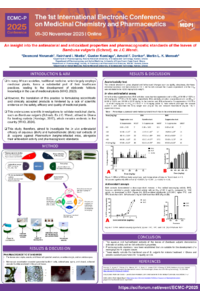
Introduction: Malaria remains a significant public health concern in Ghana, underscoring the need to explore the antimalarial efficacy of medicinal plants, such as Bambusa vulgaris (bamboo), traditionally used for its management. This study investigates the in vivo antimalarial efficacy of aqueous (BVA) and hydroethanolic (BVE) leaf extracts of B. vulgaris against Plasmodium berghei-infected mice, alongside their antioxidant activity and pharmacognostic standards.
Method: Acute toxicity was assessed following OECD guidelines. Antimalarial activity was evaluated using Peter’s four-day suppressive and Rane’s curative tests. Antioxidant properties were investigated using the DPPH assay. Pharmacognostic standards were established following standard procedures.
Results: The LD50 of the extracts was > 2000 mg/kg. In the four-day suppressive test, BVE exhibited parasitaemia suppression and an ED50 of 90.68 ± 1.53% at 400 mg/kg and 177.83 ± 16.36 mg/kg, respectively. BVA, similarly, provided a suppression and an ED50 of 84.98 ± 1.62% and 281.84 ± 22.31 mg/kg. In the curative test, BVA achieved a % suppression of 63.15 ± 1.53 at 400 mg/kg and an ED50 of 234.42 ± 10.28 mg/kg. Both extracts prolonged survival and increased body weight of mice, with BVA reversing hypothermia and anaemia. Antioxidant assays revealed BVE’s stronger DPPH scavenging activity, with an IC50 of 851.3 µg/mL, compared to BVA, which had an IC50 of 1552 µg/mL, attributed to higher flavonoid (4.71 ± 0.039 mg quercetin/g) and phenolic (58.99 ± 0.039 mg GAE/g) contents. Pharmacognostic studies established macro-morphological, microscopic, physicochemical, chromatographic, and spectroscopic standards.
Conclusion: The study validates the traditional antimalarial use of B. vulgaris leaves and provides standard benchmarks for its quality control.
Keywords
antimalaria
Bambusa vulgaris
parasitaemia
Plasmodium berghei
mice
antioxidant
Poster
Poster for conference - Desmond Nkrumah.pdf
Mechanistic evaluation of anti-inflammatory and antimicrobial properties of selected medicinal Plants
mRNA delivery significantly improves the efficiency of VSV-based cancer immunotherapy