Event submissions
Published
This submission belongs to the session S5. Materials for Energy Harvesting, Conversion and Storage of the event The 4th International Online Conference on Materials
Published date
29 Oct, 2025
Academic Editor
'%3e%3cpath%20d='M12.6657%2010.9104C12.4185%2010.325%2012.0599%209.79327%2011.6097%209.34482C11.1609%208.89508%2010.6293%208.5365%2010.0442%208.28888C10.0389%208.28626%2010.0337%208.28495%2010.0285%208.28233C10.8446%207.69279%2011.3752%206.73249%2011.3752%205.64904C11.3752%203.8542%209.92103%202.39999%208.1262%202.39999C6.33136%202.39999%204.87715%203.8542%204.87715%205.64904C4.87715%206.73249%205.40774%207.69279%206.22393%208.28364C6.21869%208.28626%206.21345%208.28757%206.20821%208.29019C5.62129%208.5378%205.09463%208.89284%204.64265%209.34613C4.1929%209.79493%203.83432%2010.3266%203.58671%2010.9117C3.34345%2011.4845%203.21226%2012.0987%203.20023%2012.7209C3.19988%2012.7349%203.20233%2012.7488%203.20744%2012.7619C3.21255%2012.7749%203.22022%2012.7867%203.22998%2012.7968C3.23975%2012.8068%203.25142%2012.8147%203.26431%2012.8202C3.2772%2012.8256%203.29105%2012.8284%203.30504%2012.8284H4.09109C4.14874%2012.8284%204.19459%2012.7825%204.1959%2012.7262C4.2221%2011.7148%204.62823%2010.7676%205.34617%2010.0497C6.08899%209.30683%207.0755%208.89808%208.1262%208.89808C9.17689%208.89808%2010.1634%209.30683%2010.9062%2010.0497C11.6242%2010.7676%2012.0303%2011.7148%2012.0565%2012.7262C12.0578%2012.7838%2012.1037%2012.8284%2012.1613%2012.8284H12.9474C12.9613%2012.8284%2012.9752%2012.8256%2012.9881%2012.8202C13.001%2012.8147%2013.0126%2012.8068%2013.0224%2012.7968C13.0322%2012.7867%2013.0398%2012.7749%2013.0449%2012.7619C13.0501%2012.7488%2013.0525%2012.7349%2013.0522%2012.7209C13.0391%2012.0947%2012.9094%2011.4855%2012.6657%2010.9104ZM8.1262%207.9024C7.52486%207.9024%206.9589%207.6679%206.53312%207.24211C6.10733%206.81633%205.87283%206.25037%205.87283%205.64904C5.87283%205.0477%206.10733%204.48174%206.53312%204.05596C6.9589%203.63018%207.52486%203.39567%208.1262%203.39567C8.72753%203.39567%209.29349%203.63018%209.71927%204.05596C10.1451%204.48174%2010.3796%205.0477%2010.3796%205.64904C10.3796%206.25037%2010.1451%206.81633%209.71927%207.24211C9.29349%207.6679%208.72753%207.9024%208.1262%207.9024Z'%20fill='%235D1EE1'/%3e%3c/g%3e%3c/svg%3e) Federico Bella
Federico BellaCitation
Diogo Horst, Andre Pscheidt, Charles Adriano Duvoisin, Eduardo Nunes Santos, Moisés Alves Marcelino Neto, Rigoberto Eleazar Melgarejo Morales, Carlos Schneider, Investigating the Band Gap of TiO2, Nb2O5, and AlO3 Applied to Stainless-Steel Electrodes utilized in Electrocoalescence, in Proceedings of The 4th International Online Conference on Materials, 3 November–6 November 2025, MDPI: Basel, Switzerland
Share
Email
Facebook
Twitter
LinkedIn
Investigating the Band Gap of TiO2, Nb2O5, and AlO3 Applied to Stainless-Steel Electrodes utilized in Electrocoalescence

Diogo Horst 1
'%3e%3cpath%20d='M12.6647%2010.9104C12.4176%2010.325%2012.0589%209.7933%2011.6088%209.34485C11.16%208.89511%2010.6283%208.53653%2010.0432%208.28891C10.038%208.28629%2010.0327%208.28498%2010.0275%208.28236C10.8437%207.69282%2011.3743%206.73252%2011.3743%205.64907C11.3743%203.85423%209.92005%202.40002%208.12522%202.40002C6.33038%202.40002%204.87618%203.85423%204.87618%205.64907C4.87618%206.73252%205.40677%207.69282%206.22296%208.28367C6.21772%208.28629%206.21248%208.2876%206.20724%208.29022C5.62031%208.53783%205.09365%208.89287%204.64167%209.34616C4.19192%209.79496%203.83334%2010.3266%203.58573%2010.9117C3.34247%2011.4846%203.21128%2012.0987%203.19925%2012.721C3.1989%2012.735%203.20135%2012.7489%203.20646%2012.7619C3.21157%2012.7749%203.21924%2012.7868%203.22901%2012.7968C3.23877%2012.8068%203.25045%2012.8148%203.26334%2012.8202C3.27623%2012.8256%203.29007%2012.8284%203.30406%2012.8284H4.09012C4.14776%2012.8284%204.19362%2012.7825%204.19493%2012.7262C4.22113%2011.7148%204.62726%2010.7676%205.34519%2010.0497C6.08802%209.30686%207.07452%208.89811%208.12522%208.89811C9.17592%208.89811%2010.1624%209.30686%2010.9052%2010.0497C11.6232%2010.7676%2012.0293%2011.7148%2012.0555%2012.7262C12.0568%2012.7839%2012.1027%2012.8284%2012.1603%2012.8284H12.9464C12.9604%2012.8284%2012.9742%2012.8256%2012.9871%2012.8202C13%2012.8148%2013.0117%2012.8068%2013.0214%2012.7968C13.0312%2012.7868%2013.0389%2012.7749%2013.044%2012.7619C13.0491%2012.7489%2013.0515%2012.735%2013.0512%2012.721C13.0381%2012.0947%2012.9084%2011.4856%2012.6647%2010.9104ZM8.12522%207.90243C7.52388%207.90243%206.95792%207.66793%206.53214%207.24215C6.10636%206.81636%205.87185%206.2504%205.87185%205.64907C5.87185%205.04773%206.10636%204.48177%206.53214%204.05599C6.95792%203.63021%207.52388%203.3957%208.12522%203.3957C8.72655%203.3957%209.29252%203.63021%209.7183%204.05599C10.1441%204.48177%2010.3786%205.04773%2010.3786%205.64907C10.3786%206.2504%2010.1441%206.81636%209.7183%207.24215C9.29252%207.66793%208.72655%207.90243%208.12522%207.90243Z'%20fill='%235D1EE1'/%3e%3c/g%3e%3c/svg%3e)
Andre Pscheidt 1
Charles Adriano Duvoisin 1
Eduardo Nunes Santos 1
Moisés Alves Marcelino Neto 1
Rigoberto Eleazar Melgarejo Morales 1
Carlos Schneider 2
1. Multiphase Flow Research Center (NUEM), Federal University of Technology Paraná (UTFPR), Rua Deputado Heitor Alencar Furtado 5000, Bloco N, CEP 81280-340 Curitiba, Brazil
2. Department of Chemistry, Federal University of Technology – Paraná , Brazil
Abstract
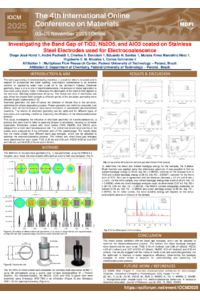
The band gap energy in semiconducting materials is crucial for electric structure and is needed for procedures like water splitting. Electrostatic coalescence is an effective method for separating water from crude oil in the petroleum industry. Electrode geometry plays a crucial role in electrocoalescence, the process of phase separation in emulsions using electric fields. It influences the distribution of the electric field applied to the emulsion, affecting coalescence efficiency. The shape and size of electrodes can also affect the electric field strength at different points in the emulsion, promoting more efficient droplet coalescence.
Electrode geometry can also influence the direction of droplet flow in the emulsion, optimizing the phase separation process. Proper geometry can minimize unwanted side effects, such as the formation of more stable emulsions or undesirable electrochemical reactions. The choice of electrode geometry can be optimized for different types of emulsions and operating conditions, improving the efficiency of the electrocoalescence process.
This study investigates the influence of electrode geometry on electrocoalescence, a process that uses electric fields to separate phases in emulsions, focusing on oil–water separation. Electrodes coated with metal oxides (TiO2, Nb2O5, and Al2O3) were designed for a static electrocoalescence cell. The optical and structural properties of the oxides were analyzed by X-ray diffraction and UV-Vis spectroscopy. The results show that the metal oxides have different band gap energies, which can be adjusted to optimize the electrocoalescence process. The indirect and direct band gap energies were determined for each oxide: TiO2 (3.18 eV and 2.96 eV), Al2O3 (4.29 eV and 3.67 eV/2.60 eV), and Nb2O5 (3.54 eV and 2.90 eV).
Keywords
Band gap
electrocoalescence
electrode geometry
simulations
separation water\oil
Poster
materials poster Horst_2025.pdf
A New Anilato-based Series of 3D MOFs for Environmental Quality
Bi-Based Perovskite Materials for High-Sensitivity Gamma Ray Detection