Event submissions
Published
This submission belongs to the session S5. Application of Spatial Technologies in Cancer Drug Discovery of the event CancersScape: Spatial Biology of the Tumor Ecosystem
Published date
05 Nov, 2025
Academic Editor
'%3e%3cpath%20d='M12.6657%2010.9104C12.4185%2010.325%2012.0599%209.79327%2011.6097%209.34482C11.1609%208.89508%2010.6293%208.5365%2010.0442%208.28888C10.0389%208.28626%2010.0337%208.28495%2010.0285%208.28233C10.8446%207.69279%2011.3752%206.73249%2011.3752%205.64904C11.3752%203.8542%209.92103%202.39999%208.1262%202.39999C6.33136%202.39999%204.87715%203.8542%204.87715%205.64904C4.87715%206.73249%205.40774%207.69279%206.22393%208.28364C6.21869%208.28626%206.21345%208.28757%206.20821%208.29019C5.62129%208.5378%205.09463%208.89284%204.64265%209.34613C4.1929%209.79493%203.83432%2010.3266%203.58671%2010.9117C3.34345%2011.4845%203.21226%2012.0987%203.20023%2012.7209C3.19988%2012.7349%203.20233%2012.7488%203.20744%2012.7619C3.21255%2012.7749%203.22022%2012.7867%203.22998%2012.7968C3.23975%2012.8068%203.25142%2012.8147%203.26431%2012.8202C3.2772%2012.8256%203.29105%2012.8284%203.30504%2012.8284H4.09109C4.14874%2012.8284%204.19459%2012.7825%204.1959%2012.7262C4.2221%2011.7148%204.62823%2010.7676%205.34617%2010.0497C6.08899%209.30683%207.0755%208.89808%208.1262%208.89808C9.17689%208.89808%2010.1634%209.30683%2010.9062%2010.0497C11.6242%2010.7676%2012.0303%2011.7148%2012.0565%2012.7262C12.0578%2012.7838%2012.1037%2012.8284%2012.1613%2012.8284H12.9474C12.9613%2012.8284%2012.9752%2012.8256%2012.9881%2012.8202C13.001%2012.8147%2013.0126%2012.8068%2013.0224%2012.7968C13.0322%2012.7867%2013.0398%2012.7749%2013.0449%2012.7619C13.0501%2012.7488%2013.0525%2012.7349%2013.0522%2012.7209C13.0391%2012.0947%2012.9094%2011.4855%2012.6657%2010.9104ZM8.1262%207.9024C7.52486%207.9024%206.9589%207.6679%206.53312%207.24211C6.10733%206.81633%205.87283%206.25037%205.87283%205.64904C5.87283%205.0477%206.10733%204.48174%206.53312%204.05596C6.9589%203.63018%207.52486%203.39567%208.1262%203.39567C8.72753%203.39567%209.29349%203.63018%209.71927%204.05596C10.1451%204.48174%2010.3796%205.0477%2010.3796%205.64904C10.3796%206.25037%2010.1451%206.81633%209.71927%207.24211C9.29349%207.6679%208.72753%207.9024%208.1262%207.9024Z'%20fill='%235D1EE1'/%3e%3c/g%3e%3c/svg%3e) Samuel Mok
Samuel MokCitation
Sevinch Xushnud qizi Rajabova, Spatial Insights into hTERT Promoter Restoration as a Novel Pathway for Cancer Drug Discovery, in Proceedings of CancersScape: Spatial Biology of the Tumor Ecosystem, Barcelona, 5 November–7 November 2025, MDPI: Basel, Switzerland
Share
Email
Facebook
Twitter
LinkedIn
Spatial Insights into hTERT Promoter Restoration as a Novel Pathway for Cancer Drug Discovery
'%3e%3cpath%20d='M12.6647%2010.9104C12.4176%2010.325%2012.0589%209.7933%2011.6088%209.34485C11.16%208.89511%2010.6283%208.53653%2010.0432%208.28891C10.038%208.28629%2010.0327%208.28498%2010.0275%208.28236C10.8437%207.69282%2011.3743%206.73252%2011.3743%205.64907C11.3743%203.85423%209.92005%202.40002%208.12522%202.40002C6.33038%202.40002%204.87618%203.85423%204.87618%205.64907C4.87618%206.73252%205.40677%207.69282%206.22296%208.28367C6.21772%208.28629%206.21248%208.2876%206.20724%208.29022C5.62031%208.53783%205.09365%208.89287%204.64167%209.34616C4.19192%209.79496%203.83334%2010.3266%203.58573%2010.9117C3.34247%2011.4846%203.21128%2012.0987%203.19925%2012.721C3.1989%2012.735%203.20135%2012.7489%203.20646%2012.7619C3.21157%2012.7749%203.21924%2012.7868%203.22901%2012.7968C3.23877%2012.8068%203.25045%2012.8148%203.26334%2012.8202C3.27623%2012.8256%203.29007%2012.8284%203.30406%2012.8284H4.09012C4.14776%2012.8284%204.19362%2012.7825%204.19493%2012.7262C4.22113%2011.7148%204.62726%2010.7676%205.34519%2010.0497C6.08802%209.30686%207.07452%208.89811%208.12522%208.89811C9.17592%208.89811%2010.1624%209.30686%2010.9052%2010.0497C11.6232%2010.7676%2012.0293%2011.7148%2012.0555%2012.7262C12.0568%2012.7839%2012.1027%2012.8284%2012.1603%2012.8284H12.9464C12.9604%2012.8284%2012.9742%2012.8256%2012.9871%2012.8202C13%2012.8148%2013.0117%2012.8068%2013.0214%2012.7968C13.0312%2012.7868%2013.0389%2012.7749%2013.044%2012.7619C13.0491%2012.7489%2013.0515%2012.735%2013.0512%2012.721C13.0381%2012.0947%2012.9084%2011.4856%2012.6647%2010.9104ZM8.12522%207.90243C7.52388%207.90243%206.95792%207.66793%206.53214%207.24215C6.10636%206.81636%205.87185%206.2504%205.87185%205.64907C5.87185%205.04773%206.10636%204.48177%206.53214%204.05599C6.95792%203.63021%207.52388%203.3957%208.12522%203.3957C8.72655%203.3957%209.29252%203.63021%209.7183%204.05599C10.1441%204.48177%2010.3786%205.04773%2010.3786%205.64907C10.3786%206.2504%2010.1441%206.81636%209.7183%207.24215C9.29252%207.66793%208.72655%207.90243%208.12522%207.90243Z'%20fill='%235D1EE1'/%3e%3c/g%3e%3c/svg%3e)
Sevinch Xushnud qizi Rajabova 1
1. Tashkent State Medical University
Abstract
Background
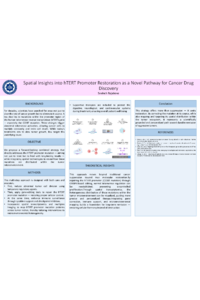
For decades, scientists have searched for ways not just to slow the rate of cancer growth but to eliminate it source. A key clue lies in mutations within the promoter region of the human telomerase reverse transcriptase (hTERT) gene — especially the C228T mutation. These changes trigger abnormal telomerase activation, allowing cancer cells to multiply constantly and resist cell death. While today’s treatments aim to slow tumor growth, few target this underlying cause.
Objective
We propose a forward-looking combined strategy that directly addresses the hTERT promoter mutation — aiming not just to treat but to heal with long-lasting results — while integrating spatial technologies to reveal how these mutations are distributed within the tumor microenvironment.
Methods
This multi-step approach is designed with both care and precision.
1. First, reduce abnormal tumor cell division using temporary regulatory agents.
2. Then, apply gene-editing tools to repair the hTERT promoter mutation — restoring proper cellular control.
3. At the same time, enhance immune surveillance through cytokine support and checkpoint inhibitors.
4. Incorporate spatial transcriptomics and multiplex imaging to map hTERT promoter mutation patterns across tumor niches, thereby tailoring interventions to microenvironmental heterogeneity.
Supportive therapies are included to protect the digestive, neurological, and cardiovascular systems during treatment, ensuring overall patient well-being.
Conclusion
This strategy offers more than suppression — it seeks restoration. By correcting the mutation at its source, while also mapping and targeting its spatial distribution within the tumor ecosystem, it represents a scientifically grounded and personalized path toward durable remission of aggressive tumors.
Keywords
hTERT promoter
cancer therapy
gene editing
C228T mutation
telomerase
spatial transcriptomics
tumor microenvironment
targeted therapy
tumor remission
Poster
ONLINE_Sevinch Rajabova.pdf
Comprehensive Sociodemographic, Clinical, and Molecular Profiling of Breast Cancer in Morocco: Insights from 833 Patients at the Mohammed VI Cancer Center
Tracing colorectal malignancy transformation from cell to tissue scale