Event submissions
Published
This submission belongs to the session S6. Clinical Rehabilitation of the event The 3rd International Online Conference on Clinical Medicine
Published date
12 Nov, 2025
Academic Editor
'%3e%3cpath%20d='M12.6657%2010.9104C12.4185%2010.325%2012.0599%209.79327%2011.6097%209.34482C11.1609%208.89508%2010.6293%208.5365%2010.0442%208.28888C10.0389%208.28626%2010.0337%208.28495%2010.0285%208.28233C10.8446%207.69279%2011.3752%206.73249%2011.3752%205.64904C11.3752%203.8542%209.92103%202.39999%208.1262%202.39999C6.33136%202.39999%204.87715%203.8542%204.87715%205.64904C4.87715%206.73249%205.40774%207.69279%206.22393%208.28364C6.21869%208.28626%206.21345%208.28757%206.20821%208.29019C5.62129%208.5378%205.09463%208.89284%204.64265%209.34613C4.1929%209.79493%203.83432%2010.3266%203.58671%2010.9117C3.34345%2011.4845%203.21226%2012.0987%203.20023%2012.7209C3.19988%2012.7349%203.20233%2012.7488%203.20744%2012.7619C3.21255%2012.7749%203.22022%2012.7867%203.22998%2012.7968C3.23975%2012.8068%203.25142%2012.8147%203.26431%2012.8202C3.2772%2012.8256%203.29105%2012.8284%203.30504%2012.8284H4.09109C4.14874%2012.8284%204.19459%2012.7825%204.1959%2012.7262C4.2221%2011.7148%204.62823%2010.7676%205.34617%2010.0497C6.08899%209.30683%207.0755%208.89808%208.1262%208.89808C9.17689%208.89808%2010.1634%209.30683%2010.9062%2010.0497C11.6242%2010.7676%2012.0303%2011.7148%2012.0565%2012.7262C12.0578%2012.7838%2012.1037%2012.8284%2012.1613%2012.8284H12.9474C12.9613%2012.8284%2012.9752%2012.8256%2012.9881%2012.8202C13.001%2012.8147%2013.0126%2012.8068%2013.0224%2012.7968C13.0322%2012.7867%2013.0398%2012.7749%2013.0449%2012.7619C13.0501%2012.7488%2013.0525%2012.7349%2013.0522%2012.7209C13.0391%2012.0947%2012.9094%2011.4855%2012.6657%2010.9104ZM8.1262%207.9024C7.52486%207.9024%206.9589%207.6679%206.53312%207.24211C6.10733%206.81633%205.87283%206.25037%205.87283%205.64904C5.87283%205.0477%206.10733%204.48174%206.53312%204.05596C6.9589%203.63018%207.52486%203.39567%208.1262%203.39567C8.72753%203.39567%209.29349%203.63018%209.71927%204.05596C10.1451%204.48174%2010.3796%205.0477%2010.3796%205.64904C10.3796%206.25037%2010.1451%206.81633%209.71927%207.24211C9.29349%207.6679%208.72753%207.9024%208.1262%207.9024Z'%20fill='%235D1EE1'/%3e%3c/g%3e%3c/svg%3e) Axel Brandes
Axel BrandesCitation
María Soledad García, Manuel Parajón Víscido, Francisco Esteban Escobar, Gonzalo Daniel Gerez, Fernando Daniel Farfán, Leonardo Ariel Cano, Toward individualized high-intensity interval training in type 1 diabetes: a framework for safe implementation, in Proceedings of The 3rd International Online Conference on Clinical Medicine, 17 November–19 November 2025, MDPI: Basel, Switzerland
Share
Email
Facebook
Twitter
LinkedIn
Toward individualized high-intensity interval training in type 1 diabetes: a framework for safe implementation

María Soledad García 1
'%3e%3cpath%20d='M12.6647%2010.9104C12.4176%2010.325%2012.0589%209.7933%2011.6088%209.34485C11.16%208.89511%2010.6283%208.53653%2010.0432%208.28891C10.038%208.28629%2010.0327%208.28498%2010.0275%208.28236C10.8437%207.69282%2011.3743%206.73252%2011.3743%205.64907C11.3743%203.85423%209.92005%202.40002%208.12522%202.40002C6.33038%202.40002%204.87618%203.85423%204.87618%205.64907C4.87618%206.73252%205.40677%207.69282%206.22296%208.28367C6.21772%208.28629%206.21248%208.2876%206.20724%208.29022C5.62031%208.53783%205.09365%208.89287%204.64167%209.34616C4.19192%209.79496%203.83334%2010.3266%203.58573%2010.9117C3.34247%2011.4846%203.21128%2012.0987%203.19925%2012.721C3.1989%2012.735%203.20135%2012.7489%203.20646%2012.7619C3.21157%2012.7749%203.21924%2012.7868%203.22901%2012.7968C3.23877%2012.8068%203.25045%2012.8148%203.26334%2012.8202C3.27623%2012.8256%203.29007%2012.8284%203.30406%2012.8284H4.09012C4.14776%2012.8284%204.19362%2012.7825%204.19493%2012.7262C4.22113%2011.7148%204.62726%2010.7676%205.34519%2010.0497C6.08802%209.30686%207.07452%208.89811%208.12522%208.89811C9.17592%208.89811%2010.1624%209.30686%2010.9052%2010.0497C11.6232%2010.7676%2012.0293%2011.7148%2012.0555%2012.7262C12.0568%2012.7839%2012.1027%2012.8284%2012.1603%2012.8284H12.9464C12.9604%2012.8284%2012.9742%2012.8256%2012.9871%2012.8202C13%2012.8148%2013.0117%2012.8068%2013.0214%2012.7968C13.0312%2012.7868%2013.0389%2012.7749%2013.044%2012.7619C13.0491%2012.7489%2013.0515%2012.735%2013.0512%2012.721C13.0381%2012.0947%2012.9084%2011.4856%2012.6647%2010.9104ZM8.12522%207.90243C7.52388%207.90243%206.95792%207.66793%206.53214%207.24215C6.10636%206.81636%205.87185%206.2504%205.87185%205.64907C5.87185%205.04773%206.10636%204.48177%206.53214%204.05599C6.95792%203.63021%207.52388%203.3957%208.12522%203.3957C8.72655%203.3957%209.29252%203.63021%209.7183%204.05599C10.1441%204.48177%2010.3786%205.04773%2010.3786%205.64907C10.3786%206.2504%2010.1441%206.81636%209.7183%207.24215C9.29252%207.66793%208.72655%207.90243%208.12522%207.90243Z'%20fill='%235D1EE1'/%3e%3c/g%3e%3c/svg%3e)
Manuel Parajón Víscido 1
Francisco Esteban Escobar 2
Gonzalo Daniel Gerez 2

Fernando Daniel Farfán 2,3

Leonardo Ariel Cano 2
1. Faculty of Physical Education (FACDEF), Neuroscience and Applied Technologies Laboratory (LINTEC), National University of Tucumán (UNT), Av. Benjamín Aráoz 750, San Miguel de Tucumán 4000, Argentina
2. Neuroscience and Applied Technologies Laboratory (LINTEC), Bioengineering Department, Faculty of Exact Sciences and Technology (FACET), Faculty of Physical Education (FACDEF), National University of Tucumán (UNT), Tucumán 4000, Argentina
3. Institute of Bioengineering, University Miguel Hernández, Elche 03202, Spain
Abstract
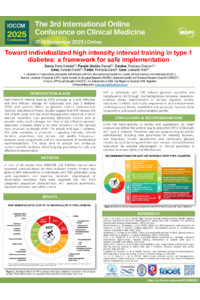
Introduction: High-Intensity Interval Training (HIIT) emerges as a safe, effective, and time-efficient strategy for individuals with type 1 diabetes (T1D), with positive effects on glycemic control, cardiovascular function, and physical fitness. Studies suggest that HIIT reduces the risk of both acute and late-onset hypoglycemia compared to other exercise modalities, thus promoting adherence. Factors such as prandial state, insulin dosage, and time of day influence glycemic responses. However, there is no clear consensus on the optimal type, structure, or dosage of HIIT for people with type 1 diabetes. The wide variability in protocols, regarding intensity, interval duration, repetitions, rest periods, and weekly frequency, hampers study comparisons and the development of standardized recommendations.
Methods: This study aims to analyze and synthesize current scientific evidence, identifying key parameters for the safe and effective implementation of this approach. A total of 18 studies from MEDLINE and PubMed Central were reviewed and selected based on strict inclusion criteria. Priority was given to HIIT interventions in individuals with T1D, preferably using cycle ergometers, and reporting metabolic, physiological, or neurological outcomes. Data were organized into four main categories: population characteristics, HIIT protocol parameters, reported outcomes, and safety criteria.
Results: The evidence reveals considerable diversity in HIIT configuration. Although no single parameter explains the observed benefits, protocol adherence and individualization appear to be critical factors. Frequent glucose monitoring—ideally via continuous systems—and professional supervision, including virtual formats, are essential.
Conclusions: A preliminary framework is proposed to guide individualized HIIT programming for people with type 1 diabetes, considering intensity, interval duration, weekly frequency, glycemic control, and personal variables.
Keywords
Type 1 Diabetes
High Intensity Interval Training
Glycemic Control
Exercise Safety
Personalized Exercise Prescription
Continuous Glucose Monitoring
Poster
GARCIA MS - POSTER IOCCM2025.pdf
Effects of Online Physical Therapy Interventions on Aged Adult Health to Reduce Falls: A Systematic Review of Mobile Health Applications in Rehabilitation
Exploring the Relationship Between Urinary Incontinence and Physical Activity Participation