Event submissions
Published
This submission belongs to the session S4. Polymer Composites and Nanocomposites of the event The 3rd International Online Conference on Polymer Science
Published date
14 Nov, 2025
Academic Editor
'%3e%3cpath%20d='M12.6657%2010.9104C12.4185%2010.325%2012.0599%209.79327%2011.6097%209.34482C11.1609%208.89508%2010.6293%208.5365%2010.0442%208.28888C10.0389%208.28626%2010.0337%208.28495%2010.0285%208.28233C10.8446%207.69279%2011.3752%206.73249%2011.3752%205.64904C11.3752%203.8542%209.92103%202.39999%208.1262%202.39999C6.33136%202.39999%204.87715%203.8542%204.87715%205.64904C4.87715%206.73249%205.40774%207.69279%206.22393%208.28364C6.21869%208.28626%206.21345%208.28757%206.20821%208.29019C5.62129%208.5378%205.09463%208.89284%204.64265%209.34613C4.1929%209.79493%203.83432%2010.3266%203.58671%2010.9117C3.34345%2011.4845%203.21226%2012.0987%203.20023%2012.7209C3.19988%2012.7349%203.20233%2012.7488%203.20744%2012.7619C3.21255%2012.7749%203.22022%2012.7867%203.22998%2012.7968C3.23975%2012.8068%203.25142%2012.8147%203.26431%2012.8202C3.2772%2012.8256%203.29105%2012.8284%203.30504%2012.8284H4.09109C4.14874%2012.8284%204.19459%2012.7825%204.1959%2012.7262C4.2221%2011.7148%204.62823%2010.7676%205.34617%2010.0497C6.08899%209.30683%207.0755%208.89808%208.1262%208.89808C9.17689%208.89808%2010.1634%209.30683%2010.9062%2010.0497C11.6242%2010.7676%2012.0303%2011.7148%2012.0565%2012.7262C12.0578%2012.7838%2012.1037%2012.8284%2012.1613%2012.8284H12.9474C12.9613%2012.8284%2012.9752%2012.8256%2012.9881%2012.8202C13.001%2012.8147%2013.0126%2012.8068%2013.0224%2012.7968C13.0322%2012.7867%2013.0398%2012.7749%2013.0449%2012.7619C13.0501%2012.7488%2013.0525%2012.7349%2013.0522%2012.7209C13.0391%2012.0947%2012.9094%2011.4855%2012.6657%2010.9104ZM8.1262%207.9024C7.52486%207.9024%206.9589%207.6679%206.53312%207.24211C6.10733%206.81633%205.87283%206.25037%205.87283%205.64904C5.87283%205.0477%206.10733%204.48174%206.53312%204.05596C6.9589%203.63018%207.52486%203.39567%208.1262%203.39567C8.72753%203.39567%209.29349%203.63018%209.71927%204.05596C10.1451%204.48174%2010.3796%205.0477%2010.3796%205.64904C10.3796%206.25037%2010.1451%206.81633%209.71927%207.24211C9.29349%207.6679%208.72753%207.9024%208.1262%207.9024Z'%20fill='%235D1EE1'/%3e%3c/g%3e%3c/svg%3e) Alessandro Pegoretti
Alessandro PegorettiCitation
Eunhye Hwang, Swathi Ippili, Soon-Gil Yoon, Optimizing LDH and PVDF-TrFE Composite Layers for High-Performance Flexible Triboelectric Nanogenerators, in Proceedings of The 3rd International Online Conference on Polymer Science, 19 November–21 November 2025, MDPI: Basel, Switzerland
Share
Email
Facebook
Twitter
LinkedIn
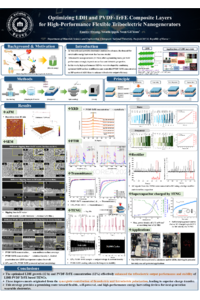
Optimizing LDH and PVDF-TrFE Composite Layers for High-Performance Flexible Triboelectric Nanogenerators
'%3e%3cpath%20d='M12.6647%2010.9104C12.4176%2010.325%2012.0589%209.7933%2011.6088%209.34485C11.16%208.89511%2010.6283%208.53653%2010.0432%208.28891C10.038%208.28629%2010.0327%208.28498%2010.0275%208.28236C10.8437%207.69282%2011.3743%206.73252%2011.3743%205.64907C11.3743%203.85423%209.92005%202.40002%208.12522%202.40002C6.33038%202.40002%204.87618%203.85423%204.87618%205.64907C4.87618%206.73252%205.40677%207.69282%206.22296%208.28367C6.21772%208.28629%206.21248%208.2876%206.20724%208.29022C5.62031%208.53783%205.09365%208.89287%204.64167%209.34616C4.19192%209.79496%203.83334%2010.3266%203.58573%2010.9117C3.34247%2011.4846%203.21128%2012.0987%203.19925%2012.721C3.1989%2012.735%203.20135%2012.7489%203.20646%2012.7619C3.21157%2012.7749%203.21924%2012.7868%203.22901%2012.7968C3.23877%2012.8068%203.25045%2012.8148%203.26334%2012.8202C3.27623%2012.8256%203.29007%2012.8284%203.30406%2012.8284H4.09012C4.14776%2012.8284%204.19362%2012.7825%204.19493%2012.7262C4.22113%2011.7148%204.62726%2010.7676%205.34519%2010.0497C6.08802%209.30686%207.07452%208.89811%208.12522%208.89811C9.17592%208.89811%2010.1624%209.30686%2010.9052%2010.0497C11.6232%2010.7676%2012.0293%2011.7148%2012.0555%2012.7262C12.0568%2012.7839%2012.1027%2012.8284%2012.1603%2012.8284H12.9464C12.9604%2012.8284%2012.9742%2012.8256%2012.9871%2012.8202C13%2012.8148%2013.0117%2012.8068%2013.0214%2012.7968C13.0312%2012.7868%2013.0389%2012.7749%2013.044%2012.7619C13.0491%2012.7489%2013.0515%2012.735%2013.0512%2012.721C13.0381%2012.0947%2012.9084%2011.4856%2012.6647%2010.9104ZM8.12522%207.90243C7.52388%207.90243%206.95792%207.66793%206.53214%207.24215C6.10636%206.81636%205.87185%206.2504%205.87185%205.64907C5.87185%205.04773%206.10636%204.48177%206.53214%204.05599C6.95792%203.63021%207.52388%203.3957%208.12522%203.3957C8.72655%203.3957%209.29252%203.63021%209.7183%204.05599C10.1441%204.48177%2010.3786%205.04773%2010.3786%205.64907C10.3786%206.2504%2010.1441%206.81636%209.7183%207.24215C9.29252%207.66793%208.72655%207.90243%208.12522%207.90243Z'%20fill='%235D1EE1'/%3e%3c/g%3e%3c/svg%3e)
Eunhye Hwang 1
Swathi Ippili 1

Soon-Gil Yoon 1
1. Department of Materials Science and Engineering, Chungnam National University, Daejeon 34134, Republic of Korea.
Abstract
The growing demand for sustainable power in wearable electronics, mobile devices, and self-powered sensors has encouraged research into efficient energy harvesting technologies. Mechanical energy generated from human motion and the surrounding environment represents a promising energy source. Triboelectric nanogenerators (TENGs) have attracted considerable attention due to their high efficiency, scalability, and low cost [1–3]. However, improving material properties to enhance output performance and long-term stability remains a challenge.
In this study, a multilayer TENG was fabricated by sequentially depositing RF-sputtered aluminum-doped zinc oxide (AZO), layered double hydroxide (LDH), and spin-coated poly(vinylidene fluoride-trifluoroethylene) (PVDF-TrFE). LDH layers were grown via an optimized immersion method to ensure uniform coverage, and PVDF-TrFE solutions with varying concentrations were applied to investigate polymer loading effects.
The AZO/LDH TENG exhibited an output voltage of 164.25 V and a current density of 2.9 µA/cm². The composite layer with the optimal PVDF-TrFE concentration significantly enhanced the output, achieving an output voltage of 641.625 V and a current density of 16.530 µA/cm². This improvement is attributed to increased surface charge density and enhanced dielectric properties of the ferroelectric polymer. Long-term stability tests further confirmed the enhanced performance of PVDF-TrFE-coated devices compared to those with LDH only.
These results highlight the synergistic benefits of combining LDH optimization with PVDF-TrFE loading, presenting a promising strategy for the development of flexible, high-performance energy harvesters for wearable and self-powered sensor applications.
References
[1] Fan, F.-R., Tian, Z.-Q., & Wang, Z. L. (2012). Flexible triboelectric generator. Nano Energy, 1(2), 328–334.
[2] Nguyen, T. M. T., et al. (2018). Enhanced Output Performance of Nanogenerator Based on Composite of PVDF and Zn:Al LDHs. Trans. Electr. Electron. Mater., 19, 403–411.
[3] Park, D., et al. (2021). Performance enhancement of flexible polymer triboelectric generator. Applied Sciences, 11(3), 1284.
Keywords
Triboelectric nanogenerator(TENG)
layered double hydroxide (LDH)
PVDF-TrFE
energy harvesting
Poster
sciforum-138551 IOCPS--Eunhye HWANG.pdf
Intranasal Mucoadhesive Chitosan-Coated SNEDDS of Apocynin for Nose-to-Brain Delivery in Glioblastoma: Minimizing Dose Dumping
Polyvinylpyrrolidone-Mediated Engineering of NiMn2O4 Nanocubes for Enhanced Energy Storage and Non-Enzymatic H2O2 Detection