Event submissions
Published
This submission belongs to the session S3. Recent Functional and Structural Applications of Polymer Systems of the event The 3rd International Online Conference on Polymer Science
Published date
14 Nov, 2025
Academic Editor
'%3e%3cpath%20d='M12.6657%2010.9104C12.4185%2010.325%2012.0599%209.79327%2011.6097%209.34482C11.1609%208.89508%2010.6293%208.5365%2010.0442%208.28888C10.0389%208.28626%2010.0337%208.28495%2010.0285%208.28233C10.8446%207.69279%2011.3752%206.73249%2011.3752%205.64904C11.3752%203.8542%209.92103%202.39999%208.1262%202.39999C6.33136%202.39999%204.87715%203.8542%204.87715%205.64904C4.87715%206.73249%205.40774%207.69279%206.22393%208.28364C6.21869%208.28626%206.21345%208.28757%206.20821%208.29019C5.62129%208.5378%205.09463%208.89284%204.64265%209.34613C4.1929%209.79493%203.83432%2010.3266%203.58671%2010.9117C3.34345%2011.4845%203.21226%2012.0987%203.20023%2012.7209C3.19988%2012.7349%203.20233%2012.7488%203.20744%2012.7619C3.21255%2012.7749%203.22022%2012.7867%203.22998%2012.7968C3.23975%2012.8068%203.25142%2012.8147%203.26431%2012.8202C3.2772%2012.8256%203.29105%2012.8284%203.30504%2012.8284H4.09109C4.14874%2012.8284%204.19459%2012.7825%204.1959%2012.7262C4.2221%2011.7148%204.62823%2010.7676%205.34617%2010.0497C6.08899%209.30683%207.0755%208.89808%208.1262%208.89808C9.17689%208.89808%2010.1634%209.30683%2010.9062%2010.0497C11.6242%2010.7676%2012.0303%2011.7148%2012.0565%2012.7262C12.0578%2012.7838%2012.1037%2012.8284%2012.1613%2012.8284H12.9474C12.9613%2012.8284%2012.9752%2012.8256%2012.9881%2012.8202C13.001%2012.8147%2013.0126%2012.8068%2013.0224%2012.7968C13.0322%2012.7867%2013.0398%2012.7749%2013.0449%2012.7619C13.0501%2012.7488%2013.0525%2012.7349%2013.0522%2012.7209C13.0391%2012.0947%2012.9094%2011.4855%2012.6657%2010.9104ZM8.1262%207.9024C7.52486%207.9024%206.9589%207.6679%206.53312%207.24211C6.10733%206.81633%205.87283%206.25037%205.87283%205.64904C5.87283%205.0477%206.10733%204.48174%206.53312%204.05596C6.9589%203.63018%207.52486%203.39567%208.1262%203.39567C8.72753%203.39567%209.29349%203.63018%209.71927%204.05596C10.1451%204.48174%2010.3796%205.0477%2010.3796%205.64904C10.3796%206.25037%2010.1451%206.81633%209.71927%207.24211C9.29349%207.6679%208.72753%207.9024%208.1262%207.9024Z'%20fill='%235D1EE1'/%3e%3c/g%3e%3c/svg%3e) Valentina Siracusa
Valentina SiracusaCitation
Carlos Bruno Barreto Luna, Eduardo da Silva Barbosa Ferreira, José Vinícius Melo Barreto, Ingridy Dayane Silva, Debora Pereira Schmitz, Bluma Guenther Soares, Renate Wellen, Edcleide Maria Araújo, Towards Green Conductive Nanocomposites Based on Epoxidized Soybean Oil (ESO) for Electromagnetic Shielding and Antistatic Application: Effect of Hybridization of Carbon Nanotubes and Graphene, in Proceedings of The 3rd International Online Conference on Polymer Science, 19 November–21 November 2025, MDPI: Basel, Switzerland
Share
Email
Facebook
Twitter
LinkedIn
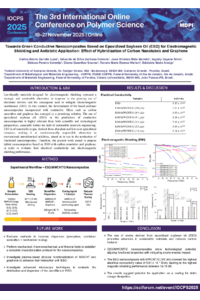
Towards Green Conductive Nanocomposites Based on Epoxidized Soybean Oil (ESO) for Electromagnetic Shielding and Antistatic Application: Effect of Hybridization of Carbon Nanotubes and Graphene
'%3e%3cpath%20d='M12.6647%2010.9104C12.4176%2010.325%2012.0589%209.7933%2011.6088%209.34485C11.16%208.89511%2010.6283%208.53653%2010.0432%208.28891C10.038%208.28629%2010.0327%208.28498%2010.0275%208.28236C10.8437%207.69282%2011.3743%206.73252%2011.3743%205.64907C11.3743%203.85423%209.92005%202.40002%208.12522%202.40002C6.33038%202.40002%204.87618%203.85423%204.87618%205.64907C4.87618%206.73252%205.40677%207.69282%206.22296%208.28367C6.21772%208.28629%206.21248%208.2876%206.20724%208.29022C5.62031%208.53783%205.09365%208.89287%204.64167%209.34616C4.19192%209.79496%203.83334%2010.3266%203.58573%2010.9117C3.34247%2011.4846%203.21128%2012.0987%203.19925%2012.721C3.1989%2012.735%203.20135%2012.7489%203.20646%2012.7619C3.21157%2012.7749%203.21924%2012.7868%203.22901%2012.7968C3.23877%2012.8068%203.25045%2012.8148%203.26334%2012.8202C3.27623%2012.8256%203.29007%2012.8284%203.30406%2012.8284H4.09012C4.14776%2012.8284%204.19362%2012.7825%204.19493%2012.7262C4.22113%2011.7148%204.62726%2010.7676%205.34519%2010.0497C6.08802%209.30686%207.07452%208.89811%208.12522%208.89811C9.17592%208.89811%2010.1624%209.30686%2010.9052%2010.0497C11.6232%2010.7676%2012.0293%2011.7148%2012.0555%2012.7262C12.0568%2012.7839%2012.1027%2012.8284%2012.1603%2012.8284H12.9464C12.9604%2012.8284%2012.9742%2012.8256%2012.9871%2012.8202C13%2012.8148%2013.0117%2012.8068%2013.0214%2012.7968C13.0312%2012.7868%2013.0389%2012.7749%2013.044%2012.7619C13.0491%2012.7489%2013.0515%2012.735%2013.0512%2012.721C13.0381%2012.0947%2012.9084%2011.4856%2012.6647%2010.9104ZM8.12522%207.90243C7.52388%207.90243%206.95792%207.66793%206.53214%207.24215C6.10636%206.81636%205.87185%206.2504%205.87185%205.64907C5.87185%205.04773%206.10636%204.48177%206.53214%204.05599C6.95792%203.63021%207.52388%203.3957%208.12522%203.3957C8.72655%203.3957%209.29252%203.63021%209.7183%204.05599C10.1441%204.48177%2010.3786%205.04773%2010.3786%205.64907C10.3786%206.2504%2010.1441%206.81636%209.7183%207.24215C9.29252%207.66793%208.72655%207.90243%208.12522%207.90243Z'%20fill='%235D1EE1'/%3e%3c/g%3e%3c/svg%3e)
Carlos Bruno Barreto Luna 1
Eduardo da Silva Barbosa Ferreira 1
José Vinícius Melo Barreto 2
Ingridy Dayane Silva 2
Debora Pereira Schmitz 3

Bluma Guenther Soares 3

Renate Wellen 4
Edcleide Maria Araújo 1
1. Academic Unit of Materials Engineering, Federal University of Campina Grande, Av. Aprígio Veloso, 882 – Bodocongó, 58429-900, Campina Grande – Paraíba, Brazil
2. Department of Materials Engineering, Federal University of Paraíba, Cidade Universitária, 58051-900, João Pessoa – Paraíba, Brazil
3. Department of Metallurgical and Materials Engineering, PEMM-COPPE, Federal University of Rio de Janeiro, Ilha do Fundão 21941-972, Rio de Janeiro – RJ, Brazil
4. Department of Physics, Federal Rural University of Rio de Janeiro, BR-465, Km 7, Seropédica
23890-000, Rio de Janeiro – RJ, Brazil
Abstract
The use of resins derived from epoxidized soybean oil (ESO) promotes advances in sustainable materials and reduces carbon footprint. There is technological potential for the development of nanocomposites with viable technical performance, aligning functional properties with environmental impact mitigation. However, ESO acts as an electrical insulator, limiting applications as a material for static charge dissipation and electromagnetic interference shielding. Therefore, electrical and hybrid nanocomposites based on ESO were prepared with fumaric acid as the curing agent, using carbon nanotubes (MWCNT) and graphene (G) as conductive nanofillers. The ESO/MWCNT/G nanocomposites were evaluated through electrical conductivity (σ), electromagnetic interference shielding (EMI SE), and reflection loss (RL), adopting hybridization between MWCNT/G with 5/0, 4/1, 3/2, 2/3, 1/4, and 0/5 parts per hundred resin (phr). The pure ESO exhibited insulating behavior, with a conductivity of 1.61 x 10⁻¹¹ S/cm, which resulted in low electromagnetic shielding performance (~1 dB) between 8.2-18 GHz. The ESO nanocomposite with MWCNT/G (5/0 phr) showed the highest electrical conductivity value of 5.81 x 10⁻⁵ S/cm, leading to the highest magnetic shielding performance between 12-15 dB. Among the hybrid nanocomposites, the MWCNT/G (3/2 phr) formulation demonstrated synergy in magnetic shielding effectiveness, although still lower than that of MWCNT/G (5/0 phr). The shielding mechanism of the ESO/MWCNT/G nanocomposites was primarily due to reflection, except for MWCNT/G (5/0 phr), which, in the Ku band, showed nearly identical values of energy shielded by reflection and absorption. In terms of RL, the best results were observed for MWCNT/G (3/2 and 2/3 phr) in the Ku band, reaching -10 dB (corresponding to 90% attenuation), which is the minimum standard value for a material with good absorptivity. The results suggest potential for application as a coating for static charge dissipation.
Keywords
Nanocomposites
epoxidized oil
carbon nanotubes
graphene
electrical conductivity
Poster
Slide.pdf
Blue meets green: Marine bacteria and biomass residues in sustainable polyhydroxyalkanoates synthesis
Rheological and textural studies of a hydrogel with Perovskia atriplicifolia extract