Event submissions
Published
This submission belongs to the session S3. Models for Vaccine Development and Evaluation of the event The 3rd International Online Conference on Vaccines
Published date
21 Nov, 2025
Academic Editor
'%3e%3cpath%20d='M12.6657%2010.9104C12.4185%2010.325%2012.0599%209.79327%2011.6097%209.34482C11.1609%208.89508%2010.6293%208.5365%2010.0442%208.28888C10.0389%208.28626%2010.0337%208.28495%2010.0285%208.28233C10.8446%207.69279%2011.3752%206.73249%2011.3752%205.64904C11.3752%203.8542%209.92103%202.39999%208.1262%202.39999C6.33136%202.39999%204.87715%203.8542%204.87715%205.64904C4.87715%206.73249%205.40774%207.69279%206.22393%208.28364C6.21869%208.28626%206.21345%208.28757%206.20821%208.29019C5.62129%208.5378%205.09463%208.89284%204.64265%209.34613C4.1929%209.79493%203.83432%2010.3266%203.58671%2010.9117C3.34345%2011.4845%203.21226%2012.0987%203.20023%2012.7209C3.19988%2012.7349%203.20233%2012.7488%203.20744%2012.7619C3.21255%2012.7749%203.22022%2012.7867%203.22998%2012.7968C3.23975%2012.8068%203.25142%2012.8147%203.26431%2012.8202C3.2772%2012.8256%203.29105%2012.8284%203.30504%2012.8284H4.09109C4.14874%2012.8284%204.19459%2012.7825%204.1959%2012.7262C4.2221%2011.7148%204.62823%2010.7676%205.34617%2010.0497C6.08899%209.30683%207.0755%208.89808%208.1262%208.89808C9.17689%208.89808%2010.1634%209.30683%2010.9062%2010.0497C11.6242%2010.7676%2012.0303%2011.7148%2012.0565%2012.7262C12.0578%2012.7838%2012.1037%2012.8284%2012.1613%2012.8284H12.9474C12.9613%2012.8284%2012.9752%2012.8256%2012.9881%2012.8202C13.001%2012.8147%2013.0126%2012.8068%2013.0224%2012.7968C13.0322%2012.7867%2013.0398%2012.7749%2013.0449%2012.7619C13.0501%2012.7488%2013.0525%2012.7349%2013.0522%2012.7209C13.0391%2012.0947%2012.9094%2011.4855%2012.6657%2010.9104ZM8.1262%207.9024C7.52486%207.9024%206.9589%207.6679%206.53312%207.24211C6.10733%206.81633%205.87283%206.25037%205.87283%205.64904C5.87283%205.0477%206.10733%204.48174%206.53312%204.05596C6.9589%203.63018%207.52486%203.39567%208.1262%203.39567C8.72753%203.39567%209.29349%203.63018%209.71927%204.05596C10.1451%204.48174%2010.3796%205.0477%2010.3796%205.64904C10.3796%206.25037%2010.1451%206.81633%209.71927%207.24211C9.29349%207.6679%208.72753%207.9024%208.1262%207.9024Z'%20fill='%235D1EE1'/%3e%3c/g%3e%3c/svg%3e) Jorge Leitão
Jorge LeitãoCitation
Haobo Kang, Shuaishuai Fu, Yuanzhe Li, Zhenchi Fang, Weijie Ding, Yuanhang Chang, Enqi Guan, Yubo Sun, Kun Yang, Xiyang Zhang, Dongbo Jiang, Adverse events of mRNA vaccine: mechanisms, risks and management, in Proceedings of The 3rd International Online Conference on Vaccines, 26 November–28 November 2025, MDPI: Basel, Switzerland
Share
Email
Facebook
Twitter
LinkedIn
Adverse events of mRNA vaccine: mechanisms, risks and management
'%3e%3cpath%20d='M12.6647%2010.9104C12.4176%2010.325%2012.0589%209.7933%2011.6088%209.34485C11.16%208.89511%2010.6283%208.53653%2010.0432%208.28891C10.038%208.28629%2010.0327%208.28498%2010.0275%208.28236C10.8437%207.69282%2011.3743%206.73252%2011.3743%205.64907C11.3743%203.85423%209.92005%202.40002%208.12522%202.40002C6.33038%202.40002%204.87618%203.85423%204.87618%205.64907C4.87618%206.73252%205.40677%207.69282%206.22296%208.28367C6.21772%208.28629%206.21248%208.2876%206.20724%208.29022C5.62031%208.53783%205.09365%208.89287%204.64167%209.34616C4.19192%209.79496%203.83334%2010.3266%203.58573%2010.9117C3.34247%2011.4846%203.21128%2012.0987%203.19925%2012.721C3.1989%2012.735%203.20135%2012.7489%203.20646%2012.7619C3.21157%2012.7749%203.21924%2012.7868%203.22901%2012.7968C3.23877%2012.8068%203.25045%2012.8148%203.26334%2012.8202C3.27623%2012.8256%203.29007%2012.8284%203.30406%2012.8284H4.09012C4.14776%2012.8284%204.19362%2012.7825%204.19493%2012.7262C4.22113%2011.7148%204.62726%2010.7676%205.34519%2010.0497C6.08802%209.30686%207.07452%208.89811%208.12522%208.89811C9.17592%208.89811%2010.1624%209.30686%2010.9052%2010.0497C11.6232%2010.7676%2012.0293%2011.7148%2012.0555%2012.7262C12.0568%2012.7839%2012.1027%2012.8284%2012.1603%2012.8284H12.9464C12.9604%2012.8284%2012.9742%2012.8256%2012.9871%2012.8202C13%2012.8148%2013.0117%2012.8068%2013.0214%2012.7968C13.0312%2012.7868%2013.0389%2012.7749%2013.044%2012.7619C13.0491%2012.7489%2013.0515%2012.735%2013.0512%2012.721C13.0381%2012.0947%2012.9084%2011.4856%2012.6647%2010.9104ZM8.12522%207.90243C7.52388%207.90243%206.95792%207.66793%206.53214%207.24215C6.10636%206.81636%205.87185%206.2504%205.87185%205.64907C5.87185%205.04773%206.10636%204.48177%206.53214%204.05599C6.95792%203.63021%207.52388%203.3957%208.12522%203.3957C8.72655%203.3957%209.29252%203.63021%209.7183%204.05599C10.1441%204.48177%2010.3786%205.04773%2010.3786%205.64907C10.3786%206.2504%2010.1441%206.81636%209.7183%207.24215C9.29252%207.66793%208.72655%207.90243%208.12522%207.90243Z'%20fill='%235D1EE1'/%3e%3c/g%3e%3c/svg%3e)
Haobo Kang 1
Shuaishuai Fu 1
Yuanzhe Li 1
Zhenchi Fang 1
Weijie Ding 1
Yuanhang Chang 1
Enqi Guan 1
Yubo Sun 1
Kun Yang 1
Xiyang Zhang 1

Dongbo Jiang 1
1. Department of Immunology, Basic Medicine School, Air-Force Medical University (the Fourth Military Medical University), Xi’an 710032, Shaanxi, China
Abstract
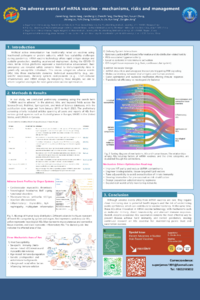
Introduction: mRNA vaccines have been pivotal in combating COVID-19, yet their deployment is associated with reports of adverse events (AEs). A better understanding and study of adverse reactions can promote the advancement of vaccine technology. Therefore, this study comprehensively characterizes these AEs, elucidates underlying mechanisms, and proposes management strategies to advance vaccine safety.
Methods: A systematic literature search was conducted across ScienceDirect, PubMed, SpringerLink, and Web of Science from January 2019 to April 2025, using the search terms "mRNA vaccine adverse" in the title, abstract, and keywords. Global pharmacovigilance databases, including EudraVigilance, VAERS, and CANVA, were also included. After deduplication and relevance analysis of the literature, the required documents were obtained, based on whom AEs were classified according to anatomical systems and mechanisms. Finally, visual analysis was conducted to complete the study.
Results: According to the method above, 87 articles, comprising clinical trials and case reports, met the inclusion criteria, following the PRISMA workflow referring to academic standard. AEs were categorized by anatomical systems and mechanistic axes. Anatomically, AEs are classified into four categories: cardiovascular AEs, neurological AEs, inflammatory AEs and mucocutaneous disorders. Cardiovascular AEs included myocarditis, thrombosis, and systemic capillary leak syndrome. Neurological AEs encompassed headaches, acute transverse myelitis, Bell’s palsy, and delirium. Mucocutaneous disorders featured urticaria, vitiligo, and oral ulcers. Inflammatory AEs involved IgA nephropathy, subacute thyroiditis, rhabdomyolysis, and autoimmune flares like SLE, RA. Mechanistically, AEs were categorized into three axes: host susceptibility, delivery system interactions, mRNA component immunogenicity.
Conclusions: mRNA vaccine AEs arise from complex interactions between host biology, delivery systems, and mRNA immunogenicity. Key strategies for mitigation include: nucleotide chemistry refinement like pseudouridine modification, codon optimization, tissue-targeted LNPs, tunable adjuvants, and biomarker-guided risk stratification. Future research must prioritize mechanistic insights into molecular mimicry and host-specific vulnerabilities to enable safer, precision-engineered mRNA platforms.
Keywords
mRNA vaccine
adverse event
mechanisms
risks
management
Poster
mRNA vaccine adverse events.pdf
Novel Immunopeptidomic Insights into EHEC O157:H7 Immune Evasion in Cattle: Implications for Rational T-Cell-Based Vaccine Design
Single-cell immune profiling reveals potent anti-tumor immune response in virus-like particle vaccine and anti-CTLA4 treatment through lymphatic delivery