Event submissions
Published
This submission belongs to the session S2. Hydrogels, Organogels, Xerogels, and Aerogels of the event The 1st International Online Conference on Gels
Published date
28 Nov, 2025
Academic Editor
'%3e%3cpath%20d='M12.6657%2010.9104C12.4185%2010.325%2012.0599%209.79327%2011.6097%209.34482C11.1609%208.89508%2010.6293%208.5365%2010.0442%208.28888C10.0389%208.28626%2010.0337%208.28495%2010.0285%208.28233C10.8446%207.69279%2011.3752%206.73249%2011.3752%205.64904C11.3752%203.8542%209.92103%202.39999%208.1262%202.39999C6.33136%202.39999%204.87715%203.8542%204.87715%205.64904C4.87715%206.73249%205.40774%207.69279%206.22393%208.28364C6.21869%208.28626%206.21345%208.28757%206.20821%208.29019C5.62129%208.5378%205.09463%208.89284%204.64265%209.34613C4.1929%209.79493%203.83432%2010.3266%203.58671%2010.9117C3.34345%2011.4845%203.21226%2012.0987%203.20023%2012.7209C3.19988%2012.7349%203.20233%2012.7488%203.20744%2012.7619C3.21255%2012.7749%203.22022%2012.7867%203.22998%2012.7968C3.23975%2012.8068%203.25142%2012.8147%203.26431%2012.8202C3.2772%2012.8256%203.29105%2012.8284%203.30504%2012.8284H4.09109C4.14874%2012.8284%204.19459%2012.7825%204.1959%2012.7262C4.2221%2011.7148%204.62823%2010.7676%205.34617%2010.0497C6.08899%209.30683%207.0755%208.89808%208.1262%208.89808C9.17689%208.89808%2010.1634%209.30683%2010.9062%2010.0497C11.6242%2010.7676%2012.0303%2011.7148%2012.0565%2012.7262C12.0578%2012.7838%2012.1037%2012.8284%2012.1613%2012.8284H12.9474C12.9613%2012.8284%2012.9752%2012.8256%2012.9881%2012.8202C13.001%2012.8147%2013.0126%2012.8068%2013.0224%2012.7968C13.0322%2012.7867%2013.0398%2012.7749%2013.0449%2012.7619C13.0501%2012.7488%2013.0525%2012.7349%2013.0522%2012.7209C13.0391%2012.0947%2012.9094%2011.4855%2012.6657%2010.9104ZM8.1262%207.9024C7.52486%207.9024%206.9589%207.6679%206.53312%207.24211C6.10733%206.81633%205.87283%206.25037%205.87283%205.64904C5.87283%205.0477%206.10733%204.48174%206.53312%204.05596C6.9589%203.63018%207.52486%203.39567%208.1262%203.39567C8.72753%203.39567%209.29349%203.63018%209.71927%204.05596C10.1451%204.48174%2010.3796%205.0477%2010.3796%205.64904C10.3796%206.25037%2010.1451%206.81633%209.71927%207.24211C9.29349%207.6679%208.72753%207.9024%208.1262%207.9024Z'%20fill='%235D1EE1'/%3e%3c/g%3e%3c/svg%3e) SIDI A. BENCHERIF
SIDI A. BENCHERIFCitation
Bindu Sadanandan, Kavyasree Marabanahalli Yogendraiah, Hydrogel-Like Biofilms of Candida tropicalis: Biofouling of Polymeric Prosthetic Materials and Emerging Antifungal Strategies, in Proceedings of The 1st International Online Conference on Gels, 3 December–5 December 2025, MDPI: Basel, Switzerland
Share
Email
Facebook
Twitter
LinkedIn
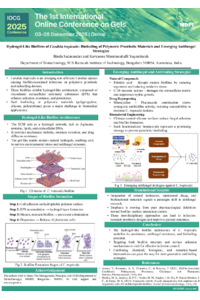
Hydrogel-Like Biofilms of Candida tropicalis: Biofouling of Polymeric Prosthetic Materials and Emerging Antifungal Strategies
'%3e%3cpath%20d='M12.6647%2010.9104C12.4176%2010.325%2012.0589%209.7933%2011.6088%209.34485C11.16%208.89511%2010.6283%208.53653%2010.0432%208.28891C10.038%208.28629%2010.0327%208.28498%2010.0275%208.28236C10.8437%207.69282%2011.3743%206.73252%2011.3743%205.64907C11.3743%203.85423%209.92005%202.40002%208.12522%202.40002C6.33038%202.40002%204.87618%203.85423%204.87618%205.64907C4.87618%206.73252%205.40677%207.69282%206.22296%208.28367C6.21772%208.28629%206.21248%208.2876%206.20724%208.29022C5.62031%208.53783%205.09365%208.89287%204.64167%209.34616C4.19192%209.79496%203.83334%2010.3266%203.58573%2010.9117C3.34247%2011.4846%203.21128%2012.0987%203.19925%2012.721C3.1989%2012.735%203.20135%2012.7489%203.20646%2012.7619C3.21157%2012.7749%203.21924%2012.7868%203.22901%2012.7968C3.23877%2012.8068%203.25045%2012.8148%203.26334%2012.8202C3.27623%2012.8256%203.29007%2012.8284%203.30406%2012.8284H4.09012C4.14776%2012.8284%204.19362%2012.7825%204.19493%2012.7262C4.22113%2011.7148%204.62726%2010.7676%205.34519%2010.0497C6.08802%209.30686%207.07452%208.89811%208.12522%208.89811C9.17592%208.89811%2010.1624%209.30686%2010.9052%2010.0497C11.6232%2010.7676%2012.0293%2011.7148%2012.0555%2012.7262C12.0568%2012.7839%2012.1027%2012.8284%2012.1603%2012.8284H12.9464C12.9604%2012.8284%2012.9742%2012.8256%2012.9871%2012.8202C13%2012.8148%2013.0117%2012.8068%2013.0214%2012.7968C13.0312%2012.7868%2013.0389%2012.7749%2013.044%2012.7619C13.0491%2012.7489%2013.0515%2012.735%2013.0512%2012.721C13.0381%2012.0947%2012.9084%2011.4856%2012.6647%2010.9104ZM8.12522%207.90243C7.52388%207.90243%206.95792%207.66793%206.53214%207.24215C6.10636%206.81636%205.87185%206.2504%205.87185%205.64907C5.87185%205.04773%206.10636%204.48177%206.53214%204.05599C6.95792%203.63021%207.52388%203.3957%208.12522%203.3957C8.72655%203.3957%209.29252%203.63021%209.7183%204.05599C10.1441%204.48177%2010.3786%205.04773%2010.3786%205.64907C10.3786%206.2504%2010.1441%206.81636%209.7183%207.24215C9.29252%207.66793%208.72655%207.90243%208.12522%207.90243Z'%20fill='%235D1EE1'/%3e%3c/g%3e%3c/svg%3e)
Bindu Sadanandan 1
Kavyasree Marabanahalli Yogendraiah 1
1. Department of Biotechnology, M S Ramaiah Institute of Technology, Bengaluru 560054, Karnataka, India.
Abstract
The non-albicans Candida species Candida tropicalis is an opportunistic fungal pathogen that forms robust gel-like biofilm on polymeric prosthetic materials. These biofilms are embedded in an extracellular polymeric substance that retains large amounts of water, giving rise to a hydrogel-like matrix that protects fungal cells, increases antifungal resistance, and also leads to biofouling of these prosthetic materials. Biofouling is the unwanted colonization and accumulation of microbial communities on material surfaces, which alters their function and compromises clinical performance. Clinically, it is significant because it is linked to recurrent urinary tract infections, bloodstream infections, and persistent device-related infections, which often result in therapeutic failure and device malfunction. Polymers such as silicone elastomer, polypropylene, polystyrene, polyurethane, polyethylene, and polyvinyl chloride are widely used in catheters, surgical meshes, implants, and prostheses because of their durability, flexibility, and biocompatibility, yet their surface properties often encourage microbial adhesion and biofilm formation. This review emphasizes that the gel-like biofilm architecture of C. tropicalis underpins its persistence and resistance, while also highlighting promising antifungal strategies being developed to mitigate these infections. Notably, palmitic acid has been shown to disrupt mature biofilms by lowering ergosterol and inducing oxidative stress, whereas C-10 massoia lactone damages the extracellular matrix and suppresses hyphal growth. Drug repurposing approaches, such as combining minocycline with fluconazole, restore susceptibility in resistant isolates and demonstrate synergistic antibiofilm activity. Additionally, biomaterial-based interventions, such as chitosan coatings on silicone surfaces, significantly reduce fungal adhesion and biofilm formation. Together, these findings reflect a translational shift toward integrating natural products, repurposed drugs, and functionalized biomaterials into antifungal development. Understanding biofouling and these emerging strategies is crucial for developing effective control measures against C. tropicalis biofilms and for guiding the design of infection-resistant prosthetic devices.
Keywords
Candida tropicalis
Hydrogel-like biofilm
Biofouling
Polymeric prosthetic materials
Antifungal resistance
Surface functionalization
Plant-derived bioactive compounds.
Poster
Gels Conference - Poster.pdf
Development of novel chitosan–gelatine-based hydrogels for drug delivery applications
Designing peptide hydrogels for localised therapeutics in treating Glioblastoma