Event submissions
Published
This submission belongs to the session S3. Animal Taxonomy of the event The 1st International Online Conference on Taxonomy
Published date
01 Dec, 2025
Academic Editor
'%3e%3cpath%20d='M12.6657%2010.9104C12.4185%2010.325%2012.0599%209.79327%2011.6097%209.34482C11.1609%208.89508%2010.6293%208.5365%2010.0442%208.28888C10.0389%208.28626%2010.0337%208.28495%2010.0285%208.28233C10.8446%207.69279%2011.3752%206.73249%2011.3752%205.64904C11.3752%203.8542%209.92103%202.39999%208.1262%202.39999C6.33136%202.39999%204.87715%203.8542%204.87715%205.64904C4.87715%206.73249%205.40774%207.69279%206.22393%208.28364C6.21869%208.28626%206.21345%208.28757%206.20821%208.29019C5.62129%208.5378%205.09463%208.89284%204.64265%209.34613C4.1929%209.79493%203.83432%2010.3266%203.58671%2010.9117C3.34345%2011.4845%203.21226%2012.0987%203.20023%2012.7209C3.19988%2012.7349%203.20233%2012.7488%203.20744%2012.7619C3.21255%2012.7749%203.22022%2012.7867%203.22998%2012.7968C3.23975%2012.8068%203.25142%2012.8147%203.26431%2012.8202C3.2772%2012.8256%203.29105%2012.8284%203.30504%2012.8284H4.09109C4.14874%2012.8284%204.19459%2012.7825%204.1959%2012.7262C4.2221%2011.7148%204.62823%2010.7676%205.34617%2010.0497C6.08899%209.30683%207.0755%208.89808%208.1262%208.89808C9.17689%208.89808%2010.1634%209.30683%2010.9062%2010.0497C11.6242%2010.7676%2012.0303%2011.7148%2012.0565%2012.7262C12.0578%2012.7838%2012.1037%2012.8284%2012.1613%2012.8284H12.9474C12.9613%2012.8284%2012.9752%2012.8256%2012.9881%2012.8202C13.001%2012.8147%2013.0126%2012.8068%2013.0224%2012.7968C13.0322%2012.7867%2013.0398%2012.7749%2013.0449%2012.7619C13.0501%2012.7488%2013.0525%2012.7349%2013.0522%2012.7209C13.0391%2012.0947%2012.9094%2011.4855%2012.6657%2010.9104ZM8.1262%207.9024C7.52486%207.9024%206.9589%207.6679%206.53312%207.24211C6.10733%206.81633%205.87283%206.25037%205.87283%205.64904C5.87283%205.0477%206.10733%204.48174%206.53312%204.05596C6.9589%203.63018%207.52486%203.39567%208.1262%203.39567C8.72753%203.39567%209.29349%203.63018%209.71927%204.05596C10.1451%204.48174%2010.3796%205.0477%2010.3796%205.64904C10.3796%206.25037%2010.1451%206.81633%209.71927%207.24211C9.29349%207.6679%208.72753%207.9024%208.1262%207.9024Z'%20fill='%235D1EE1'/%3e%3c/g%3e%3c/svg%3e) Mathias Harzhauser
Mathias HarzhauserCitation
Fanny Sieler, Sahar Khodami, Martin Husemann, Nancy Fabiola Mercado-Salas, Integrating 3D imaging with multi-locus phylogenetic analysis to update the diversity of the aegisthid genus Pontostratiotes Brady, 1883 (Copepoda: Harpacticoida), in Proceedings of The 1st International Online Conference on Taxonomy, 3 December–4 December 2025, MDPI: Basel, Switzerland
Share
Email
Facebook
Twitter
LinkedIn
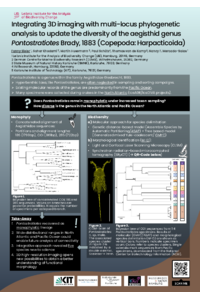
Integrating 3D imaging with multi-locus phylogenetic analysis to update the diversity of the aegisthid genus Pontostratiotes Brady, 1883 (Copepoda: Harpacticoida)
'%3e%3cpath%20d='M12.6647%2010.9104C12.4176%2010.325%2012.0589%209.7933%2011.6088%209.34485C11.16%208.89511%2010.6283%208.53653%2010.0432%208.28891C10.038%208.28629%2010.0327%208.28498%2010.0275%208.28236C10.8437%207.69282%2011.3743%206.73252%2011.3743%205.64907C11.3743%203.85423%209.92005%202.40002%208.12522%202.40002C6.33038%202.40002%204.87618%203.85423%204.87618%205.64907C4.87618%206.73252%205.40677%207.69282%206.22296%208.28367C6.21772%208.28629%206.21248%208.2876%206.20724%208.29022C5.62031%208.53783%205.09365%208.89287%204.64167%209.34616C4.19192%209.79496%203.83334%2010.3266%203.58573%2010.9117C3.34247%2011.4846%203.21128%2012.0987%203.19925%2012.721C3.1989%2012.735%203.20135%2012.7489%203.20646%2012.7619C3.21157%2012.7749%203.21924%2012.7868%203.22901%2012.7968C3.23877%2012.8068%203.25045%2012.8148%203.26334%2012.8202C3.27623%2012.8256%203.29007%2012.8284%203.30406%2012.8284H4.09012C4.14776%2012.8284%204.19362%2012.7825%204.19493%2012.7262C4.22113%2011.7148%204.62726%2010.7676%205.34519%2010.0497C6.08802%209.30686%207.07452%208.89811%208.12522%208.89811C9.17592%208.89811%2010.1624%209.30686%2010.9052%2010.0497C11.6232%2010.7676%2012.0293%2011.7148%2012.0555%2012.7262C12.0568%2012.7839%2012.1027%2012.8284%2012.1603%2012.8284H12.9464C12.9604%2012.8284%2012.9742%2012.8256%2012.9871%2012.8202C13%2012.8148%2013.0117%2012.8068%2013.0214%2012.7968C13.0312%2012.7868%2013.0389%2012.7749%2013.044%2012.7619C13.0491%2012.7489%2013.0515%2012.735%2013.0512%2012.721C13.0381%2012.0947%2012.9084%2011.4856%2012.6647%2010.9104ZM8.12522%207.90243C7.52388%207.90243%206.95792%207.66793%206.53214%207.24215C6.10636%206.81636%205.87185%206.2504%205.87185%205.64907C5.87185%205.04773%206.10636%204.48177%206.53214%204.05599C6.95792%203.63021%207.52388%203.3957%208.12522%203.3957C8.72655%203.3957%209.29252%203.63021%209.7183%204.05599C10.1441%204.48177%2010.3786%205.04773%2010.3786%205.64907C10.3786%206.2504%2010.1441%206.81636%209.7183%207.24215C9.29252%207.66793%208.72655%207.90243%208.12522%207.90243Z'%20fill='%235D1EE1'/%3e%3c/g%3e%3c/svg%3e)
Fanny Sieler 1
Sahar Khodami 2
Martin Husemann 3
Nancy Fabiola Mercado-Salas 1
1. Section Crustacea, Leibniz Institute for the Analysis of Biodiversity Change (LIB), Hamburg, 20146, Germany
2. Senckenberg am Meer, German Centre for Marine Biodiversity Research (DZMB), Wilhelmshaven, 26382, Germany
3. Staatliches Museum für Naturkunde Karlsruhe, Erbprinzenstraße 13, 76133 Karlsruhe, Germany
Abstract
The hyperbenthic zone, the transition between pelagial and benthos, is known as an environment of unique interactions with endemic species. Taxa inhabiting the marine benthic and hyperbenthic zone are often deemed as having the most plesiomorphic characters, making the study of hyperbenthic species essential to understanding the evolutionary history of several taxa, among them copepods. One copepod family whose representatives are found especially within deep-sea hyperbenthic communities is the Aegisthidae Giesbrecht, 1893, which, together with the family Rometidae Seifried & Schminke, 2003, is considered the sister group to all remaining Harpacticoida. Whilst efforts have been made to unravel phylogenetic relationships within Aegisthidae, the monophyly of the hyperbenthic genus Pontostratiotes Brady, 1883 has yet to be tested across specimens from both the Pacific and the Atlantic Ocean. Here, we apply an integrative approach, combining the inference of a phylogenetic tree, including the gene fragment of mitochondrial cytochrome oxidase c subunit I, as well as nuclear sequences of 18S and 28S, with high-resolution imaging techniques—confocal laser scanning microscopy and synchroton radiation-based microcomputed tomography—for detailed morphology documentation. The Pontostratiotes specimens analyzed were collected during expeditions across the North Atlantic Ocean (IceAGE, IceAGE 3, IceDivA, IceDivA 2). Our analyses, including the molecular data available, which originate almost exclusively from Pacific samples, recovered the subfamily Pontostratiotinae, including all members of Pontostratiotes, as monophyletic. Four of the nine resulting species clusters of Pontostratiotes specimens examined in this study were assigned to valid species, while five previously undescribed lineages were provided with molecular barcodes and morphological descriptions. The examination of spatial records of the genus lead to the assumption of a near-worldwide distribution. As closely related benthic harpacticoid copepods are seldomly found in multiple samples across greater distances, abundant specimens of Pontostratiotes could be a good proxy to understand the connectivity of North Atlantic communities.
Keywords
18S
28S
Aegisthidae
COI
IceAGE expeditions
Poster
Fanny_Sieler_Session3.1_Poster.pdf
Using an integrative morphological approach to species delimitation in a marine gastrotrich (Gastrotricha: Macrodasyida)
How many species are there within Chamaeza campanisona (Aves, Formicariidae)?