Event submissions
Published
This submission belongs to the session S1. Applied Biosciences and Bioengineering of the event The 6th International Electronic Conference on Applied Sciences
Published date
03 Dec, 2025
Academic Editor
'%3e%3cpath%20d='M12.6657%2010.9104C12.4185%2010.325%2012.0599%209.79327%2011.6097%209.34482C11.1609%208.89508%2010.6293%208.5365%2010.0442%208.28888C10.0389%208.28626%2010.0337%208.28495%2010.0285%208.28233C10.8446%207.69279%2011.3752%206.73249%2011.3752%205.64904C11.3752%203.8542%209.92103%202.39999%208.1262%202.39999C6.33136%202.39999%204.87715%203.8542%204.87715%205.64904C4.87715%206.73249%205.40774%207.69279%206.22393%208.28364C6.21869%208.28626%206.21345%208.28757%206.20821%208.29019C5.62129%208.5378%205.09463%208.89284%204.64265%209.34613C4.1929%209.79493%203.83432%2010.3266%203.58671%2010.9117C3.34345%2011.4845%203.21226%2012.0987%203.20023%2012.7209C3.19988%2012.7349%203.20233%2012.7488%203.20744%2012.7619C3.21255%2012.7749%203.22022%2012.7867%203.22998%2012.7968C3.23975%2012.8068%203.25142%2012.8147%203.26431%2012.8202C3.2772%2012.8256%203.29105%2012.8284%203.30504%2012.8284H4.09109C4.14874%2012.8284%204.19459%2012.7825%204.1959%2012.7262C4.2221%2011.7148%204.62823%2010.7676%205.34617%2010.0497C6.08899%209.30683%207.0755%208.89808%208.1262%208.89808C9.17689%208.89808%2010.1634%209.30683%2010.9062%2010.0497C11.6242%2010.7676%2012.0303%2011.7148%2012.0565%2012.7262C12.0578%2012.7838%2012.1037%2012.8284%2012.1613%2012.8284H12.9474C12.9613%2012.8284%2012.9752%2012.8256%2012.9881%2012.8202C13.001%2012.8147%2013.0126%2012.8068%2013.0224%2012.7968C13.0322%2012.7867%2013.0398%2012.7749%2013.0449%2012.7619C13.0501%2012.7488%2013.0525%2012.7349%2013.0522%2012.7209C13.0391%2012.0947%2012.9094%2011.4855%2012.6657%2010.9104ZM8.1262%207.9024C7.52486%207.9024%206.9589%207.6679%206.53312%207.24211C6.10733%206.81633%205.87283%206.25037%205.87283%205.64904C5.87283%205.0477%206.10733%204.48174%206.53312%204.05596C6.9589%203.63018%207.52486%203.39567%208.1262%203.39567C8.72753%203.39567%209.29349%203.63018%209.71927%204.05596C10.1451%204.48174%2010.3796%205.0477%2010.3796%205.64904C10.3796%206.25037%2010.1451%206.81633%209.71927%207.24211C9.29349%207.6679%208.72753%207.9024%208.1262%207.9024Z'%20fill='%235D1EE1'/%3e%3c/g%3e%3c/svg%3e) Roger Narayan
Roger NarayanCitation
Stanislava Ivanova, Ralitsa Parova, Zoya Dzhakova, Diana Karcheva-Bahchevanska, Kalin Ivanov, EVALUATION OF THE CHEMICAL COMPOSITION AND THE HISTOCHEMICAL LOCALIZATION OF SALVIA NEMOROSA L. ESSENTIAL OILS, in Proceedings of The 6th International Electronic Conference on Applied Sciences, 9 December–11 December 2025, MDPI: Basel, Switzerland
Share
Email
Facebook
Twitter
LinkedIn
EVALUATION OF THE CHEMICAL COMPOSITION AND THE HISTOCHEMICAL LOCALIZATION OF SALVIA NEMOROSA L. ESSENTIAL OILS

Stanislava Ivanova 1,2
'%3e%3cpath%20d='M12.6647%2010.9104C12.4176%2010.325%2012.0589%209.7933%2011.6088%209.34485C11.16%208.89511%2010.6283%208.53653%2010.0432%208.28891C10.038%208.28629%2010.0327%208.28498%2010.0275%208.28236C10.8437%207.69282%2011.3743%206.73252%2011.3743%205.64907C11.3743%203.85423%209.92005%202.40002%208.12522%202.40002C6.33038%202.40002%204.87618%203.85423%204.87618%205.64907C4.87618%206.73252%205.40677%207.69282%206.22296%208.28367C6.21772%208.28629%206.21248%208.2876%206.20724%208.29022C5.62031%208.53783%205.09365%208.89287%204.64167%209.34616C4.19192%209.79496%203.83334%2010.3266%203.58573%2010.9117C3.34247%2011.4846%203.21128%2012.0987%203.19925%2012.721C3.1989%2012.735%203.20135%2012.7489%203.20646%2012.7619C3.21157%2012.7749%203.21924%2012.7868%203.22901%2012.7968C3.23877%2012.8068%203.25045%2012.8148%203.26334%2012.8202C3.27623%2012.8256%203.29007%2012.8284%203.30406%2012.8284H4.09012C4.14776%2012.8284%204.19362%2012.7825%204.19493%2012.7262C4.22113%2011.7148%204.62726%2010.7676%205.34519%2010.0497C6.08802%209.30686%207.07452%208.89811%208.12522%208.89811C9.17592%208.89811%2010.1624%209.30686%2010.9052%2010.0497C11.6232%2010.7676%2012.0293%2011.7148%2012.0555%2012.7262C12.0568%2012.7839%2012.1027%2012.8284%2012.1603%2012.8284H12.9464C12.9604%2012.8284%2012.9742%2012.8256%2012.9871%2012.8202C13%2012.8148%2013.0117%2012.8068%2013.0214%2012.7968C13.0312%2012.7868%2013.0389%2012.7749%2013.044%2012.7619C13.0491%2012.7489%2013.0515%2012.735%2013.0512%2012.721C13.0381%2012.0947%2012.9084%2011.4856%2012.6647%2010.9104ZM8.12522%207.90243C7.52388%207.90243%206.95792%207.66793%206.53214%207.24215C6.10636%206.81636%205.87185%206.2504%205.87185%205.64907C5.87185%205.04773%206.10636%204.48177%206.53214%204.05599C6.95792%203.63021%207.52388%203.3957%208.12522%203.3957C8.72655%203.3957%209.29252%203.63021%209.7183%204.05599C10.1441%204.48177%2010.3786%205.04773%2010.3786%205.64907C10.3786%206.2504%2010.1441%206.81636%209.7183%207.24215C9.29252%207.66793%208.72655%207.90243%208.12522%207.90243Z'%20fill='%235D1EE1'/%3e%3c/g%3e%3c/svg%3e)
Ralitsa Parova 1
Zoya Dzhakova 1

Diana Karcheva-Bahchevanska 1,2
Kalin Ivanov 1,2
1. Department of Pharmacognosy and Pharmaceutical Chemistry, Faculty of Pharmacy, Medical University of Plovdiv, 4002 Plovdiv, Bulgaria
2. Research Institute, Medical University of Plovdiv, 4002 Plovdiv, Bulgaria
Abstract
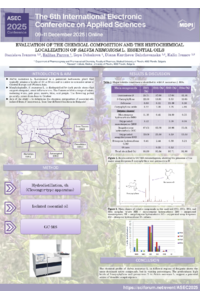
Introduction: Salvia is the largest genus within the Lamiaceae family, comprising over 1,000 species of considerable importance to the pharmaceutical, food, and cosmetic industries. Salvia nemorosa L. (S. nemorosa) is a less explored representative of this genus, associated with antioxidant, analgesic, antimicrobial, antifungal, antidiabetic, and acetylcholinesterase inhibitory activities. This study aimed to evaluate the phytochemical profiles of essential oils (EOs) obtained from four wild populations of S. nemorosa L. collected across different regions of Bulgaria. Methods: The phytochemical profiles of the four samples were analyzed using gas chromatography-mass spectrometry (GC–MS). In addition, histochemical analysis of lipid accumulation was carried out with Sudan III staining, and sections were examined under a light microscope equipped with a digital camera and image processing software. Results: GC–MS analyses revealed the presence of sesquiterpene hydrocarbons, monoterpene hydrocarbons, oxygenated sesquiterpenes, and oxygenated monoterpenes. The predominant compounds were germacrene D (17.64–41.34%), β-caryophyllene (9.50–22.38%), and caryophyllene oxide (4.66–7.35%), with other notable constituents including sabinene (6.88–21.89%), bicyclogermacrene (7.67%), and phytol (5.21%). Based on the high content of these compounds, the EOs may exhibit considerable antioxidant, antimicrobial, and anti-inflammatory activities. Histochemical analysis confirmed the presence of lipid structures, as indicated by orange-stained droplets. These findings provide valuable insights into the phytochemistry of S. nemorosa L., highlighting its promise for future pharmacological and industrial applications.
Keywords
Keywords: Salvia nemorosa L.
Salvia
natural products
essential oil
histochemical analysis
Gas chromatography/mass spectrometry (GC/MS)
Poster
Salvia nemorosa L. Ralitsa Parova.pdf
Conductive polymer–natural clay nanocomposites for efficient heavy metal removal from aqueous solutions
Scenario-Based Flood Susceptibility Mapping using Machine Learning: A Case in Manila City, Philippines