Event submissions
Published
This submission belongs to the session S6. Microbiota and sports nutrition: The gut-performance connection of the event The 5th International Online Conference on Nutrients
Published date
05 Dec, 2025
Academic Editor
'%3e%3cpath%20d='M12.6657%2010.9104C12.4185%2010.325%2012.0599%209.79327%2011.6097%209.34482C11.1609%208.89508%2010.6293%208.5365%2010.0442%208.28888C10.0389%208.28626%2010.0337%208.28495%2010.0285%208.28233C10.8446%207.69279%2011.3752%206.73249%2011.3752%205.64904C11.3752%203.8542%209.92103%202.39999%208.1262%202.39999C6.33136%202.39999%204.87715%203.8542%204.87715%205.64904C4.87715%206.73249%205.40774%207.69279%206.22393%208.28364C6.21869%208.28626%206.21345%208.28757%206.20821%208.29019C5.62129%208.5378%205.09463%208.89284%204.64265%209.34613C4.1929%209.79493%203.83432%2010.3266%203.58671%2010.9117C3.34345%2011.4845%203.21226%2012.0987%203.20023%2012.7209C3.19988%2012.7349%203.20233%2012.7488%203.20744%2012.7619C3.21255%2012.7749%203.22022%2012.7867%203.22998%2012.7968C3.23975%2012.8068%203.25142%2012.8147%203.26431%2012.8202C3.2772%2012.8256%203.29105%2012.8284%203.30504%2012.8284H4.09109C4.14874%2012.8284%204.19459%2012.7825%204.1959%2012.7262C4.2221%2011.7148%204.62823%2010.7676%205.34617%2010.0497C6.08899%209.30683%207.0755%208.89808%208.1262%208.89808C9.17689%208.89808%2010.1634%209.30683%2010.9062%2010.0497C11.6242%2010.7676%2012.0303%2011.7148%2012.0565%2012.7262C12.0578%2012.7838%2012.1037%2012.8284%2012.1613%2012.8284H12.9474C12.9613%2012.8284%2012.9752%2012.8256%2012.9881%2012.8202C13.001%2012.8147%2013.0126%2012.8068%2013.0224%2012.7968C13.0322%2012.7867%2013.0398%2012.7749%2013.0449%2012.7619C13.0501%2012.7488%2013.0525%2012.7349%2013.0522%2012.7209C13.0391%2012.0947%2012.9094%2011.4855%2012.6657%2010.9104ZM8.1262%207.9024C7.52486%207.9024%206.9589%207.6679%206.53312%207.24211C6.10733%206.81633%205.87283%206.25037%205.87283%205.64904C5.87283%205.0477%206.10733%204.48174%206.53312%204.05596C6.9589%203.63018%207.52486%203.39567%208.1262%203.39567C8.72753%203.39567%209.29349%203.63018%209.71927%204.05596C10.1451%204.48174%2010.3796%205.0477%2010.3796%205.64904C10.3796%206.25037%2010.1451%206.81633%209.71927%207.24211C9.29349%207.6679%208.72753%207.9024%208.1262%207.9024Z'%20fill='%235D1EE1'/%3e%3c/g%3e%3c/svg%3e) David Nieman
David NiemanCitation
Manuel Remesal, Arantxa Fernandez, Esmeralda M Parra Peralbo, Diego Dominguez Balmaseda, Juan David Ramirez Gonzalez, Mar Larrosa, Rocio Gonzalez Soltero, A Multi-Omics Approach to Investigating the Role of Fecal miRNAs in the Gut Microbiota in Response to Physical Exercise: A Pilot Study, in Proceedings of The 5th International Online Conference on Nutrients, 10 December–12 December 2025, MDPI: Basel, Switzerland
Share
Email
Facebook
Twitter
LinkedIn
A Multi-Omics Approach to Investigating the Role of Fecal miRNAs in the Gut Microbiota in Response to Physical Exercise: A Pilot Study
'%3e%3cpath%20d='M12.6647%2010.9104C12.4176%2010.325%2012.0589%209.7933%2011.6088%209.34485C11.16%208.89511%2010.6283%208.53653%2010.0432%208.28891C10.038%208.28629%2010.0327%208.28498%2010.0275%208.28236C10.8437%207.69282%2011.3743%206.73252%2011.3743%205.64907C11.3743%203.85423%209.92005%202.40002%208.12522%202.40002C6.33038%202.40002%204.87618%203.85423%204.87618%205.64907C4.87618%206.73252%205.40677%207.69282%206.22296%208.28367C6.21772%208.28629%206.21248%208.2876%206.20724%208.29022C5.62031%208.53783%205.09365%208.89287%204.64167%209.34616C4.19192%209.79496%203.83334%2010.3266%203.58573%2010.9117C3.34247%2011.4846%203.21128%2012.0987%203.19925%2012.721C3.1989%2012.735%203.20135%2012.7489%203.20646%2012.7619C3.21157%2012.7749%203.21924%2012.7868%203.22901%2012.7968C3.23877%2012.8068%203.25045%2012.8148%203.26334%2012.8202C3.27623%2012.8256%203.29007%2012.8284%203.30406%2012.8284H4.09012C4.14776%2012.8284%204.19362%2012.7825%204.19493%2012.7262C4.22113%2011.7148%204.62726%2010.7676%205.34519%2010.0497C6.08802%209.30686%207.07452%208.89811%208.12522%208.89811C9.17592%208.89811%2010.1624%209.30686%2010.9052%2010.0497C11.6232%2010.7676%2012.0293%2011.7148%2012.0555%2012.7262C12.0568%2012.7839%2012.1027%2012.8284%2012.1603%2012.8284H12.9464C12.9604%2012.8284%2012.9742%2012.8256%2012.9871%2012.8202C13%2012.8148%2013.0117%2012.8068%2013.0214%2012.7968C13.0312%2012.7868%2013.0389%2012.7749%2013.044%2012.7619C13.0491%2012.7489%2013.0515%2012.735%2013.0512%2012.721C13.0381%2012.0947%2012.9084%2011.4856%2012.6647%2010.9104ZM8.12522%207.90243C7.52388%207.90243%206.95792%207.66793%206.53214%207.24215C6.10636%206.81636%205.87185%206.2504%205.87185%205.64907C5.87185%205.04773%206.10636%204.48177%206.53214%204.05599C6.95792%203.63021%207.52388%203.3957%208.12522%203.3957C8.72655%203.3957%209.29252%203.63021%209.7183%204.05599C10.1441%204.48177%2010.3786%205.04773%2010.3786%205.64907C10.3786%206.2504%2010.1441%206.81636%209.7183%207.24215C9.29252%207.66793%208.72655%207.90243%208.12522%207.90243Z'%20fill='%235D1EE1'/%3e%3c/g%3e%3c/svg%3e)
Manuel Remesal 1
Arantxa Fernandez 2
Esmeralda M Parra Peralbo 3

Diego Dominguez Balmaseda 4
Juan David Ramirez Gonzalez 5

Mar Larrosa 6

Rocio Gonzalez Soltero 7
1. Department of Biomedicine and Dentistry, Faculty of Biomedical Sciences and Sports, Universidad Europea de Andalucía, Málaga, 29010, Spain
2. Faculty of Biomedical and Health Sciences, Universidad Europea de Madrid, Villaviciosa de Odón (Madrid), 28670, Spain
3. Department of Medicine. Faculty of Medicine, Health and Sports, Universidad Europea de Madrid, Villaviciosa de Odón (Madrid), 28670, Spain
4. Faculty of Medicine, Health and Sports, Universidad Europea de Madrid, Villaviciosa de Odón (Madrid), 28670, Spain
5. Research Center for Microbiology and Biotechnology (CIMBIUR), Universidad del Rosario, Bogotá, Colombia
6. Department of Nutrition and Food Science, Faculty of Pharmacy, Complutense University of Madrid, Plaza Ramón y Cajal s/n., 28040 Madrid, Spain
7. Department of Biosciences. Faculty of Biomedical and Health Sciences, Universidad Europea de Madrid, Villaviciosa de Odón (Madrid), 28670, Spain
Abstract
Introduction:
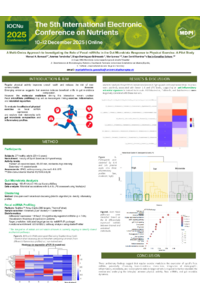
Regular physical activity improves overall health and reduces the risk of non-communicable diseases. These benefits have been linked to positive shifts in gut microbiota composition; however, the molecular mechanisms driving these adaptations remain unclear. Fecal microRNAs (miRNAs) may serve as mediators connecting exercise, inflammation, and microbial regulation.
Objective:
This pilot study aimed to evaluate the effects of physical exercise on fecal miRNA expression and explore its relationship with gut microbiota composition and inflammatory profiles.
Methods:
A total of 27 healthy adults (aged 20–45) were recruited and classified according to their physical activity level, including trained individuals (≥3 sessions/week, 60–90 min, moderate–high intensity). Participants were clustered by IL-6 and LPS plasma levels into three inflammatory profiles (low, moderate, high). From these, six trained subjects (two per cluster) were selected and compared with one sedentary participant (<1 session/week). Fecal miRNAs were quantified using TaqMan Array Cards (ThermoFisher) assessing 386 miRNA, while gut microbiota composition was determined by 16S rRNA sequencing. Microbial associations with IL-6 and LPS were analyzed via MaAsLin2.
Results:
The clustering approach identified three distinct inflammatory groups. MaAsLin2 analysis showed that Christensenellaceae R-7 group and Lachnospiraceae NK4A136 group were positively associated with lower IL-6 and LPS levels, suggesting an anti-inflammatory microbial signature in trained individuals. Conversely, Bifidobacterium, Collinsella, and Solobacterium were negatively correlated with these markers. Exercise-modulated miRNAs, including hsa-miR-1-3p and hsa-miR-92a-3p, were related to cardiac function, angiogenesis, and endothelial regulation. The integration of miRNA and microbiota datasets is currently ongoing to identify shared mechanistic pathways.
Conclusions:
These preliminary findings suggest that regular exercise modulates the expression of specific fecal miRNAs, potentially influencing host–microbiota interactions. Integration of demographic, inflammatory, microbiota, and transcriptomic data in larger cohorts is required to further elucidate the mechanisms underlying the interplay between physical activity, fecal miRNAs, and gut microbial dynamics.
Keywords
Physical activity
Gut microbiota
Fecal microRNAs
Multi-omics
Exercise physiology
Host–microbiota interactions
Poster
Poster_MDPI_Remesal_2025.pdf
Effects of Cordyceps militaris Supplementation on Oxidative Stress and Muscle Damage Following Endurance Exercise
Antibacterial and Antibiofilm Potentials of LAB-Derived Metabolites Against Porphyromonas gingivalis